
Go Unlimited with Magzter GOLD
Get unlimited access to 10,000+ magazines, newspapers and Premium stories for just
The Role and Impact of the Insolvency and Bankruptcy Code (IBC) in NPA Recovery
BANKING FINANCE
|November 2024
Indian banks, especially grappling with the mounting challenge of Non-Performing Assets (NPAs) within Scheduled Commercial Banks (SCBs), are experiencing a significant downturn in their capacity for credit recycling, resulting in reduced business opportunities and declining profits. However, various factors contributing to the severity of NPA problem are including macro-economic, political, and internal factors, emphasizing the complexity of the issue. With this background, the present study puts an effort to look at the role of the Insolvency and Bankruptcy Code (IBC) in NPA recovery and also showcasing its significance in resolving insolvency and maximizing creditor recovery.

The Indian banking sector is on the cusp of a transformation. FinTech startups are revolutionizing the industry with innovative products, seamless digital experiences, and a culture of agility. But this disruption extends beyond just technology.
Introduction:
The vitality of a country's economy lies at the core of its growth and prosperity, with various factors contributing to its development. Among these factors, the banking sector emerges as a pivotal force, facilitating the expansion and stability of the national economy. Through the efficient allocation of savings into productive ventures, the banking system assumes a vital function in nurturing economic growth and development. In India, the banking structure comprises commercial banks and co-operative banks, each playing distinct yet complementary roles in the financial ecosystem. Commercial banks, further categorized as scheduled and non-scheduled, encompass private, public, branches of foreign banks and regional rural banks, collectively providing to the diverse financial needs of the populace.
Central to the functions of these banks is the mobilization of deposits and the provision of loans, pivotal for stimulating economic activity. While deposit-taking carries minimal risk, as banks are obligated to refund public funds upon request, lending involves inherent risks, with the possibility of borrowers defaulting on repayments, leading to the accumulation of non-performing assets (NPAs). NPAs, characterized by assets failing to generate revenue for the bank, primarily consist of loans or advances in default or arrears. Default occurs when borrowers fail to meet their contractual obligations, jeopardizing the financial health and profitability of banks. As such, the management and mitigation of NPAs are critical for ensuring the stability and sustainability of the banking sector, thereby bolstering the broader economic landscape.


This story is from the November 2024 edition of BANKING FINANCE.
Subscribe to Magzter GOLD to access thousands of curated premium stories, and 10,000+ magazines and newspapers.
Already a subscriber? Sign In
MORE STORIES FROM BANKING FINANCE

BANKING FINANCE
India's Fiscal Discipline: A Path to Economic Stability and Growth
A fiscal deficit occurs when a government's total expenditures exceed its total revenues, excluding money from borrowings, within a specific fiscal period, usually a year. It essentially indicates that the government is spending more than it is earning from taxes and other sources of income.

5 mins
December 2025
BANKING FINANCE
Synergistic Financing: Unlocking Co- Lending Potential
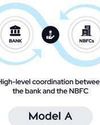
Co-lending is an arrangement where multiple lenders, typically a bank and a Non-Banking Financial Company (NBFC), partner to provide loans to borrowers. This helps increase lending capacity and reduces risk for individual lenders. Each lender sets their own terms and conditions.
11 mins
December 2025

BANKING FINANCE
Tackling Trade-Based Money Laundering in the Modern Financial Landscape
TBML schemes can also involve misrepresenting the price, quantity, or type of goods or services in trade transactions. In misrepresentation schemes, the parties involved in the trade transaction may under or over invoice goods or services; issue multiple invoices for the same goods or services.
5 mins
December 2025
BANKING FINANCE
Axis Mutual Fund debuts micro-investment feature for first-time investors
Axis Mutual Fund has introduced an industry-first micro-investment option enabling new investors to start SIPS with as little as Rs. 100 per scheme.
1 min
December 2025
BANKING FINANCE
PPFAS Mutual Fund explains rationale behind proposed large-cap fund launch
PPFAS Mutual Fund, known for its conservative and product-lite approach, has filed draft documents with SEBI to launch a large-cap fund.
1 min
December 2025
BANKING FINANCE
Domestic pension fund flows into equities hit record high
Domestic pension funds have made their highest-ever net investment in Indian equities, deploying Rs. 41,242 crore during the first nine months of 2025, NSE data shows.
1 min
December 2025
BANKING FINANCE
SC asks Centre to adopt blockchain for property registrations
The Supreme Court said property transactions in India were \"traumatic\" and asked the Centre to take the lead in adopting blockchain technology to make the registration process seamless nationwide.
1 min
December 2025
BANKING FINANCE
NCDEX gets final board approval to launch mutual fund distribution platform
The National Commodity and Derivatives Exchange (NCDEX) has received board approval to roll out an electronic mutual fund distribution platform, sources told Bloomberg.
1 min
December 2025
BANKING FINANCE
Kerala Bank: Mohanan elected President of Asia's largest Co-op Bank
CPI (M) leader P. Mohanan Master from Kozhikode has been elected as the President of Asia's largest cooperative bank, the Kerala State Cooperative Bank (Kerala Bank).
1 min
December 2025
BANKING FINANCE
Passive fund AUM rises 5% to Rs. 13.67 lakh crore on strong gold ETF inflows
Passive fund assets grew 5.2% in October to Rs. 13.67 lakh crore, driven largely by inflows into precious metal ETFs, according to AMFI's monthly note.
1 min
December 2025
Listen
Translate
Change font size