
Go Unlimited with Magzter GOLD
Get unlimited access to 10,000+ magazines, newspapers and Premium stories for just
Try GOLD - Free
"Achieving self-reliance in pulse production requires a multi-pronged approach"
AgroSpectrum
|AgroSpectrum India March 2025
The United Nations General Assembly has designated February 10 as World Pulses Day to recognise the importance of pulse crops like chickpeas, dry beans and lentils as a global food.
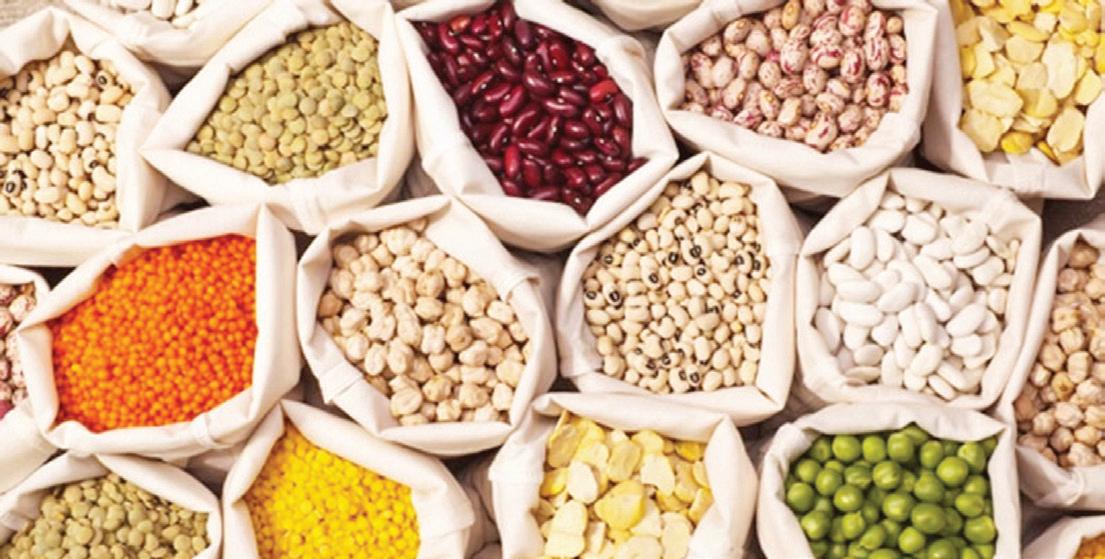
The day is crucial to raising awareness about the nutritional benefits of pulses as part of sustainable food production to enhance food security and nutrition. In 2025, the theme for World Pulses Day is "Pulses: Bringing diversity to agrifood systems" while the slogan is "Love pulses for a healthy diet and planet". This year's theme will underscore the vital role of pulses in promoting diversity – both above and below the ground. With low yields, India being the largest producer of pulses imports large quantities of pulses to fulfil its local needs. In this regard, AgroSpectrum spoke to Rajavelu N K, CEO, Crop Protection Business, Godrej Agrovet Ltd about how to achieve 'Aatmanirbharta in Pulses' and other issues. Edited excerpts:
What are the key factors contributing to India's low pulse yields despite having the largest cultivation area globally?
Despite being the world's largest producer of pulses with extensive cultivation area, India's yield per hectare remains significantly lower than global standards. This paradox stems from multiple interconnected challenges in our agricultural ecosystem. Traditional farming practices, predominantly reliant on rainfed agriculture, continue to dominate pulse cultivation, limiting the potential for higher yields. The situation is further complicated by the fact that pulses are typically grown in marginal lands with poor soil fertility and erratic rainfall patterns, making them vulnerable to climate variations.
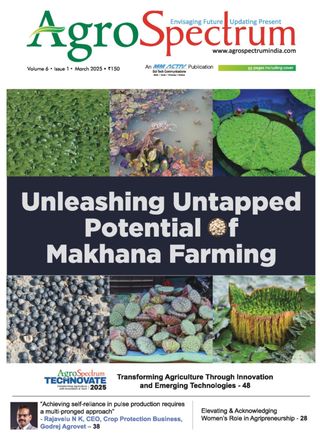

This story is from the AgroSpectrum India March 2025 edition of AgroSpectrum.
Subscribe to Magzter GOLD to access thousands of curated premium stories, and 10,000+ magazines and newspapers.
Already a subscriber? Sign In
MORE STORIES FROM AgroSpectrum
AgroSpectrum
Gearing Up for Resilient Kharif 2026 Season
As India approaches the Kharif 2026 season, its agricultural narrative reflects a measured evolution-from the imperatives of food security to a more refined emphasis on nutrient resilience and ecological balance. The past year reveals a supply chain growing increasingly nimble amid global uncertainty. Urea, the system's backbone, saw requirements exceed 100 LMT in Kharif 2025 and rise further to 156.80 LMT in Rabi 2025-26, supported by steady domestic output. This stability sustained productivity across key agrarian centres such as Madhya Pradesh and Maharashtra, even as DAP availability tightened during Kharif.

5 mins
AgroSpectrum India May 2026

AgroSpectrum
"We aim to expand climate-aligned infrastructure in communities where regular sourcing relationships already exist"
In an exclusive AgroSpectrum interview with Rajesh Jain, Co-founder of Ayekart and Ayekart RISE Foundation, the SUGAM-CSS programme is highlighted as a strategic extension of the foundation's mission to reduce post-harvest losses and strengthen rural livelihoods through renewable energy-powered micro cold storage.
4 mins
AgroSpectrum India May 2026

AgroSpectrum
How Women Are Reshaping India's Agri Value Chain
Despite comprising nearly 80 per cent of the agricultural workforce in several Indian states, participation of women has historically been concentrated at the labour end: sowing, weeding, harvesting, often as unpaid family workers with little say in what is grown, where it is sold, or at what price. That script is now being rewritten. Across the country, a shift is underway from women as farm labour to women as agripreneurs, enterprise managers, and value-chain decision-makers. What makes this shift different from earlier empowerment narratives is that it is increasingly driven, not by welfare alone, but by institutional design, market infrastructure and technology.
3 mins
AgroSpectrum India May 2026

AgroSpectrum
"AI-based analytics, predictive maintenance, IoT-enabled equipment, and high-efficiency process control are shaping the industry"
Bühler India is known for its technological innovation and sustainability within the Bühler Group's global operations since its inception in 1993.
4 mins
AgroSpectrum India May 2026

AgroSpectrum
"We leverage digitised workflow data to streamline access to financing, making it faster and more transparent"
In an exclusive AgroSpectrum interview, Deepak Gandhi, Director - Exports & Pre-Shipment at Drip Capital, highlights how invoice financing bridges the structural working capital gap faced by India’s seafood exporters by unlocking up to 80% of receivables quickly, enabling continuous operations.
4 mins
AgroSpectrum India May 2026

AgroSpectrum
How Artificial Intelligence Is Transforming Global Food Systems
Recently, I was watching a documentary with my children about leafcutter ant colonies when my ears perked up as the narrator described the ants as farmers.
3 mins
AgroSpectrum India May 2026

AgroSpectrum
How India's Climate and Farm Economy Are Rewriting the Science of Single Malt Whisky
India's single malt whisky boom is often framed through the lens of global awards, premiumisation, and export ambition. But the real story is unfolding far from tasting rooms and distillery tours. It begins in the fields, where barley, long treated as a modest winter crop, is being quietly repositioned as the foundation of a high-value, globally competitive industry.
4 mins
AgroSpectrum India May 2026
AgroSpectrum
India's Acreage vs. Efficiency Conundrum
While India's total geographical area is 328 million hectare, approximately 145 million hectare is actually cultivable.
6 mins
AgroSpectrum India May 2026

AgroSpectrum
Gearing Up for Resilient Kharif 2026 Season
As India approaches the Kharif 2026 season, its agricultural narrative reflects a measured evolution-from the imperatives of food security to a more refined emphasis on nutrient resilience and ecological balance.
5 mins
AgroSpectrum India May 2026
AgroSpectrum
Metal to Tech Leap: India's Digital Pivot
India's farm mechanisation sector is shifting from traditional metal-based machinery to digital technologies like IoT sensors, Al-driven precision tools, drones, and autonomous equipment, driven by labour shortages, sustainability needs, and government initiatives such as the Digital Agriculture Mission.
15 mins
AgroSpectrum India May 2026
Listen
Translate
Change font size