
Go Unlimited with Magzter GOLD
Get unlimited access to 10,000+ magazines, newspapers and Premium stories for just
Front lines for nature
BBC Wildlife
|March 2025
Inside the ambitious UK project rallying local communities to fight for wildlife
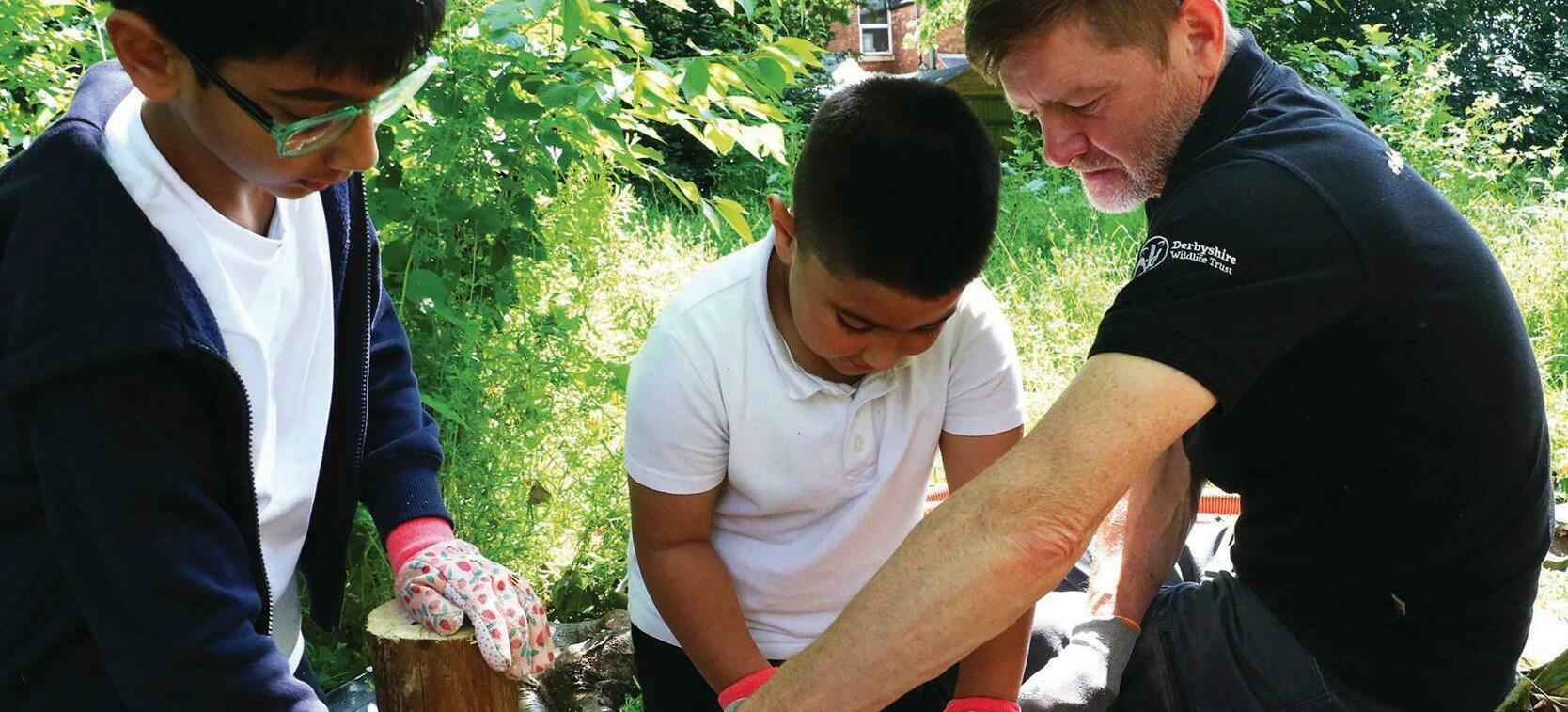
IT'S JUST AFTER 11AM ON THE NORMANTON Road in Derby. A man is striding across a parking lot, shouting at no one in particular, his words lost amid the urban hum of a weekday morning. Adam Slater, community organiser for Derbyshire Wildlife Trust, smiles as if he's heard it all before.
"You've got these two parks Arboretum Park and Normanton Park - and there were all these little pockets of green space in between that were often abused with fly-tipping and anti-social behaviour," he says. "It was sad, because this area doesn't have a lot of green space."
As part of The Wildlife Trusts' Nextdoor Nature project, which ran from 2022-2024 and aimed to reach people and communities that are largely excluded from "making decisions about nature", Adam was tasked with trying to connect local people to the city's wildlife.
This is not a tale of the miraculous conversion of a degraded habitat to one suddenly teeming with life. Instead, it recounts the first steps of a community's engagement with nature. The gains may not sound much compared to the global conservation success stories usually described in these pages, but in many ways, they are equally significant.
This part of Derby is poor, with a transient population of refugees and a very high percentage of people with ethnic minority backgrounds, mainly India and Pakistan. Studies have shown that children of a black or Asian background are half as likely to visit the countryside as white children, and that people from ethnic minority backgrounds have on average 11 times less access to green spaces. Poverty, language barriers, lack of transport and cultural issues are identified as the key reasons behind this exclusion.

This story is from the March 2025 edition of BBC Wildlife.
Subscribe to Magzter GOLD to access thousands of curated premium stories, and 10,000+ magazines and newspapers.
Already a subscriber? Sign In
MORE STORIES FROM BBC Wildlife
BBC Wildlife
"I was terrified the elephant would ram us"
African elephant in Kenya

2 mins
January 2026
BBC Wildlife
ALL YOU EVER NEEDED TO KNOW ABOUT THE Fennec fox
THE FENNEC FOX IS THE SMALLEST fox in the world, with a body length that can be as little as 24cm.
3 mins
January 2026
BBC Wildlife
INTO THE PLASTISPHERE
A unique synthetic ecosystem is evolving in our oceans – welcome to the plastisphere
7 mins
January 2026
BBC Wildlife
“More than half of all animal life exists in a parasitic relationship, and all life lives in symbiosis”
Our survival depends on species evolving to live together - but some relationships take dark turns
7 mins
January 2026
BBC Wildlife
Are animals able to dream?
SLEEP IS A MYSTERIOUS THING. FOR A long time, we weren't sure why we do it.
1 mins
January 2026
BBC Wildlife
Does a cuckoo know it's a cuckoo?
ABSURD LITTLE BIRDS ACROSS THE world lay their eggs in the nests of other species, leaving the hapless parents to raise a changeling at the expense of their own offspring.
2 mins
January 2026
BBC Wildlife
Orcas killing young sharks
Juvenile great whites are easy prey for orca pod
1 mins
January 2026
BBC Wildlife
Ocean goes on tour
Acclaimed film touring the UK, backed by live orchestra and choir
1 min
January 2026
BBC Wildlife
Feisty bats hunt like lions
Winged mammals use a 'hang and wait' strategy to take down large prey
1 mins
January 2026
BBC Wildlife
SNAP-CHAT
Richard Birchett on magical merlins, wily coyotes and charging deer
2 mins
January 2026
Listen
Translate
Change font size