
Go Unlimited with Magzter GOLD
Get unlimited access to 10,000+ magazines, newspapers and Premium stories for just
Try GOLD - Free
Failing to take root
BBC Wildlife
|January 2026
Vast amounts of money are spent on tree planting schemes, yet nature can do the job for free
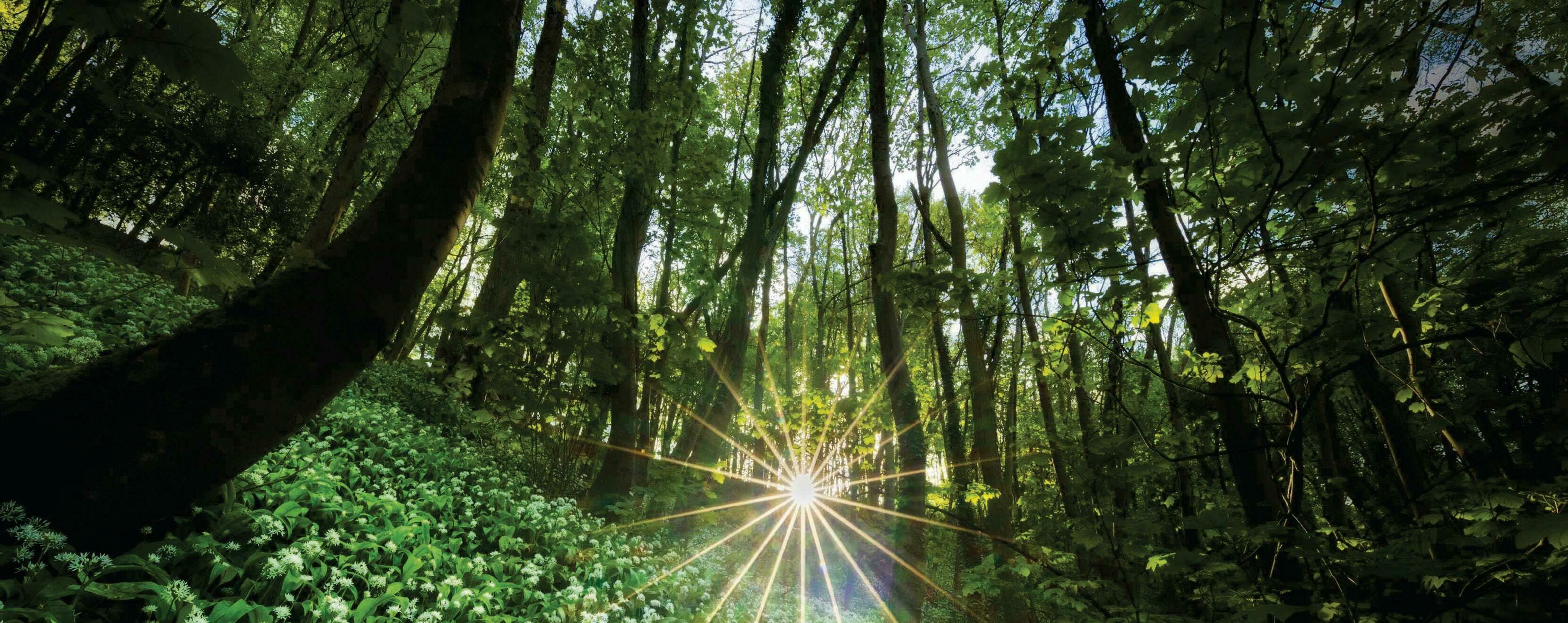
IN 1961, A FOUR-HECTARE FIELD ON THE southern edge of an ancient woodland called Monks Wood in Cambridgeshire produced its last crop of barley.
Having originally been cleared of trees during the Roman occupation, it was then abandoned to nature. In the intervening 60 years, that field has changed beyond recognition. Today, it's a mature, closed-canopy woodland with oak, maple and ash trees, as well as berry-bearing shrubs such as hawthorn and brambles.
Its "structural characteristics", according to a study published in the renowned science journal PLOS One in 2021, are "approaching those of neighbouring ancient woodlands". That's some recovery in a little over half-a-century - with no money spent and no human effort required.
Just a year before that study was published, the £1.5 billion upgrade of the A14 between Cambridge and Huntingdon was completed, with 850,000 trees planted as part of environmental enhancements that were meant to provide a biodiversity uplift of 11.5 per cent.
Over the course of the next year or so, somewhere between 50 and 70 per cent of those trees died and, despite two further replantings, the embankments of the new dual carriageway still appear today to be largely bare of anything living other than grass. Tens of thousands of plastic guards stand empty like corpses on a battlefield. National Highways, which was responsible for the scheme, said the high failure rate (which it would not confirm to BBC Wildlife) was down to drought. It said that 90 per cent of 160,000 trees and shrubs subsequently planted survived and that it had met its “performance target of achieving no net loss of biodiversity in the period 2020-25”. (It also declined to comment on whether it had achieved the 11.5 per cent biodiversity gain or not.) As of today, there is no reliable figure on how many trees, including those replanted, are still alive.


This story is from the January 2026 edition of BBC Wildlife.
Subscribe to Magzter GOLD to access thousands of curated premium stories, and 10,000+ magazines and newspapers.
Already a subscriber? Sign In
MORE STORIES FROM BBC Wildlife
BBC Wildlife
"I was terrified the elephant would ram us"
African elephant in Kenya

2 mins
January 2026
BBC Wildlife
ALL YOU EVER NEEDED TO KNOW ABOUT THE Fennec fox
THE FENNEC FOX IS THE SMALLEST fox in the world, with a body length that can be as little as 24cm.
3 mins
January 2026
BBC Wildlife
INTO THE PLASTISPHERE
A unique synthetic ecosystem is evolving in our oceans – welcome to the plastisphere
7 mins
January 2026
BBC Wildlife
“More than half of all animal life exists in a parasitic relationship, and all life lives in symbiosis”
Our survival depends on species evolving to live together - but some relationships take dark turns
7 mins
January 2026
BBC Wildlife
Are animals able to dream?
SLEEP IS A MYSTERIOUS THING. FOR A long time, we weren't sure why we do it.
1 mins
January 2026
BBC Wildlife
Does a cuckoo know it's a cuckoo?
ABSURD LITTLE BIRDS ACROSS THE world lay their eggs in the nests of other species, leaving the hapless parents to raise a changeling at the expense of their own offspring.
2 mins
January 2026
BBC Wildlife
Orcas killing young sharks
Juvenile great whites are easy prey for orca pod
1 mins
January 2026
BBC Wildlife
Ocean goes on tour
Acclaimed film touring the UK, backed by live orchestra and choir
1 min
January 2026
BBC Wildlife
Feisty bats hunt like lions
Winged mammals use a 'hang and wait' strategy to take down large prey
1 mins
January 2026
BBC Wildlife
SNAP-CHAT
Richard Birchett on magical merlins, wily coyotes and charging deer
2 mins
January 2026
Listen
Translate
Change font size