
Go Unlimited with Magzter GOLD
Get unlimited access to 10,000+ magazines, newspapers and Premium stories for just
CRUISE CONTROL
BBC Wildlife
|December 2023
As more people are drawn to experience the frozen frontiers, can tourism to the seventh continent be a good thing for nature?

I WAS HALFWAY THROUGH MY DINNER WHEN THE expedition leader announced that our ship was surrounded by a pod of killer whales. Rushing out onto the observation deck, I watched as velvet ribbons of black and white rippled through the frigid waters of the Antarctic Ocean in pursuit of a solitary fur seal, leading it on a deathly dance around the vessel where more orcas waited in ambush. It was a breathless scene that could have been plucked straight from an episode of Frozen Planet.
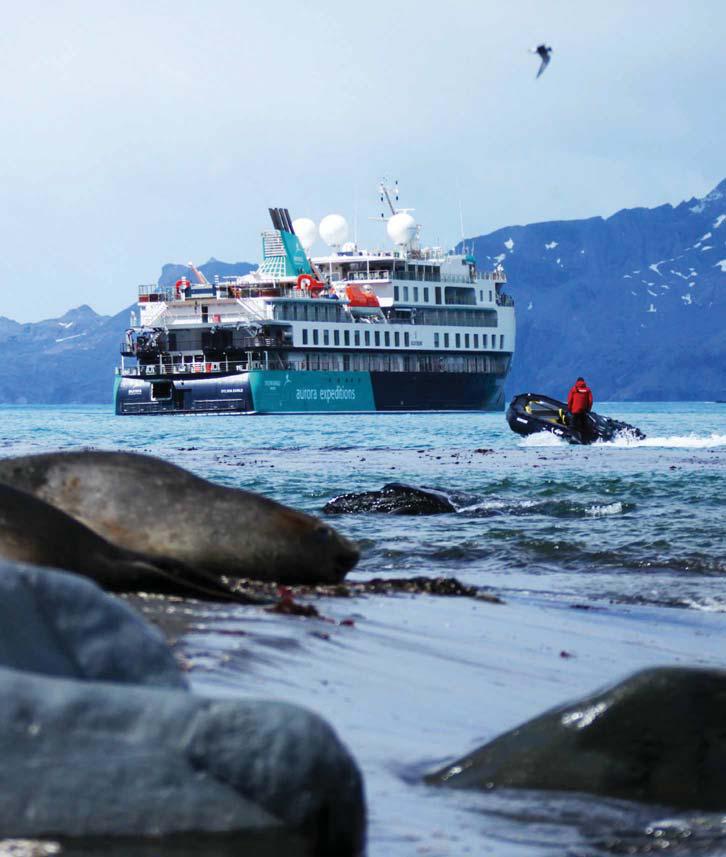
But I was sharing this moment not with a hardened BBC film crew but with CEOs, stockbrokers and a semi-retired schoolteacher, aboard the Sylvia Earle.
It’s a sign that cruise tourism in Antarctica is a booming business and that more people than ever are experiencing the pull of our planet’s final, frozen frontier. According to the International Association of Antarctica Tour Operators (IAATO), my companions and I were joined by more than 100,000 others on the ice during the 2022-23 season (October to March). It’s a significant increase from the highest previous figure of 75,000 during the 2019-2020 season, and it’s reignited the debate about the sustainability and ethics of these tourist expeditions in the world’s most fragile ecosystem. But while it’s important to emphasise the environmental impact of the industry, there’s a growing sense that tourism, if managed sustainably, can actually make a positive contribution to conservation in Antarctica and beyond.


This story is from the December 2023 edition of BBC Wildlife.
Subscribe to Magzter GOLD to access thousands of curated premium stories, and 10,000+ magazines and newspapers.
Already a subscriber? Sign In
MORE STORIES FROM BBC Wildlife
BBC Wildlife
"I was terrified the elephant would ram us"
African elephant in Kenya

2 mins
January 2026
BBC Wildlife
ALL YOU EVER NEEDED TO KNOW ABOUT THE Fennec fox
THE FENNEC FOX IS THE SMALLEST fox in the world, with a body length that can be as little as 24cm.
3 mins
January 2026
BBC Wildlife
INTO THE PLASTISPHERE
A unique synthetic ecosystem is evolving in our oceans – welcome to the plastisphere
7 mins
January 2026
BBC Wildlife
“More than half of all animal life exists in a parasitic relationship, and all life lives in symbiosis”
Our survival depends on species evolving to live together - but some relationships take dark turns
7 mins
January 2026
BBC Wildlife
Are animals able to dream?
SLEEP IS A MYSTERIOUS THING. FOR A long time, we weren't sure why we do it.
1 mins
January 2026
BBC Wildlife
Does a cuckoo know it's a cuckoo?
ABSURD LITTLE BIRDS ACROSS THE world lay their eggs in the nests of other species, leaving the hapless parents to raise a changeling at the expense of their own offspring.
2 mins
January 2026
BBC Wildlife
Orcas killing young sharks
Juvenile great whites are easy prey for orca pod
1 mins
January 2026
BBC Wildlife
Ocean goes on tour
Acclaimed film touring the UK, backed by live orchestra and choir
1 min
January 2026
BBC Wildlife
Feisty bats hunt like lions
Winged mammals use a 'hang and wait' strategy to take down large prey
1 mins
January 2026

BBC Wildlife
SNAP-CHAT
Richard Birchett on magical merlins, wily coyotes and charging deer
2 mins
January 2026
Translate
Change font size