Try GOLD - Free
Long road home
Down To Earth
|September 01, 2021
Uttarakhand is increasingly declaring its villages disasterprone. While many are fighting relocation, those who shift face conflicts with host villages over resources like water and grazing land. Is relocation the right way to mitigate disasters that are striking the Himalayan state with increasing ferocity?

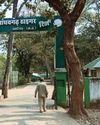
ON JULY 18, when the district administration of Chamoli moved the statue of Gaura Devi from Raini village to a safer place in the town of Joshimath, located 25 km downhill, it had in reality removed the symbol of a historic event that helped protect the sensitive ecology of upper Himalaya until recently. The legendary Gaura Devi in 1974 led the Chipko movement launched by the women of Raini and other villages across the Garhwal Himalayas to protect its forests from loggers and its steep mountain slopes from getting washed away by rains. Today we are fighting again but to leave Raini and be relocated to a safer place, says sarpanch Bhawan Rana.
Located at an altitude of about 3,000 m, just below the Nanda Devi glaciers, Raini is nestled on both sides of a deep gorge traversed by the Rishiganga river. In 2000, the year when Uttarakhand became a separate state, the government allowed a 13-MW run-of-the-river hydroelectric project to be built on the Rishiganga, right below Raini. By 2005, construction works on the dam and deforestation in the area were in full swing. Soon, houses developed cracks as the builders started blowing up the mountain just below the village. We have been demanding relocation since then. But no one paid heed until things got worse, Rana claims.


This story is from the September 01, 2021 edition of Down To Earth.
Subscribe to Magzter GOLD to access thousands of curated premium stories, and 10,000+ magazines and newspapers.
Already a subscriber? Sign In
MORE STORIES FROM Down To Earth

Down To Earth
THE GREAT PIVOT
China's moves to transition to clean energy offer critical lessons to India

4 mins
March 01, 2026
Down To Earth
COAL V CORRIDOR
A proposal to mine coal along a corridor that links two tiger reserves in central India is a step away from getting final clearance. The move could affect movement and genetic diversity of tiger populations in the region
8 mins
March 01, 2026

Down To Earth
India's challenging AI predicament
Hobbled by lack of innovation and AI skills in its crucial technology sector, India is focusing on a ruinous plan to host data centres
4 mins
March 01, 2026
Down To Earth
China to implement zero tariffs across Africa
CHINA ON February 14 announced that it will implement zero tariffs for imports from all the 53 African nations it has diplomatic relations with, starting from May 1.
1 min
March 01, 2026
Down To Earth
Poverty, sans the threshold
MEASUREMENT OF poverty is a fundamental exercise, needed to direct development programmes.
2 mins
March 01, 2026
Down To Earth
A bridge across forever
For two decades, a Chhattisgarh village remains stuck in a loop of building temporary river crossings to access markets and sell forest produce
4 mins
March 01, 2026
Down To Earth
Liveable cities need a new model
CRY FOR my Delhi. This is my city—my family records many generations who have lived here.
3 mins
March 01, 2026

Down To Earth
Real impacts of the changing seasons
This refers to the article \"1,500 days, and an alarm for new climate\" (1-15 December, 2025).
1 mins
March 01, 2026

Down To Earth
‘It’s a systematic effort by US to dismantle climate policy’
The US, the world's largest historical emitter of greenhouse gases, has overturned its “endangerment finding”, the legal foundation for regulating emissions under the Clean Air Act since 2009.
4 mins
March 01, 2026
Down To Earth
Amazon turned carbon source in 2023 drought
EXTREME DROUGHT and a prolonged heatwave in 2023 pushed parts of the Amazon rainforest from acting as a carbon sink to becoming a carbon source for three months, according to a February 13 study published in the journal AGU Advances of the American Geophysical Union.
1 min
March 01, 2026
Translate
Change font size