Try GOLD - Free
Casted Out
Down To Earth
|June 16, 2018
Discrimination against the Dalits is still pervasive in our society, and this is seriously marring the potential of the Mid Day Meal Scheme

HUNGER AND undernutrition have become endemic among children in India. At least 39 percent of the children are chronically undernourished, says the latest National Family Health Survey of 2015-16. The impact is severe among those who are impoverished and socially disadvantaged. Nutritional health of these children was precisely in the mind of policymakers when they launched the Mid Day Meal Scheme and enforced it under the National Food Security Act of 2013. The scheme envisages a system in which all children, regardless of caste, would sit together and eat the same food prepared by the same cook. It was hoped that such a system would engender feelings of brotherhood and break down caste barriers.
But it hasn’t. Lofty ideals and harsh realities often go hand in hand in this country, and this became evident during a recent telecast of Prime Minister Narendra Modi’s “Pariksha Par Charcha” speech at a government school in Himachal Pradesh’s Kullu district. During the speech, the school had made Dalit students sit away from their upper caste peers. Some students later wrote to the district commissioner alleging that such caste-based discriminations are routinely practised at the school, especially during midday meals. The principal and cook, both belonging to upper castes, are responsible for perpetuating this, they claimed.
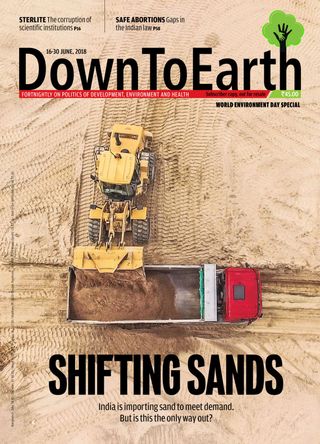

This story is from the June 16, 2018 edition of Down To Earth.
Subscribe to Magzter GOLD to access thousands of curated premium stories, and 10,000+ magazines and newspapers.
Already a subscriber? Sign In
MORE STORIES FROM Down To Earth

Down To Earth
THINK TWICE BEFORE FELLING SAL TREES
Many trees considered to be affected by sal borer in the 1990s are still alive today

1 mins
February 16, 2026

Down To Earth
EDGE OF SURVIVAL
Caste divides deny marginalised communities land, resources and essential aid, leaving them more vulnerable to climate disasters
6 mins
February 16, 2026

Down To Earth
A WISH LIST?
Union Budget for 2026-27 conveys the impression of a roll-call of intentions and ambitious proposals, with little detail on their formulation
6 mins
February 16, 2026
Down To Earth
Break down the gender wall
THE RULING National Democratic Alliance (NDA) government has been heavily invested in the goal to make India a developed economy by 2047.
2 mins
February 16, 2026

Down To Earth
MENSTRUAL HEALTH, NOW A FUNDAMENTAL RIGHT
In a landmark judgement, the Supreme Court has recognised menstrual health and hygiene as a fundamental right under Article 21 of the Constitution of India, which guarantees the right to life and dignity.
8 mins
February 16, 2026

Down To Earth
Of devolution and new disasters
The 16th Finance Commission pushes for changes in view of new fiscal and climatic conditions
11 mins
February 16, 2026
Down To Earth
Rising risks of plastics
NEGATIVE IMPACTS on human health due to emissions linked to the plastic lifecycle could double by 2040, according to a study published in The Lancet Planetary Health in January.
1 min
February 16, 2026
Down To Earth
GAP BETWEEN EPIDEMICS NARROWING
A watershed-based and landscape-level approach is needed to address forest degradation
2 mins
February 16, 2026

Down To Earth
WAITING TO STRIKE
Sal heartwood borer is considered the biggest threat to forestry in India, especially to the sal tree, where it lives and breeds.
11 mins
February 16, 2026

Down To Earth
A SPRING DELIGHT
Mustard flowers are not meant only for the eyes. Invite them to your plate once in a while
3 mins
February 16, 2026
Translate
Change font size