Try GOLD - Free
Bone Voyage
Down To Earth
|February 16, 2018
Russia joined the coloniser's club in 1741 when its Great Northern Expedition discovered Alaska. It remains the most grisly exploration in maritime history.

IN POPULAR imagination, colonialism is usually visualised and associated with the five western European seafaring nations—Britain, the Netherlands, France, Spain and Portugal. The others, Sweden, Norway and Denmark are footnotes in colonial history. Italy, Germany and the US too were colonisers, but they entered the game very late.
One country which is often overlooked in this regard is Russia, the world’s largest country by land area, stretching from the Baltic Sea to the Pacific Ocean. While reading Russian children’s books as a child, I used to often wonder: why is Russia so big? Then too, if it is one country, why are there so many ethnicities—from the Karelians near the Finnish border to the Chukchis near Alaska.
Island of the Blue Foxes answers some of these questions. Written by Stephen R Bown, the book is a riveting account of two expeditions undertaken by Vitus Jonassen Bering, a Dane employed by the Russian Empire, which was then ruled by Tsar Peter.
Peter’s reign was revolutionary for he changed a “barbaric backwater” Russia to a society on par with its western neighbours. During his dying days, Peter had become obsessed with another project—he wanted Russia to take a dive into colonial exploration. He also had a region in mind where this could be done—the Russian Far East.

This story is from the February 16, 2018 edition of Down To Earth.
Subscribe to Magzter GOLD to access thousands of curated premium stories, and 10,000+ magazines and newspapers.
Already a subscriber? Sign In
MORE STORIES FROM Down To Earth

Down To Earth
Bitter pill
THE WEB SERIES PHARMA EXPOSES HARSH TRUTHS OF THE PHARMACEUTICAL INDUSTRY, WHERE PROFIT OFTEN BECOMES MORE IMPORTANT THAN HUMAN HEALTH

3 mins
January 16, 2026
Down To Earth
CHAOS IN-DEFINITION
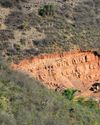
The Aravallis are perhaps India's most litigated hill range. More than 4,000 court cases have failed to arrest their destruction. The latest dispute concerns a narrow legal definition of this geological antiquity, much of which has been obliterated by mining and urban sprawl. While the Supreme Court has stayed its own judgement accepting that definition, it must see the underlying reality and help reconcile development and national security with conservation.
19 mins
January 16, 2026
Down To Earth
BITS: INDIA
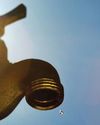
Indore has recorded 16 deaths and more than 1,600 hospitalisations between December 24 and January 6.
1 min
January 16, 2026
Down To Earth
GUARANTEE EXPIRES
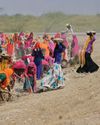
India's rural employment guarantee law is replaced with a centrally controlled, budget-capped scheme. Is this an attack on the right to work?
3 mins
January 16, 2026
Down To Earth
BLOOM OR BANE
Surge of vibrant pink water lilies in Kuttanad, Kerala, provides socio-economic benefits, but the plant's ecological impacts must be understood
4 mins
January 16, 2026
Down To Earth
INVISIBLE EMPLOYER
Field and academic evidence shows sharp falls in casual agricultural employment at places where groundwater access declines
3 mins
January 16, 2026

Down To Earth
Schemed for erasure
Does the VB-G RAMG Act address structural weaknesses long observed in MGNREGA's implementation?
10 mins
January 16, 2026

Down To Earth
School of change
An open school in Panagar, Madhya Pradesh, aims to protect children of tribal settlements from falling into the trap of addiction
2 mins
January 16, 2026

Down To Earth
PULSE OF RESILIENCE
As a climate-ready crop, cowpea shows potential for widespread use in India
3 mins
January 16, 2026
Down To Earth
BITS GLOBAL
Britain recorded its hottest and sunniest year ever in 2025, the country's meteorological office said on January 2.
1 min
January 16, 2026
Translate
Change font size