
Go Unlimited with Magzter GOLD
Get unlimited access to 10,000+ magazines, newspapers and Premium stories for just
Try GOLD - Free
Bonds To The Rescue?
Down To Earth
|April 01, 2018
Urban local bodies across India are floating bonds to raise money. This may render them unviable and make city living costly
-

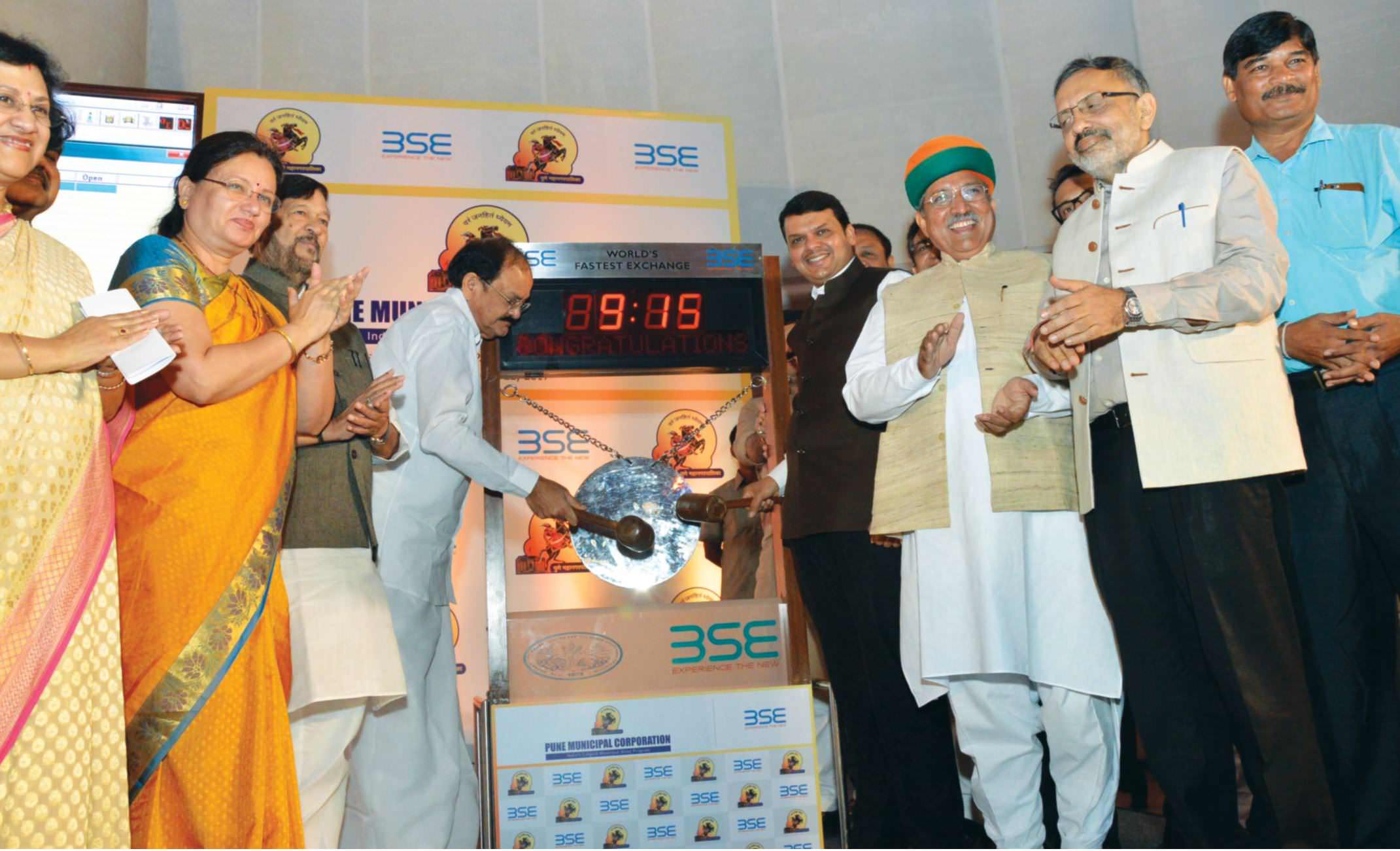
AFTER THE implementation of the Goods and Services Tax (GST), which has robbed the right of urban local bodies (ULBS) to levy and collect tolls, taxes and fees, ULBS are resorting to the system of floating municipal bonds. In May 2017, the Pune Municipal Corporation (pmc) raised ̀ 200 crore through bonds which it plans to use to improve water supply infrastructure of the city. The bond, notified in the Bombay Stock Exchange, assures returns at 7.58 percent a year to investors and will mature in 10 years.
After Pune’s success, cash-strapped New Delhi Municipal Council, Vadodara Municipal Corporation, Surat Municipal Corporation and Nashik Municipal Corporation now plan to float bonds to finance their crumbling civic infrastructure.
“Our town and cities are growing by leaps and bounds. Providing essential services like drinking water and motorable roads to these ever-expanding populations require huge funds,” says Kunal Mandavali, deputy chief accountant (finance and compliance to bond), pmc. The 2011 report by the High Powered Expert Committee of the Union Ministry of Urban Development (now renamed Ministry of Housing and Urban Affairs), shows that improving the country’s urban infrastructure requires an investment of `39 lakh crore. The latest 2017 report of think-tank McKinsey Global Institute puts the figure at an astounding `53 lakh crore. “In the absence of adequate funding from the Central or state governments, municipal bond is one of the most potent methods of mobilising money,” Mandavali adds.

This story is from the April 01, 2018 edition of Down To Earth.
Subscribe to Magzter GOLD to access thousands of curated premium stories, and 10,000+ magazines and newspapers.
Already a subscriber? Sign In
MORE STORIES FROM Down To Earth

Down To Earth
THINK TWICE BEFORE FELLING SAL TREES
Many trees considered to be affected by sal borer in the 1990s are still alive today

1 mins
February 16, 2026

Down To Earth
EDGE OF SURVIVAL
Caste divides deny marginalised communities land, resources and essential aid, leaving them more vulnerable to climate disasters
6 mins
February 16, 2026

Down To Earth
A WISH LIST?
Union Budget for 2026-27 conveys the impression of a roll-call of intentions and ambitious proposals, with little detail on their formulation
6 mins
February 16, 2026
Down To Earth
Break down the gender wall
THE RULING National Democratic Alliance (NDA) government has been heavily invested in the goal to make India a developed economy by 2047.
2 mins
February 16, 2026

Down To Earth
MENSTRUAL HEALTH, NOW A FUNDAMENTAL RIGHT
In a landmark judgement, the Supreme Court has recognised menstrual health and hygiene as a fundamental right under Article 21 of the Constitution of India, which guarantees the right to life and dignity.
8 mins
February 16, 2026

Down To Earth
Of devolution and new disasters
The 16th Finance Commission pushes for changes in view of new fiscal and climatic conditions
11 mins
February 16, 2026
Down To Earth
Rising risks of plastics
NEGATIVE IMPACTS on human health due to emissions linked to the plastic lifecycle could double by 2040, according to a study published in The Lancet Planetary Health in January.
1 min
February 16, 2026
Down To Earth
GAP BETWEEN EPIDEMICS NARROWING
A watershed-based and landscape-level approach is needed to address forest degradation
2 mins
February 16, 2026

Down To Earth
WAITING TO STRIKE
Sal heartwood borer is considered the biggest threat to forestry in India, especially to the sal tree, where it lives and breeds.
11 mins
February 16, 2026

Down To Earth
A SPRING DELIGHT
Mustard flowers are not meant only for the eyes. Invite them to your plate once in a while
3 mins
February 16, 2026
Translate
Change font size