Try GOLD - Free
Africa's Historic Pivot
Down To Earth
|June 16, 2019
IF RWANDA IS WILLING TO RISK PREFERENTIAL ACCESS TO THE US MARKET IN ORDER TO DEVELOP ITS DOMESTIC GARMENT INDUSTRY, THEN IT MUST BE CONFIDENT THAT IT WILL FIND ALTERNATIVE MARKETS FOR ITS EXPORTS

THE YEAR 2018 was marked by tremendous economic and political turbulence around the world. And yet, for future historians, it may well be the year when Africa started to claim its intellectual and economic-policy independence.
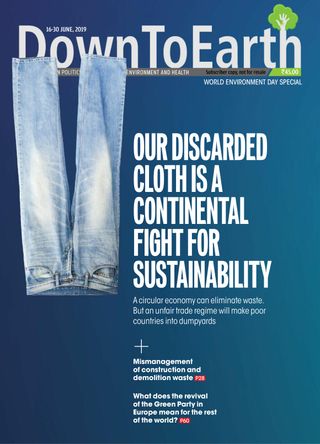
The unlikely trigger for what could turn out to be a continent-wide strategic shift was Rwanda’s decision to increase tariffs on imported secondhand clothes and footwear in support of its local garment industry. This provoked an immediate hostile response from the US, which suspended duty-free status for Rwandan textile exports under the African Growth and Opportunity Act (AGOA), America’s flagship trade legislation for the continent.
For a small, landlocked African country that relies heavily on trade, this was a big deal. But the fact that Rwanda held its ground confirmed that times have changed. If Rwanda is willing to risk preferential access to the US market in order to develop its domestic garment industry, then it must be confident that it will find alternative markets for its exports.
Meanwhile, other African countries have also adopted a more independent attitude vis-à-vis the major trading powers. African governments have increasingly been taking a stand on a wide range of potentially controversial issues, including trade policy in East Africa, land redistribution in Southern Africa, and macroeconomic and debt-management policies in North Africa.
African governments’ motive for stepping up now is not only economic; it is also about dignity, intellectual freedom, and a willingness to risk charting one’s own course. And, more broadly, African leaders recognize that the ongoing transformation of the global economy means that no country will have enough power to impose its strategic preferences on others, even when they are much smaller, as in the case of Rwanda and the US.

This story is from the June 16, 2019 edition of Down To Earth.
Subscribe to Magzter GOLD to access thousands of curated premium stories, and 10,000+ magazines and newspapers.
Already a subscriber? Sign In
MORE STORIES FROM Down To Earth
Down To Earth
Popular distrust
THE WORLD seems to be going through a period of stasis despite facing an unfathomable polycrisis.

2 mins
February 01, 2026
Down To Earth
CONSERVE OR PERISH
Periyar Tiger Reserve has rewritten Indian conservation by turning poachers into protectors and conflict into coexistence
5 mins
February 01, 2026

Down To Earth
'Rivers need to run free'
From Tibet to West Bengal, the Brahmaputra is the pulse of communities and ecosystems along its course. But what are the risks the river faces through human interventions, particularly dams, discusses journalist, author and filmmaker SANJOY HAZARIKA in his new book, River Traveller.
4 mins
February 01, 2026
Down To Earth
India is facing up to its innovation lag
There are signs now that India is acknowledging the superior strides made by China in a frontier technology like Al
4 mins
February 01, 2026

Down To Earth
Competing concerns
What are the repercussions of the EU-Mercosur pact that have made European farmers protest against the free trade agreement?
4 mins
February 01, 2026

Down To Earth
From fryer to flight
Sustainable fuel made from used cooking oil can play a pivotal role in helping India achieve its aviation emission reduction goals. Measures to collect this oil must be revamped
4 mins
February 01, 2026

Down To Earth
ACCESS OPEN
An amendment to India's nodal forest conservation law opens up forests across India to commercial exploitation by the paper industry
6 mins
February 01, 2026
Down To Earth
DRINK FROM TAP CAN BE A REALITY
As cities across India struggle to supply safe piped water, Odisha offers a success story
2 mins
February 01, 2026
Down To Earth
GREAT DRYING
The Earth is hotter than at any point in the past 100,000 years, with 2023-25 becoming the warmest three-year period on record and also breaching the 1.5°C threshold for the first time. One fallout is dwindling freshwater.
22 mins
February 01, 2026

Down To Earth
Green redemption
Restoration of grasslands of Kerala's Pampadum Shola National Park, once dominated by invasive Australian wattles, see a return of streams and native species
1 mins
February 01, 2026
Translate
Change font size