Try GOLD - Free
ASTROPHOTOGRAPHY CAPTURE - Morning conjunctions
BBC Sky at Night Magazine
|April 2022
A month of planetary encounters offers opportunities to test your astro imaging skills

There are a number of interesting morning meetings of planets in April, ending with a spectacular conjunction of Venus and Jupiter. Both planets will be bright, but their altitudes and positions are not ideal at this time of year due to the shallow angle of the morning ecliptic with the eastern horizon. As such, you'll need good photographic skills (including adaptability, the most important skill of all) to capture this and the other conjunctions that can be seen throughout the month.
On 3 April, a 6%-illuminated waxing crescent Moon sits close to Uranus, which is always close to the naked-eye threshold from a dark-sky location. On the evening of 3 April, Uranus will appear 1.10 from the Moon's centre. The difference in brightness between the two will make this conjunction hard to capture well: if you set an exposure for the Moon's crescent then Uranus won't show, and if you set an exposure for Uranus you will overexpose the Moon.
A tricky meeting between Saturn and Mars occurs on the morning of 5 April, with both planets rising just 80 minutes before the Sun. They will appear separated by 19 arcminutes and be of almost the same brightness. You'll need to be lucky with the weather and figure out how best to catch them in the brightening twilight of dawn.
The morning planet line-up becomes impressive towards the end of April; recording the waning crescent Moon's journey as it visits each planet will be a good test of skills. But its low altitude means it will remain challenging to catch. The same low altitude and brightening sky will cause problems for the Venus -Jupiter conjunction at the end of April into May.

This story is from the April 2022 edition of BBC Sky at Night Magazine.
Subscribe to Magzter GOLD to access thousands of curated premium stories, and 10,000+ magazines and newspapers.
Already a subscriber? Sign In
MORE STORIES FROM BBC Sky at Night Magazine
BBC Sky at Night Magazine
The Giant Leap: Why Space is the Next Frontier in the Evolution of Life
“Earth is the cradle of humanity, but one cannot live in the cradle forever,” wrote Konstantin Tsiolkovsky in 1911.

1 mins
February 2026
BBC Sky at Night Magazine
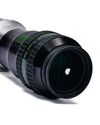
Tele Vue Nagler Type-7 series eyepieces
These premium optics were inspired by Apollo - and deliver a giant leap to your views
4 mins
February 2026
BBC Sky at Night Magazine
Once Upon a Time in Space
While the Space Race of the Cold War years was ultimately a geopolitical contest between the USA and the Soviet Union, the rivalry sparked rapid innovation and inspired multiple generations to look skyward.
1 mins
February 2026
BBC Sky at Night Magazine
The Multiverse: When One Universe Isn't Enough
The concept of a 'multiverse' – the idea that our Universe may be just one of many – is widespread in science fiction and a common thread of online discussions.
1 mins
February 2026
BBC Sky at Night Magazine
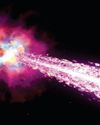
Q&A WITH A GAMMA RAY SPECIALIST
In 2025, astronomers detected a blast from space that lasted seven hours. Now they're uncovering the strange processes behind the exceptional outburst
3 mins
February 2026
BBC Sky at Night Magazine
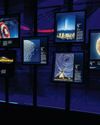
Astronomy Photographer of the Year
The world-leading astrophotography competition returns. Could your image take the top prize of £10,000?
2 mins
February 2026
BBC Sky at Night Magazine
MOONWATCH
February's top lunar feature to observe
2 mins
February 2026
BBC Sky at Night Magazine
NOVAStar Scarlet A62Q 62mm f/8.4 quadruplet achromatic refractor
Well-built and capable, this beginner scope punches well above its bargain price
4 mins
February 2026
BBC Sky at Night Magazine
STAR OF THE MONTH
Rasalas, Leo the Lion's metal-rich crown
1 min
February 2026
BBC Sky at Night Magazine
Comet 24P/Schaumasse
Having reached perihelion on 8 January, comet 24P/ Schaumasse is now fading. Starting the month at a small-telescope-friendly mag. +10.5, it dims throughout February to below 12th magnitude.
1 min
February 2026
Translate
Change font size