Try GOLD - Free
London Tube: Does Its Air Harm Your Health?
BBC Science Focus
|March 2022
The Mayor of London hopes that 80 per cent of trips in the city will be made on foot, bike or public transport by 2041. But how polluted is the Underground's air?

On any given weekday, the London Underground can see up to five million passengers hopping on and off. Its 11 lines serve 272 stations, and at peak times there can be more than 500 trains hurtling around beneath the streets of London. As it's been in constant use since the 19th Century, the London Underground has remained largely the same, and hasn't been updated or researched as much as other forms of transport.
The pandemic did provide Transport for London (TFL), which manages the London Underground, the opportunity to make some improvements. Ventilation systems were assessed and, according to the Mayor's Transport Strategy Update in 2021, the London Underground ventilation infrastructure is typically designed in excess of statutory minimum requirements with an adequate provision of fresh air. But how fresh is the air you're breathing on the Tube?
The air, even before it gets to the Underground, isn't perfectly clean,” explains Dr David Green, who leads the aerosol science team at Imperial College London and is a member of the UK's Committee on the Medical Effects of Air Pollution (COMEAP). Green is also part of a group commissioned by TfL to regularly assess the COVID-19 risk on the Underground.
The urban background air already has a low level a of particulate matter, but on top of that you have all these extra emissions [coming from the Tube),” he adds.
These include particles that come from the carriage moving along the rails, the brake blocks rubbing on the wheels, and the electrical connection between the collector plate and the live rail. There are also particles that come from Tube passengers, human and otherwise. Hair and skin cells, plastic fibres from clothing, and debris from the creatures that call the Underground their home all contribute to the air quality.


This story is from the March 2022 edition of BBC Science Focus.
Subscribe to Magzter GOLD to access thousands of curated premium stories, and 10,000+ magazines and newspapers.
Already a subscriber? Sign In
MORE STORIES FROM BBC Science Focus
BBC Science Focus
HEALTH: Eating oats could lower your cholesterol in just two days
The health benefits of a two-day porridge diet lasted for weeks afterwards

1 mins
April 2026

BBC Science Focus
Most people are too sure they can identify fake human faces
Even 'super recognisers' struggle with the challenge. Can you do better?
1 min
April 2026

BBC Science Focus
WHAT'S THE WORST THING YOU CAN DO FOR THE PLANET ONLINE?
Human beings can barely move a muscle without some kind of deleterious effect on the environment around us.
2 mins
April 2026
BBC Science Focus
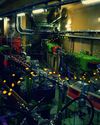
A bug in the system
The complex arrangement of equipment you see here is part of a particle accelerator.
1 min
April 2026
BBC Science Focus
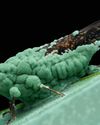
Snug as a bug in a rug
At first glance, you might feel envious of this little leafhopper, swaddled beneath the folds of what appears to be a luxurious fur blanket.
1 min
April 2026

BBC Science Focus
WHY DO WE ROOT FOR THE VILLAIN IN MOVIES?
Whether it's Darth Vader or Cruella de Vil, we all have a favourite movie villain.
1 mins
April 2026
BBC Science Focus
A TURN TO DISPERSE
Why a fart walk after dinner does more than release your gas
3 mins
April 2026

BBC Science Focus
Hatching a nebula
Welcome to the Egg Nebula, an enigmatic structure formed by ejected stardust in the Cygnus constellation around 1,000 light-years from Earth.
1 min
April 2026

BBC Science Focus
7 TIMES AI GOT IT SPECTACULARLY WRONG
For the past four years, AI has been reshaping how we work and live. But its failures are proving just as transformative as its triumphs
8 mins
April 2026
BBC Science Focus
CHARLES ADCOCK, VIA EMAIL: COULD DARK MATTER BE ALL AROUND PLANET EARTH BUT UNDETECTABLE?
Astronomers have gathered overwhelming evidence that 80 per cent of all matter in the Universe is invisible.
1 min
April 2026
Translate
Change font size