Try GOLD - Free
Meet Your Second Brain
BBC Focus - Science & Technology
|Christmas 2016
Decision-making, mood, disease… scientists are discovering that the network of neurons in our gut is involved in a lot more than just digestion

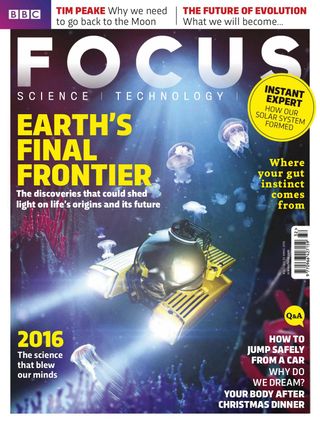
You’re facing a big decision – whether that’s to go into a business partnership with a friend, say, or put money into a promising new idea. It’s a tough call, as there are very few hard facts to go on. So it’s time to use your second brain. Don’t worry, you’ve probably used your second brain countless times before; it’s just that when you did, you more likely referred to it as ‘gut instinct’.
New research is showing that this age-old phrase is surprisingly accurate. We really do have a second brain that influences our judgment, and much else besides. Known as the Enteric Nervous System (ENS) – enteric meaning ‘to do with intestines’ – it’s an extensive network of brain-like neurons and neurotransmitters wrapped in and around our gut.
Most of the time, we’re unaware of its existence, as its prime function is what one would expect: managing digestion. Yet the presence of all that brain-like complexity is no coincidence. The ENS is in constant communication with the brain in our skull via the body’s own information superhighway – the vagus nerve. And it’s now becoming clear that all those signals flowing back and forth can influence our decisions, mood and general well-being.
“Your gut has capabilities that surpass all your other organs, and even rival your brain,” says ENS specialist Dr Emeran Mayer of the University of California, Los Angeles, who is author of a new account of the science of the ENS, The Mind-Gut Connection. “This second brain is made up of 50-100 million nerve cells, as many as are contained in your spinal cord.”

This story is from the Christmas 2016 edition of BBC Focus - Science & Technology.
Subscribe to Magzter GOLD to access thousands of curated premium stories, and 10,000+ magazines and newspapers.
Already a subscriber? Sign In
MORE STORIES FROM BBC Focus - Science & Technology

BBC Science Focus
DOES MY DOG HAVE ADHD?
Officially, Attention-Deficit Hyperactivity Disorder (ADHD) is a human condition. People are diagnosed with it. Dogs are not. Yet many of its core features, including hyperactivity, impulsivity and distractibility, can be found in dogs.

1 min
March 2026
BBC Science Focus
DOES MY BRAIN LIVE A LITTLE IN THE PAST?
Yes, your brain does live a little in the past. It can't help it. The information it receives via your senses is always a little out of date. Whether it's light entering the retinas in your eyes, or sounds vibrating the hairs in your ears, it not only takes time for the data to arrive, but your brain then has to process it.
2 mins
March 2026

BBC Science Focus
ASTRONOMY FOR BEGINNERS
RETURN OF THE EVENING STAR (VENUS)
1 mins
March 2026

BBC Science Focus
CAN YOU STOP YOUR SENSE OF TASTE DULLING AS YOU AGE?
Sometimes I hear people say that food just doesn't taste the same as they get older. It's tempting to blame this on age, but there are other factors at play, too.
1 mins
March 2026

BBC Science Focus
MICROBIOMES OF THE SUPERAGERS
BY STUDYING THE INCREASING NUMBER OF PEOPLE WHO ARE LIVING BEYOND THEIR 100TH BIRTHDAYS, SCIENTISTS ARE DISCOVERING THAT THE SECRET TO REACHING A RIPE OLD AGE IN RUDE HEALTH MIGHT LIE IN OUR GUTS
8 mins
March 2026

BBC Science Focus
HOW BIG WERE MEDIEVAL WAR HORSES?
You might picture knights charging into battle on towering steeds, but medieval horses were typically no bigger than modern-day ponies.
1 min
March 2026

BBC Science Focus
FORCES OF HABIT
Could new research on setting up healthy habits resuscitate those stuttering New Year resolutions?
3 mins
March 2026

BBC Science Focus
5 DANGERS HIDING IN YOUR PROCESSED FOOD
We all know that ultra-processed foods are bad for us, but what ingredients should we particularly try to avoid? And what are they doing to our bodies?
9 mins
March 2026
BBC Science Focus
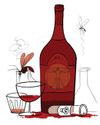
Mosquitoes are becoming thirstier for human blood
Habitat loss may be pushing mosquitoes towards human hosts with deadly consequences
1 mins
March 2026

BBC Science Focus
HOW CAN I GET OVER MY EX?
Relationship breakups can be brutal, just look at the popularity of songs like 'Someone Like You' by Adele, or all the covers of 'Cry Me a River' by Julie London.
1 mins
March 2026
Translate
Change font size