Try GOLD - Free
A Revolution In The Making
BBC Focus - Science & Technology
|August 2021
Scientists will soon have the tools to rewrite the book of life, and in doing so, edit out sections that cause disease, piece by piece. But is the technology safe and will all of us get the benefits, or will it be the preserve of those who can afford it?

Scientists are a cautious bunch, fond of a caveat even when describing their own research. “Our favourite expressions are ‘Yes, but…’ and ‘On the other hand...’ and ‘It remains unclear...’” says gene editor Dr Fyodor Urnov. “So please add all of that to what I’m about to say. If CRISPR realises 10 per cent of what we practitioners of gene editing dream it to be able to do, it will rival the greatest advances in the history of biomedicine as a technology to impact public health.”
Urnov is talking via a crackly Zoom link from his office at the Innovative Genomics Institute (IGI) in Berkeley, California, which is at the forefront of what may prove to be the defining scientific breakthrough of the 21st Century.
CRISPR is a genome editing technology that allows scientists to cut DNA with incredible precision and insert or delete DNA to correct unwanted mutations. To oversimplify the technology, it’s the power to edit the building blocks of life, just like text on a computer screen. Not only could it enable scientists to switch off genes that lead to a broad spectrum of disease, but it will unshackle all of us from the genetics we’re born with.
“The knowledge gained is amazing and it’s just really accelerated basic research. That in itself is already transformative,” says Dr Robin LovellBadge, from the Crick Institute. “And the notion that we can actually treat people with genetic diseases in a way that was never possible before is mind boggling.”
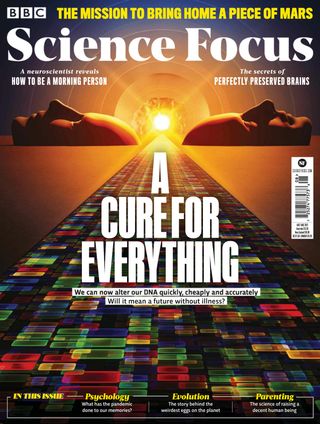

This story is from the August 2021 edition of BBC Focus - Science & Technology.
Subscribe to Magzter GOLD to access thousands of curated premium stories, and 10,000+ magazines and newspapers.
Already a subscriber? Sign In
MORE STORIES FROM BBC Focus - Science & Technology

BBC Science Focus
DOES MY DOG HAVE ADHD?
Officially, Attention-Deficit Hyperactivity Disorder (ADHD) is a human condition. People are diagnosed with it. Dogs are not. Yet many of its core features, including hyperactivity, impulsivity and distractibility, can be found in dogs.

1 min
March 2026

BBC Science Focus
DOES MY BRAIN LIVE A LITTLE IN THE PAST?
Yes, your brain does live a little in the past. It can't help it. The information it receives via your senses is always a little out of date. Whether it's light entering the retinas in your eyes, or sounds vibrating the hairs in your ears, it not only takes time for the data to arrive, but your brain then has to process it.
2 mins
March 2026

BBC Science Focus
ASTRONOMY FOR BEGINNERS
RETURN OF THE EVENING STAR (VENUS)
1 mins
March 2026

BBC Science Focus
CAN YOU STOP YOUR SENSE OF TASTE DULLING AS YOU AGE?
Sometimes I hear people say that food just doesn't taste the same as they get older. It's tempting to blame this on age, but there are other factors at play, too.
1 mins
March 2026
BBC Science Focus
MICROBIOMES OF THE SUPERAGERS
BY STUDYING THE INCREASING NUMBER OF PEOPLE WHO ARE LIVING BEYOND THEIR 100TH BIRTHDAYS, SCIENTISTS ARE DISCOVERING THAT THE SECRET TO REACHING A RIPE OLD AGE IN RUDE HEALTH MIGHT LIE IN OUR GUTS
8 mins
March 2026

BBC Science Focus
HOW BIG WERE MEDIEVAL WAR HORSES?
You might picture knights charging into battle on towering steeds, but medieval horses were typically no bigger than modern-day ponies.
1 min
March 2026
BBC Science Focus
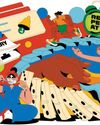
FORCES OF HABIT
Could new research on setting up healthy habits resuscitate those stuttering New Year resolutions?
3 mins
March 2026

BBC Science Focus
5 DANGERS HIDING IN YOUR PROCESSED FOOD
We all know that ultra-processed foods are bad for us, but what ingredients should we particularly try to avoid? And what are they doing to our bodies?
9 mins
March 2026
BBC Science Focus
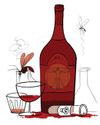
Mosquitoes are becoming thirstier for human blood
Habitat loss may be pushing mosquitoes towards human hosts with deadly consequences
1 mins
March 2026

BBC Science Focus
HOW CAN I GET OVER MY EX?
Relationship breakups can be brutal, just look at the popularity of songs like 'Someone Like You' by Adele, or all the covers of 'Cry Me a River' by Julie London.
1 mins
March 2026
Translate
Change font size