Try GOLD - Free
‘It's Always Been About Exclusion'
The Atlantic
|May 2021
America is a diverse nation of immigrants—but it was not intended to be, and its historical biases continue to haunt the present.

When David Dorado Romo was a boy growing up in El Paso, Texas, his great-aunt Adela told him about the day the U.S. Border Patrol melted her favorite shoes. Romo’s aunt was Mexican and had a visa that allowed her to commute into South Texas for her job as a maid. Every week she had to report to a Border Patrol station, in accordance with a program that ran from 1917 into the 1930s requiring most Mexican immigrants to bathe in government offices before entering the United States. She would dress up in her nicest clothing, because those who looked dirty or were thought to have lice were bathed in a mixture of kerosene and vinegar. Years later, when Romo visited the National Archives outside Washington, D.C., he found photos and records of gas chambers where the belongings of the Mexican workers had been disinfected with the chemical Zyklon B, as well as a large steam dryer of the sort that had melted his aunt’s shoes. He discovered that a German scientist had taken note of the procedures being carried out at the American border and advocated for them to be implemented in Nazi concentration camps. Eventually, the Nazis increased the potency of Zyklon B in their gas chambers, and began using it on human beings.
Romo also learned that just as the bathing and gasdousing program was winding down, the American government began using a different dangerous chemical to delouse Mexican immigrants: From the 1930s through the 1960s, border agents sprayed DDT onto the faces of more than 3 million guest workers as they crossed the southern border.
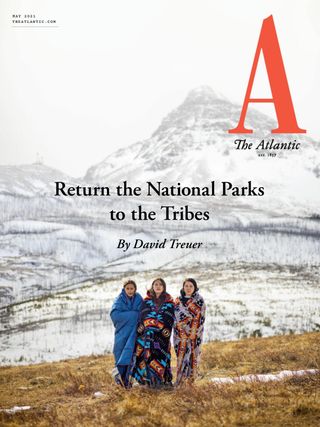

This story is from the May 2021 edition of The Atlantic.
Subscribe to Magzter GOLD to access thousands of curated premium stories, and 10,000+ magazines and newspapers.
Already a subscriber? Sign In
MORE STORIES FROM The Atlantic
The Atlantic
You Had to Be There
An emerging field of history asks if we can ever really understand how our forebears experienced love, anger, fear, and sorrow.

23 mins
January 2026

The Atlantic
By the Horns
The week before the biggest bullfight of her career, in Cádiz, Spain, this past July, 24-year-old Miriam Cabas posted a carefully produced video on Instagram.
1 mins
January 2026

The Atlantic
The New German War Machine
After World War II, Germany embraced pacifism as a form of atonement. Now the country is arming itself again.
18 mins
January 2026
The Atlantic
The Eloquence
The prime minister was watching a disaster movie when we found him.
4 mins
January 2026

The Atlantic
What's for Dinner, Mom?
The women who want to change the way America eats
12 mins
January 2026

The Atlantic
How Terror Works
A 1947 German novel explores the sometimes corrosive, sometimes energizing nature of fear.
8 mins
January 2026

The Atlantic
Yesterday's Idea of a Modern Man
Sam Shepard, a self-made cowboy, was also a poet of masculine angst.
7 mins
January 2026

The Atlantic
ACCOMMODATION NATION
America's colleges have an extra-time-on-tests problem.
11 mins
January 2026

The Atlantic
Respect the Drummer
A new history of rock, told through its overlooked heroes
5 mins
January 2026

The Atlantic
THE MOST POWERFUL MAN IN SCIENCE
WHY IS ROBERT F. KENNEDY JR. SO CONVINCED HE'S RIGHT?
42 mins
January 2026
Translate
Change font size