Try GOLD - Free
How Ice Went Rogue
The Atlantic
|September 2018
A long-running inferiority complex, vast statutory power, a chilling new directive from the top—inside America’s unfolding immigration tragedy.

Settling into a sense of safety is hard when your life’s catalog of memories teaches you the opposite lesson. Imagine: You fled from a government militia intent on murdering you; swam across a river with the uncertain hope of sanctuary on the far bank; had the dawning realization that you could never return to your village, because it had been torched; and heard pervasive rumors of former neighbors being raped and enslaved. Imagine that, following all this, you then found yourself in New York City, with travel documents that were unreliable at best.
This is the shared narrative of thousands of emigrants from the West African nation of Mauritania. The country is ruled by Arabs, but these refugees were members of a black sub population that speaks its own languages. In 1989, in a fit of nationalism, the Mauritanian government came to consider these differences capital offenses. It arrested, tortured, and violently expelled many black citizens.
The country forcibly displaced more than 70,000 of them and rescinded their citizen ship. Those who remained behind fared no better. Approximately 43,000 black Mauritanians are now enslaved— by percentage, one of the largest enslaved populations in the world.
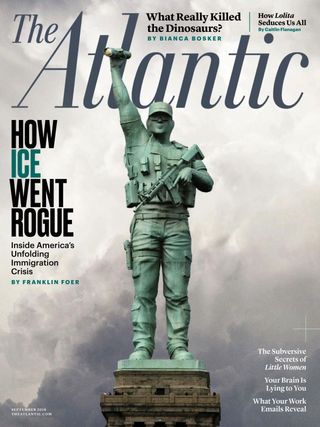

This story is from the September 2018 edition of The Atlantic.
Subscribe to Magzter GOLD to access thousands of curated premium stories, and 10,000+ magazines and newspapers.
Already a subscriber? Sign In
MORE STORIES FROM The Atlantic
The Atlantic
You Had to Be There
An emerging field of history asks if we can ever really understand how our forebears experienced love, anger, fear, and sorrow.

23 mins
January 2026

The Atlantic
By the Horns
The week before the biggest bullfight of her career, in Cádiz, Spain, this past July, 24-year-old Miriam Cabas posted a carefully produced video on Instagram.
1 mins
January 2026

The Atlantic
The New German War Machine
After World War II, Germany embraced pacifism as a form of atonement. Now the country is arming itself again.
18 mins
January 2026
The Atlantic
The Eloquence
The prime minister was watching a disaster movie when we found him.
4 mins
January 2026

The Atlantic
What's for Dinner, Mom?
The women who want to change the way America eats
12 mins
January 2026

The Atlantic
How Terror Works
A 1947 German novel explores the sometimes corrosive, sometimes energizing nature of fear.
8 mins
January 2026

The Atlantic
Yesterday's Idea of a Modern Man
Sam Shepard, a self-made cowboy, was also a poet of masculine angst.
7 mins
January 2026

The Atlantic
ACCOMMODATION NATION
America's colleges have an extra-time-on-tests problem.
11 mins
January 2026

The Atlantic
Respect the Drummer
A new history of rock, told through its overlooked heroes
5 mins
January 2026

The Atlantic
THE MOST POWERFUL MAN IN SCIENCE
WHY IS ROBERT F. KENNEDY JR. SO CONVINCED HE'S RIGHT?
42 mins
January 2026
Translate
Change font size