
Go Unlimited with Magzter GOLD
Get unlimited access to 10,000+ magazines, newspapers and Premium stories for just
Try GOLD - Free
Indian Defence Needs Lean Mean Fighting Machine
Geopolitics
|April 2017
Some time ago, the Prime Minister expressed the view that our armed forces should be driven by technology and not by an increase in numbers. LT GEN VINOD BHATIA points out where and how the numbers could be reduced to make our forces lean and mean.

While addressing the Combined Commanders Conference in December 2015 onboard INS Vikramaditya, broad areas for military reforms to include manpower rationalization, defence planning, restructuring higher defence organisation, joint warfare, and defence procurement. His directions challenged the established structures, systems and organisations of India’s military and the mindset of senior military leaders. India is probably one of the two mega nations in the world which is adding to its military might by resorting to manpower accretions. The other nation being the US where the Trump administration has approved a 70,000 or 11 per cent accretion to the army and marines indicating a shift from the way they plan to meet future security challenges. On the other hand, post the September 4, 2015 military parade where China demonstrated its military might, President Xi Jinping surprised the PLA by declaring cuts of 300,000 troops.
It is an established fact that nations always prepare and fight the last war. To assume that the Armed Forces are not prepared to combat future security challenges will be incorrect. However, the concepts, doctrines, capabilities and capacities required may not be adequate. The resistance to structural and systematic changes remains a major weakness. The armed forces are mandated to ensure the territorial integrity of our nation, which also implies securing our borders, 3488 km of the Line of Actual Control (LAC) along the India-China border, 772 km of the Line of control (LC) in J&K and 126 km of the Actual Ground Position Line (AGPL) in Siachen Glacier in addition to a 7516 km long coast line. India’s unsettled and porous borders manned by the army lie at altitudes of 4500 meters and above with woefully inadequate infrastructure and extreme climatic conditions demanding
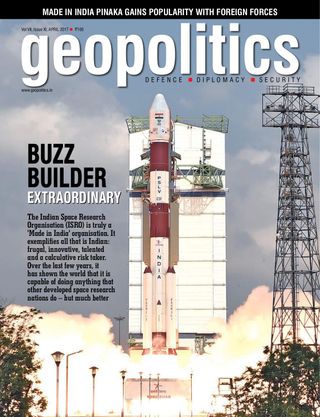

This story is from the April 2017 edition of Geopolitics.
Subscribe to Magzter GOLD to access thousands of curated premium stories, and 10,000+ magazines and newspapers.
Already a subscriber? Sign In
MORE STORIES FROM Geopolitics
Geopolitics
Tata expands Morocco push with LAMV offer
After securing an order for its WhAP 8x8 armoured vehicle from the Royal Moroccan Army, Tata Advanced Systems Limited is now actively promoting its Light Armoured Multipurpose Vehicle in the same market.

1 min
February 2026
Geopolitics
Armenia eyes India's Astra Missile for Su-30SM fleet
Armenia is in advanced discussions with India to acquire the Astra beyond-visual-range air-to-air missile, signalling a deepening of defence ties between the two countries.
1 min
February 2026
Geopolitics
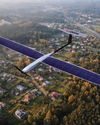
SUVI V1 becomes India's first Type-Certified UAV
In India's unmanned aviation sector has reached a significant regulatory milestone with Okulo Aerospace announcing that its SUVI V1 platform has received Type Certification from the Directorate General of Civil Aviation.
1 min
February 2026

Geopolitics
Swan Defence wins Oman naval training ship contract
Swan Defence and Heavy Industries has secured a defence export contract from the Government of the Sultanate of Oman for the construction and supply of an advanced naval training ship for the Royal Navy of Oman.
1 min
February 2026

Geopolitics
HAL'S 'DHRUV' BET
Hindustan Aeronautics Limited (HAL) is attempting a careful reset of the Dhruv helicopter narrative, positioning the platform simultaneously as a cornerstone of India's future civil helicopter market and as a rehabilitated workhorse returning to frontline maritime service.
2 mins
February 2026
Geopolitics
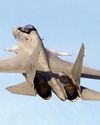
India Offers Su-30MKM Upgrade to Malaysia
India has offered a midlife modernisation package for Malaysia's fleet of 18 Sukhoi Su-30MKM fighters, marking a significant step in bilateral defence-industrial cooperation.
1 min
February 2026
Geopolitics
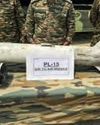
Astra upgrade rooted in indigenous R and D
Recent reports linking the Indian Air Force's Astra missile upgrades to Chinese PL-15 technology have been firmly dismissed by defence officials and scientists.
1 min
February 2026

Geopolitics
COMMAND OR COMPLIANCE? RECLAIMING THE SPIRIT OF MILITARY INITIATIVE
What does it truly mean to be a military leader in a democracy? It is a question sparked by the recent controversy surrounding General Manoj Naravane's memoir. While the government always has the final say, a great general shouldn't just wait for instructions; they must lead with confidence, give honest advice, and take decisive action on the battlefield. KARAN KHARAB highlights why India needs a military culture that rewards bold Initiative over hesitation and \"seeking orders.\"
8 mins
February 2026
Geopolitics
India's integrated air combat plan from Mk1A to MkIII
India's combat aviation landscape is entering a defining phase, marked by parallel developments in aircraft production and missile technology that together reflect a broader push toward operational self-reliance.
3 mins
February 2026

Geopolitics
DEFENCE BUDGET 2026-27: FOCUS ON CAPITAL ACQUISITIONS
While there is an overall increase in the latest defence budget, the statistics only tell half of the story, explains AMIT COWSHISH
11 mins
February 2026
Translate
Change font size