
Go Unlimited with Magzter GOLD
Get unlimited access to 10,000+ magazines, newspapers and Premium stories for just
Try GOLD - Free
Fighter Jets For The IAF
Geopolitics
|October 2019
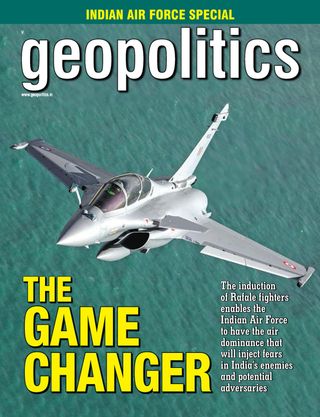
India has invited bids for the purchase of 114 fighter jets, valued at more than $15 billion and currently the world’s largest deal in play. AMIT GUPTA explains how to choose wisely and quickly.

It took India over a decade to choose the Rafale and ink the deal. The final purchase, however, was for only one-fourth of what the Indian Air Force (IAF) wanted. This was particularly troubling for two reasons: first, the IAF was shortchanged since it wanted 126 fighters but only got 36; and secondly, the French were hoping that India would do what it always does and place a follow-on order. The latter was particularly important since after 15-odd years of haggling, the expectation was that a truly big contract would follow. In fact, by the time the Rafale contract was signed, there was some discussion that if India did buy at least a small number of aircraft it would be considered a nonserious player in weapons acquisition and there was talk of “India fatigue”.
Now, the IAF wants 114 fighters and once again there is competition to select the plane. At the same time, the IAF talks about it has to counter a two-front threat and, therefore, needs a plane, in sufficient numbers, quickly. So, India has to choose wisely and quickly.
Learning from the Rafale
The Rafale deal became controversial because the media and the political opposition made it into an election issue with questions being raised about the alleged irregularities in the process. Further, the argument was made that because HAL was not given a contract to domestically assemble the aircraft, there was something insidious about the deal.
What is forgotten in all this is that the Rafale is a good plane which will allow the IAF to carry out both conventional and nuclear missions. The Mirage-2000, while a good plane, does not allow for pilot survivability in the case of a nuclear mission – the pilot would not survive the aftershock caused by a nuclear weapon he delivered. The Rafale, in contrast, is a better protected plane thereby allowing the pilot to return to base and not carry out a suicide mission.

This story is from the October 2019 edition of Geopolitics.
Subscribe to Magzter GOLD to access thousands of curated premium stories, and 10,000+ magazines and newspapers.
Already a subscriber? Sign In
MORE STORIES FROM Geopolitics
Geopolitics
Tata expands Morocco push with LAMV offer
After securing an order for its WhAP 8x8 armoured vehicle from the Royal Moroccan Army, Tata Advanced Systems Limited is now actively promoting its Light Armoured Multipurpose Vehicle in the same market.

1 min
February 2026
Geopolitics
Armenia eyes India's Astra Missile for Su-30SM fleet
Armenia is in advanced discussions with India to acquire the Astra beyond-visual-range air-to-air missile, signalling a deepening of defence ties between the two countries.
1 min
February 2026
Geopolitics
SUVI V1 becomes India's first Type-Certified UAV
In India's unmanned aviation sector has reached a significant regulatory milestone with Okulo Aerospace announcing that its SUVI V1 platform has received Type Certification from the Directorate General of Civil Aviation.
1 min
February 2026

Geopolitics
Swan Defence wins Oman naval training ship contract
Swan Defence and Heavy Industries has secured a defence export contract from the Government of the Sultanate of Oman for the construction and supply of an advanced naval training ship for the Royal Navy of Oman.
1 min
February 2026

Geopolitics
HAL'S 'DHRUV' BET
Hindustan Aeronautics Limited (HAL) is attempting a careful reset of the Dhruv helicopter narrative, positioning the platform simultaneously as a cornerstone of India's future civil helicopter market and as a rehabilitated workhorse returning to frontline maritime service.
2 mins
February 2026
Geopolitics
India Offers Su-30MKM Upgrade to Malaysia
India has offered a midlife modernisation package for Malaysia's fleet of 18 Sukhoi Su-30MKM fighters, marking a significant step in bilateral defence-industrial cooperation.
1 min
February 2026
Geopolitics
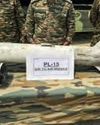
Astra upgrade rooted in indigenous R and D
Recent reports linking the Indian Air Force's Astra missile upgrades to Chinese PL-15 technology have been firmly dismissed by defence officials and scientists.
1 min
February 2026

Geopolitics
COMMAND OR COMPLIANCE? RECLAIMING THE SPIRIT OF MILITARY INITIATIVE
What does it truly mean to be a military leader in a democracy? It is a question sparked by the recent controversy surrounding General Manoj Naravane's memoir. While the government always has the final say, a great general shouldn't just wait for instructions; they must lead with confidence, give honest advice, and take decisive action on the battlefield. KARAN KHARAB highlights why India needs a military culture that rewards bold Initiative over hesitation and \"seeking orders.\"
8 mins
February 2026
Geopolitics
India's integrated air combat plan from Mk1A to MkIII
India's combat aviation landscape is entering a defining phase, marked by parallel developments in aircraft production and missile technology that together reflect a broader push toward operational self-reliance.
3 mins
February 2026
Geopolitics
DEFENCE BUDGET 2026-27: FOCUS ON CAPITAL ACQUISITIONS
While there is an overall increase in the latest defence budget, the statistics only tell half of the story, explains AMIT COWSHISH
11 mins
February 2026
Translate
Change font size