
Go Unlimited with Magzter GOLD
Get unlimited access to 10,000+ magazines, newspapers and Premium stories for just
The Election and Your Money
Kiplinger's Personal Finance
|September 2020
We’ve assessed how the presidential candidates’ stances on financial issues will affect your wallet.

Whether the upcoming presidential election is a battle for the soul of the nation or the way to keep America great is a question we will leave to you to answer. But the election will have important ramifications for your financial wellbeing, and we’re all over that agenda. How will each of the candidates help steer the economy? What might your tax bill be? Is your portfolio headed for gains or losses?
For those questions, the person living at 1600 Pennsylvania Avenue for the next four years matters.
At the start of the year, a sound economy, rock-bottom unemployment rates and a roaring bull market made it Donald Trump’s election to lose. Then came the coronavirus pandemic, exacting a vast and tragic human toll, putting a dramatic end to the longest economic expansion and bull market on record, and robbing tens of millions of Americans of their livelihood.
It remains to be seen whether voters will renew President Trump’s lease on the White House in November, but former Vice President Joe Biden became a more formidable contender over the summer, if you believe the polls and the betting markets. In early July, policy analysts at investment firm Raymond James gave Biden a 55% chance of winning the presidency.
But it bears repeating that the circumstances surrounding the 2020 election are unique, and for insights into who will ultimately claim victory, you might be better off asking an epidemiologist than a political consultant. Each of the presidential candidates faces “significant challenges,” according to analysts at Wells Fargo Investment Institute. “Voter perception of how President Trump manages the pandemic and economic reopening is key to his reelection bid.”
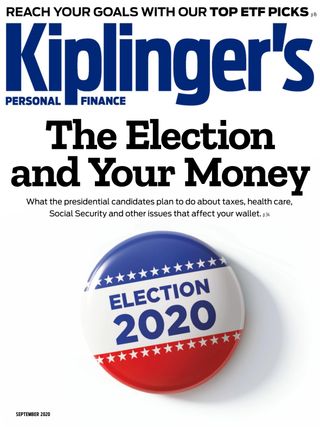

This story is from the September 2020 edition of Kiplinger's Personal Finance.
Subscribe to Magzter GOLD to access thousands of curated premium stories, and 10,000+ magazines and newspapers.
Already a subscriber? Sign In
MORE STORIES FROM Kiplinger's Personal Finance

Kiplinger's Personal Finance
A Helping Hand for the Homeless
This nonprofit offers shelters, job programs, support in finding a home and more.

2 mins
January 2026

Kiplinger's Personal Finance
Downsizing Advice, Part II
My column on downsizing (see “Living in Retirement,” Oct.) struck a chord with readers. I heard from many who offered advice on successfully culling clutter.
2 mins
January 2026
Kiplinger's Personal Finance
WHY COMPANY GUIDANCE MATTERS
Understanding how corporate profit forecasts affect analysts' estimates and stock ratings can help you make investment decisions.
4 mins
January 2026

Kiplinger's Personal Finance
WHAT SCIENCE REVEALS ABOUT MONEY AND A HAPPY RETIREMENT
Whether you're still planning or already retired, these research-based insights point the way to your best post-work life.
12 mins
January 2026

Kiplinger's Personal Finance
WHAT TO KNOW ABOUT FLOOD INSURANCE
Even if your home is outside a high-risk area, you may want to purchase coverage.
2 mins
January 2026

Kiplinger's Personal Finance
My Retirement Learning Curve
THE NEW WORLD OF RETIREMENT
2 mins
January 2026

Kiplinger's Personal Finance
CREATE A FINANCIAL PLAN WITH THESE TOOLS
Online programs for do-it-yourselfers are better than ever-and they're affordable, too.
9 mins
January 2026

Kiplinger's Personal Finance
2026 MONEY CALENDAR
These key dates and tips will help you make the most of your money in the new year.
7 mins
January 2026
Kiplinger's Personal Finance
Should You Renew Your CD?
AFTER you put money in a certificate of deposit, you can sit back while it collects interest over its term. Once it reaches maturity, you'll face a decision: renew it or withdraw the funds.
1 mins
January 2026

Kiplinger's Personal Finance
GIVING THE BULL THE BENEFIT OF THE DOUBT
KIPLINGER: What do you see ahead for financial markets in 2026? Do you have a target price for the S&P 500?
5 mins
January 2026
Translate
Change font size