Try GOLD - Free
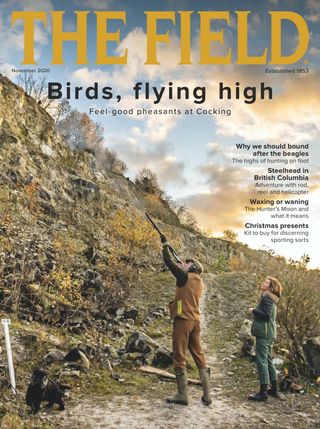
In tune with the moon
The Field
|November 2020
For the ancients, life revolved around lunar phases, which measured time, heralded the changing seasons – and even caused madness

The 29½-day cycle of moon phases was the earliest form of measuring time, and the present-day months are roughly equal to the lunar cycle. Each of the farming seasons – spring, summer, autumn and winter – lasts three months or three moon cycles, thus a year was made up of 12 full moons; the cycle of each following the same pattern. A new moon is completely black; over the next four nights, the moon ‘waxes’ or becomes more visible until a quarter, known as a ‘waxing crescent’, can be seen on the right side. Four nights later, half the moon, known as the ‘first quarter moon’, is visible. A couple of nights later, this has enlarged to become a ‘waxing gibbous moon’, then, two nights later, a full moon. After this it ‘wanes’ in similar time intervals on the left side, through ‘waning gibbous’, ‘last quarter’ and ‘waning crescent’ until it becomes a darkened or new moon.
Each full moon had its own significance. The first full moon in March had various names: the Worm Moon, because the ground had warmed up sufficiently for earthworms to become active; the Crow Moon, from the vocal mating of crows; the Lenten Moon, since it was the last full moon of Lent; or Sap Moon, from the appearance of the first buds on trees. This full moon was of particular importance in the farming calendar as it was officially the last full moon of winter and heralded the start of the three-month Vernal Equinox. (The name ‘equinox’ is derived from the Latin aequus, meaning equal, and

This story is from the November 2020 edition of The Field.
Subscribe to Magzter GOLD to access thousands of curated premium stories, and 10,000+ magazines and newspapers.
Already a subscriber? Sign In
MORE STORIES FROM The Field

The Field
The Holland & Holland Edition by Overfinch
This exquisitely detailed bespoke Range Rover is built for the field and showcases the best in fine British craftsmanship

3 mins
January 2026

The Field
Digging into terrier breeds
From the Jack Russell to the Australian to the Czesky, every one of the 27 recognised terrier types is either native British or has British ancestry
3 mins
January 2026

The Field
100 O years of The Browning B25 Superposed
Often imitated but rarely bettered, Browning's B25 Superposed is among the most influential and enduring shotgun designs in gunmaking history
8 mins
January 2026

The Field
A princely pair
Probably built for the Prince of Lobkowicz and dating to 1727, these handsome flintlocks boast both Spanish and Austrian influence
3 mins
January 2026
The Field
Adventure in a bottle
From lively, zingy Sauvignon Blanc to cassis-laden Cabernet Sauvignon, Chilean wine opens the door to a world of incredible value and diversity
3 mins
January 2026

The Field
Patrick Grant
The Great British Sewing Bee judge, former Savile Row tailor and founder of Community Clothing talks to Amanda Morison about nature, scything and sustainable fashion
4 mins
January 2026
The Field
The ultimate winter warmer
An exhilarating day following the Ross Harriers across picture-perfect Herefordshire countryside proves an ideal way to banish the January blues
7 mins
January 2026
The Field
An impact that can only grow
As a landmark report reveals the impressive environmental, social, economic and health benefits of gardening, Ursula Buchan hopes policymakers are taking note
3 mins
January 2026

The Field
'Karamojo Bell'
The last of his kind, elephant hunter Captain Walter Dalrymple Maitland Bell left an indelible mark on African hunting history, says Sir Johnny Scott
4 mins
January 2026

The Field
Deer manager shortage fears
Plans to make deerstalking training mandatory in Scotland risk leaving the country short of deer managers, rural groups have warned.
1 min
January 2026
Translate
Change font size