
Go Unlimited with Magzter GOLD
Get unlimited access to 10,000+ magazines, newspapers and Premium stories for just
Try GOLD - Free
A New Epoch!
Stereophile
|December 2017
Brooklyn-based Grado Labs has been in business for 64 years, manufacturing moving-iron phono cartridges, headphones, and, for a while, even a unipivot tonearm with a wooden arm wand, as well as the sophisticated, S-shaped Signature Laboratory Standard arm.

The company’s founder, Joseph Grado, who well deserves the appellation “legendary,” died in 2015, at the age of 90. He began as a watch builder at Tiffany & Company, and started making phono cartridges in 1953, as the hi-fi boom took off. He retired in 1990 and sold Grado Labs—still located in the same Brooklyn building where he’d begun in 1953—to his nephew John Grado Jr., who by then had put in more than a decade at Uncle Joe’s company, pretty much running it after Joe had returned to what he liked best: inventing things.
At the time, Grado Labs manufactured some 10,000 cartridges annually. It’s not as if Joe’s new invention—three models of costly, handmade headphones—was an attempt to diversify because the cartridge business was bad. Joe also invented the highly regarded, limited-edition Grado HMP-1 omnidirectional microphone, a favorite of veteran recording engineer Peter McGrath, who is currently director of sales for Wilson Audio Specialties. The headphones, hand-built by Joe and John, were an immediate success among audiophiles and recording professionals. Grado Labs’ move into headphones has proved prescient, given the subsequent boom in that market, and with the vinyl resurgence, Grado today is poised for continued growth in both arenas, even as John Grado reaches retirement age (though it’s doubtful he’ll retire anytime soon). There are more Grados in the pipe line. Recently, it was announced that John’s sons, Jonathan and Matthew, have joined the company.
The Core Business Expands


This story is from the December 2017 edition of Stereophile.
Subscribe to Magzter GOLD to access thousands of curated premium stories, and 10,000+ magazines and newspapers.
Already a subscriber? Sign In
MORE STORIES FROM Stereophile
Stereophile
Aurender N50
I was born and raised in Argentina. Ever since I was a kid, I’ve been fascinated by machines. My mother used to call me “Botones” (Spanish for “Buttons”) because I pressed every button and turned every knob I encountered.

13 mins
May 2026
Stereophile
UNISON RESEARCH UNVEILS NEW HYBRID PRE- AND POWER AMPLIFIERS
Treviso, Italy-based Unison Research has launched the Unico PRE V2 preamplifier/DAC and Unico DM V2 dual-mono power amplifier.
3 mins
May 2026
Stereophile
Nordost QNet7
In the opinion of this hi-fi reviewer, the debate over the efficacy of audio-quality network switches should be over. As logic would dictate, when connections are made via a network switch, the quality of its inputs, outputs, oscillators (clocks), power supplies, and pathways affects the sound of everything downstream. It’s clearly audible.
6 mins
May 2026
Stereophile
Marten Mingus Septet Statement Edition
As I prepared this review of the Marten Mingus Septet Statement Edition loudspeaker ($199,000/pair), I asked the Marten people to tell me something about the company and its values.
12 mins
May 2026
Stereophile
FOCAL AND NAIM ACQUIRED BY DIGITAL PROJECTION LEADER BARCO
Barco, which is based in Kortrijk, Belgium, has reached an agreement to acquire VerVent Audio Holding, the parent company of Focal and Naim.
1 mins
May 2026

Stereophile
MOON by Simaudio 371
The origins of Canadian audio manufacturer MOON, from the company called Simaudio, stretch back to 1980, when audio engineer Victor Sima created his first designs.
13 mins
May 2026

Stereophile
The show must go on
All “serious” music fans know pop music is kid’s stuff: too simple, too accessible, the embodiment of that cringeworthy moniker “disposable.”
4 mins
May 2026
Stereophile
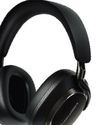
Bowers & Wilkins Px8 S2 BLUETOOTH/WIRED ACTIVE HEADPHONES
The first headphones I owned, circa mid-1970s, were made by Pioneer.
9 mins
May 2026
Stereophile
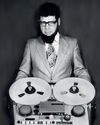
STELLAVOX FOUNDER GEORGES QUELLET DIES
Georges Quellet, developer of the Stellavox tape recorders, died on February 26 at age 96.
2 mins
May 2026
Stereophile
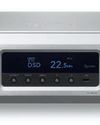
ESOTERIC UPDATES ITS STREAMING PREAMP AND CLASS-A POWER AMP
While total music-business revenues grew 3.5% to $11.5 billion last year, vinyl surged ahead 9.3% to a cool $1 billion, according to the Recording Industry Association of America (RIAA). The last time vinyl sales topped $1 billion was 1983, according to historical RIAA data.²
1 mins
May 2026
Translate
Change font size