Try GOLD - Free
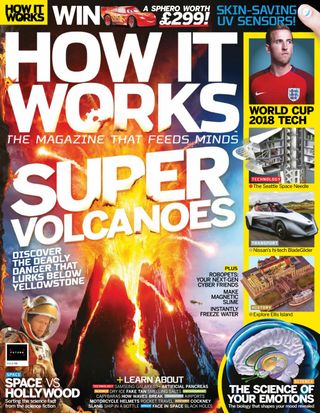
Super Volcanoes
How It Works
|Issue 113
The world’s largest and deadliest volcanoes could envelop the whole planet in ash

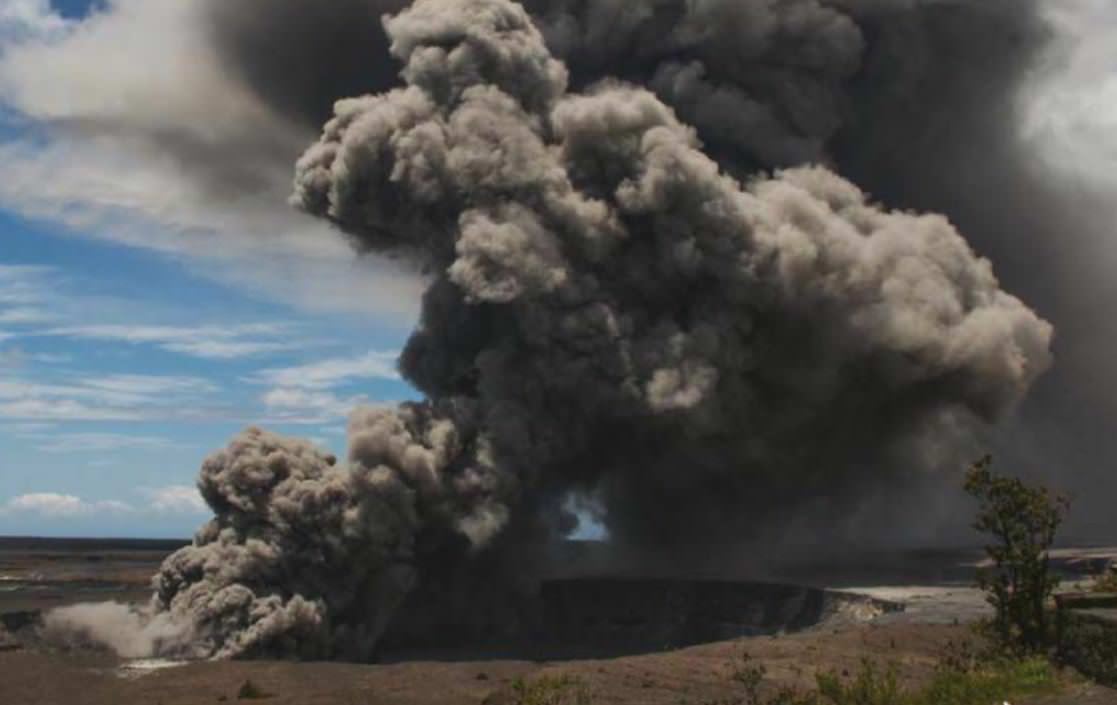
Supervolcanoes are some of the most destructive natural structures on the planet. Classified only after they have erupted, they eject more than 1,000 cubic kilometres of lava in one go. They’re a thousand times more powerful than a standard volcano and so large that they could blanket the whole Earth in ash.
The ground collapses above them when they explode, and the scars that mark their positions consume so much of the landscape that they become virtually invisible. Yet bubbling pools of magma still seethe below the surface, venting hot steam and gas through the ever-weakening crust above.
Scientists grade volcanic eruptions on a scale of 0 to 8, known as the Volcanic Explosivity Index (VEI). The tiniest volcanoes at the bottom of the scale gently dribble magma, while the behemoths at the top spit out hundreds of tons at a time. There are only around 40 of these supervolcanoes worldwide, but just ten remain potentially active. They sit atop hotspots where magma leaks up from the Earth’s mantle. Bubbles of molten rock accumulate under the ground, building pressure that stretches the Earth at its seams. Between major eruptions, pockets of heat leak out as spurts of lava, water and gas, but eventually the pressure becomes too much. The crust melts and cracks, heaving above the liquid rock below.
When supervolcanoes erupt in earnest the impact is catastrophic. Lava explodes upwards or bursts out in sheets, forming vast splatters and fast-moving lava plains. The temperature of the liquid rock can be as low as 300 degrees Celsius or as high as 1,160 degrees Celsius. It might advance slower than walking speed or vent at more than 60 kilometres per hour, and it tears through everything in its path.

This story is from the Issue 113 edition of How It Works.
Subscribe to Magzter GOLD to access thousands of curated premium stories, and 10,000+ magazines and newspapers.
Already a subscriber? Sign In
MORE STORIES FROM How It Works

How It Works UK
FORMULA FAST
YOUR ULTIMATE GUIDE TO FORMULA ONE RACING

1 mins
Issue 212
How It Works UK
MY LIFE AS AN ASTHMANAUT
A CHILDREN'S BOOK ABOUT ASTHMA
1 min
Issue 212

How It Works UK
LYDIA LOVES BUGS
A SHORT AND SWEET STORY OF AN ENTHUSIASTIC ENTOMOLOGIST
1 min
Issue 212

How It Works UK
INSIDE A DRONE
Drones aren't just for the military any more. These flying marvels are now taking over our lives
3 mins
Issue 212
How It Works UK
WE CAN HEAR WITHOUT EARS
AND OTHER THINGS YOU DIDN'T KNOW WE PLANTS COULD DO
1 min
Issue 212

How It Works UK
DO GEESE GET GOOSEBUMPS?
Many animals experience a similar reaction when they feel cold or scared
2 mins
Issue 212
How It Works UK
SUBMARINES WITHOUT SAILORS
Dive into the world of autonomous submarines and discover the mission that will see one sail around the world
4 mins
Issue 212
How It Works UK
WHAT HAPPENS INSIDE A COCOON?
How certain species of insects transform from crawling caterpillars to flying moths and butterflies
3 mins
Issue 212

How It Works UK
HOW THE ROSE LOST ITS SCENT
From floral to fragranceless, there's a biological reason behind a rose's missing odour today
3 mins
Issue 212
How It Works UK
How many insects have been discovered so far?
The total number of named species is around a million.
7 mins
Issue 212
Translate
Change font size