Try GOLD - Free
How Napoleon (almost) destroyed the French Revolution
BBC History Magazine
|April 2022
The Corsican general proclaimed himself a defender of republican ideals – while doing all he could to dismantle them

On 10 November 1799, Napoleon Bonaparte stormed into the chambers at the Château de Saint-Cloud in the suburbs of Paris and set in train a military coup. The republic no longer has a government,” he declared to the assembled members of one of France's two ruling councils. “Together let us save the cause of liberty and equality.” The coup represented an enormous gamble for Bonaparte but it paid off spectacularly: within a matter of days, he had been declared First Consul of his nation. Bonaparte was now the most powerful figure in France - and hardly anybody had seen it coming. But one man had, and his name was Maximilien Robespierre.
When revolutionary France had embarked on a war with its royalist neighbours in April 1792, Robespierre warned of the dangers that would follow. A military leader could, the leading Jacobin revolutionary counselled, take the opportunity to seize political power in Paris, becoming another Julius Caesar, another Oliver Cromwell.
Robespierre's warnings were disregarded, but they proved prescient. The ensuing war would last a generation. It brought to prominence several talented young generals with the potential to become a second Caesar. In the end, the man who came out ahead was the young Corsican general who burst into the Château de SaintCloud in November 1799: Bonaparte.
For many historians, the coup of November 1799 signalled the end of one of the great step-changes in European history: the French Revolution. Erupting in 1789, the revolution had shaken the old order based on the authority of the king, nobles, and clergy to its core. It also brought into being a raft of new political ideas: individual liberty, equality before the law, freedom of speech, and religious toleration. The revolution was the first of its kind anywhere in the world and would have an unfathomable impact on modern history.
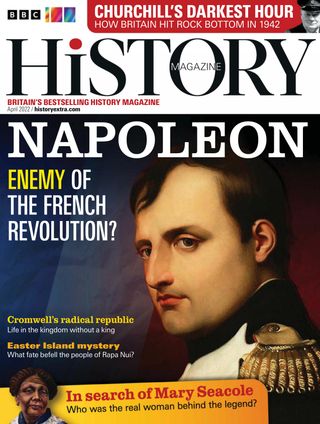

This story is from the April 2022 edition of BBC History Magazine.
Subscribe to Magzter GOLD to access thousands of curated premium stories, and 10,000+ magazines and newspapers.
Already a subscriber? Sign In
MORE STORIES FROM BBC History Magazine
BBC History UK
Royal progress
Alice Loxton's new book begins with a compelling premise.

1 mins
January 2026

BBC History UK
"Leaving Muslim contributions out of European history has allowed Islamophobic sentiment to flourish"
THARIK HUSSAIN speaks to Danny Bird about the long but often overlooked and distorted history of Muslims in Europe - and the enduring resistance to its reappraisal
9 mins
January 2026
BBC History UK
7 UNMISSABLE TRIPS IN 2026
With new routes, big anniversaries and fresh ways of discovering familiar favourites, TOM HALL highlights historical destinations to explore this year
4 mins
January 2026

BBC History UK
SOPHIE SCHOLL
Novelist Simon Scarrow chooses
2 mins
January 2026
BBC History UK
Portrait of the artists
TRACY BORMAN is enraptured by a beautifully written and richly illustrated exploration of early modern English art
2 mins
January 2026
BBC History UK
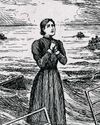
Humble heroes
Statues celebrate monarchs, rulers and conquerors - but who remembers the brave folk who gave their lives to save others? Anna Maria Barry recounts stories of selfsacrificing but otherwise ordinary people from the 19th and 20th centuries who are commemorated in one London park.
9 mins
January 2026
BBC History UK
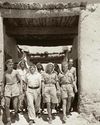
BACK FROM THE DEAD
Britain’s War Office thanked the SAS for its remarkable efforts in WW2 by abolishing it – yet soon realised the error of its ways. Gavin Mortimer tells the story of how the elite unit reinvented itself to confront the challenges of the postwar world
8 mins
January 2026
BBC History UK
Q&A - A selection of historical conundrums answered by experts
Were Roman gladiators vegetarian?
8 mins
January 2026
BBC History UK
Martha McGill on a pioneering study of folk beliefs in early modern England
I was recently chatting with a handful of early modernists about the history book we'd take to a desert island.
1 min
January 2026
BBC History UK
Independent empires
Viewing the British empire through an American lens provides an intriguing alternative perspective on the 'Land of the Free', says DAVID ARMITAGE
4 mins
January 2026
Translate
Change font size