Try GOLD - Free
When Isis Was Queen
Archaeology
|November/December 2021
At the ancient Egyptian temples of Philae, Nubians gave new life to a vanishing religious tradition

WHEN THE ROMANS conquered Egypt in 30 b.c., the country’s system of temples, which had sustained religious traditions dating back more than 3,000 years, began to slowly wither away. Starved of the funds that pharaohs traditionally supplied to religious institutions, priests lost their vocation and temples fell into disuse throughout the country. The introduction of Christianity in the first century a.d. only hastened this process. But there was one Philae Temples exception to this trend: In the temples on the island of Philae in the Nile River, rites dedicated to the goddess Isis and the god Osiris continued to be celebrated in high style for some 500 years after the Roman conquest. This final flowering of ancient Egyptian religion was only possible because of the piety and support of Egypt’s neighbors to the south, the Nubians.
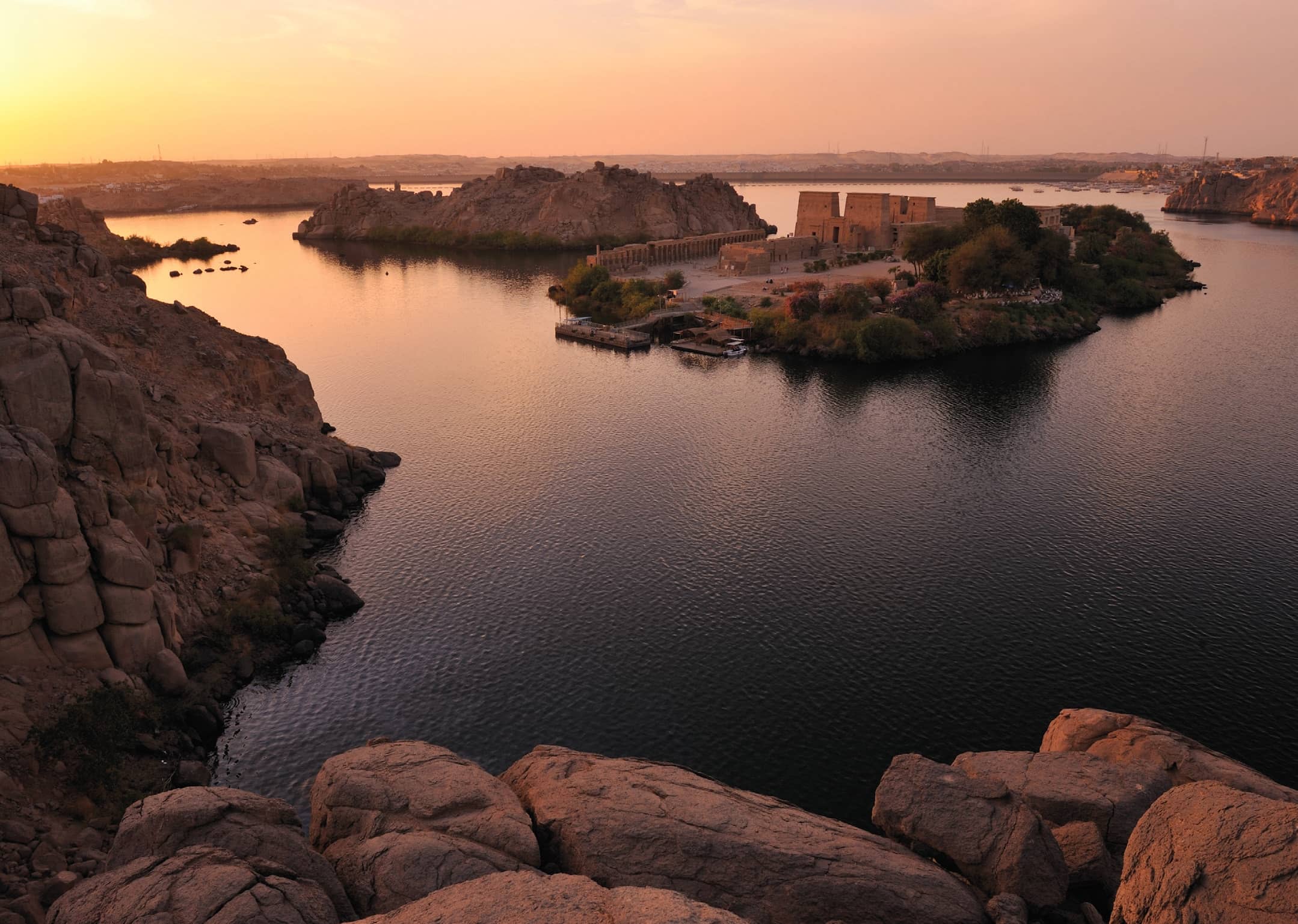
Philae lies just south of the Nile’s first cataract—one of six rapids along the river—which marked the historical border between ancient Egypt and Nubia, also known as Kush. In this region of Kush, called Lower Nubia, the temple complex at Philae was just one of many that were built on islands in the Nile and along its banks. Throughout the long history of Egypt and Nubia, Lower Nubia was a kind of buffer zone between these two Meroelands and a place where the two cultures heavily influenced one another. “Often official Egyptian texts were demeaning to Nubians,” says Egyptologist Solange Ashby of the University of California, Los Angeles. “But this cultural arrogance doesn’t reflect the lived reality of Egyptians and Nubians being neighbors, intermarrying, sharing cultural and religious practices. These were people who interacted for millennia.”
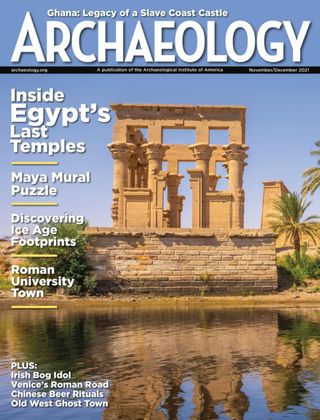

This story is from the November/December 2021 edition of Archaeology.
Subscribe to Magzter GOLD to access thousands of curated premium stories, and 10,000+ magazines and newspapers.
Already a subscriber? Sign In
MORE STORIES FROM Archaeology
Archaeology
THE EGYPTIAN SEQUENCE
Until now, the earliest Egyptians to have even part of their DNA sequenced were three people who lived between 787 and 544 B.C.

1 mins
November/December 2025

Archaeology
SOURCE MATERIAL
As early as 40,000 years ago, some hunter-gatherers in southern Africa ventured long distances to procure special types of stone to make their tools.
1 min
November/December 2025

Archaeology
Secrets of the Seven Wonders
How archaeologists are rediscovering the ancient world's most marvelous monuments
13 mins
November/December 2025
Archaeology
ACTS OF FAITH
Evidence emerges of the day in 1562 when an infamous Spanish cleric tried to destroy Maya religion
12 mins
November/December 2025
Archaeology
OASIS MAKERS OF ARABIA
Researchers are just beginning to understand how people thrived in the desert of Oman some 5,000 years ago
8 mins
November/December 2025

Archaeology
FOSSIL FORCE
One of the planet's most successful arthropods, trilobites, abounded in the oceans from about 520 million to 250 million years ago.
1 min
November/December 2025
Archaeology
BIGHORN MEDICINE WHEEL, WYOMING
Perched almost 9,700 feet above sea level on Medicine Mountain in Wyoming's Bighorn Range, the Medicine Wheel is an 80-foot-diameter circular structure made from limestone boulders.
2 mins
November/December 2025
Archaeology
ANCIENT LOOK BOOK
A young woman buried in China's Tarim Basin some 2,000 years ago went to the afterlife accompanied by the height of fashion.
1 mins
November/December 2025
Archaeology
A FAMILIAR FACE
In the early eleventh century, a landslide on the island of Ostrów Lednicki in western Poland caused a hillfort to collapse and slip to the bottom of Lake Lednica.
1 min
November/December 2025
Archaeology
Temples to Tradition
A looted cache of bronzes compels archaeologists to explore Celtic sanctuaries across Burgundy
13 mins
November/December 2025
Translate
Change font size