
Go Unlimited with Magzter GOLD
Get unlimited access to 10,000+ magazines, newspapers and Premium stories for just
PLATAEA
History of War
|Issue 104, 2022
2,500 years ago an alliance of a few Greek city-states defeated the invading army of the mighty Persian empire, saving Greece and securing the future of European civilisation

In the summer of 480 BCE, the Great King of Persia, Xerxes, led an immense army and fleet into Europe with the goal of conquering Greece. Fifteen years earlier the Athenians had played a minor part in the five-year revolt of his Greek subjects spread across the western fringe of his empire, and in 490 BCE they had added injury to insult at Marathon by comprehensively defeating a punitive expedition launched by Darius, Xerxes’ father. Darius had planned a second expedition in overwhelming force, but this was delayed by insurrection in Egypt and his death in 485 BCE. It was Xerxes’ duty as Darius’ successor to execute the plan.
In strategic terms, the conquest of mainland Greece and the islands and northern seaboard of the Aegean would stabilise the empire’s western frontier. Then, as ‘Great King, King of Kings, Ruler of the Lands’, Xerxes or his successors might have turned their thoughts beyond Greece to Sicily and Italy. More would then be at stake even than Greece’s future and the golden age of classical civilisation.
Herodotus, our foremost source for these critical years, puts these words into Xerxes’ mouth in a speech to his council of leading Persians: “If we conquer the Athenians and their neighbours, we shall extend the territory of Persia to the very edge of the earth, even where it joins with God’s heaven. When I have passed through Europe, there will be no lands under the sun that lie outside our borders, because I will make all lands one land.” The speech is invented, but it plausibly represents Xerxes’ vision and sense of destiny.

This story is from the Issue 104, 2022 edition of History of War.
Subscribe to Magzter GOLD to access thousands of curated premium stories, and 10,000+ magazines and newspapers.
Already a subscriber? Sign In
MORE STORIES FROM History of War

History of War
MORE MISS MONEYPENNY THAN MATA HARI WOMEN SPIES THROUGHOUT THE DECADES
THEY LOOKED LIKE ORDINARY HOUSEWIVES, MOTHERS AND SECRETARIES IN SENSIBLE CLOTHES AND STURDY SHOES. BUT THESE INNOCUOUS WOMEN WERE EMBARKED ON COURAGEOUS AND OFTEN TREACHEROUS MISSIONS AS SECRET AGENTS

4 mins
Issue 153

History of War
THE END OF GREAT POWERS
Full-spectrum analysis of a state's economy, technology, leadership, society and alliances could be a superior way of predicting battlefield performance
3 mins
Issue 153
History of War
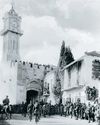
THE BATTLE OF JERUSALEM 9 JANUARY - 11 DECEMBER 1917
During a campaign that lasted nearly a year, British and Arab forces defeated the Ottoman Turks and entered the ancient city
7 mins
Issue 153
History of War
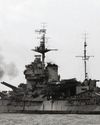
QUEEN ELIZABETH CLASS BATTLESHIP
These five super-dreadnoughts set the standard for early 20th century warship design in speed, firepower and protection and were the first fast battleships of the age
4 mins
Issue 153
History of War
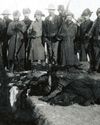
THE MASSACRE AT WOUNDED KNEE
In 1890, US troops killed more than 250 Lakota, at a location that remains the focus of resistance and dark controversy
10 mins
Issue 153
History of War
BORN IN NORTH AFRICA
HOW THE TUNISIA CAMPAIGN FORGED THE 'SPECIAL RELATIONSHIP'
3 mins
Issue 153
History of War
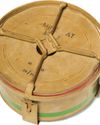
ANTI-TANK MINE
This lightweight General Service Mk V device could immobilise Hitler's heavy tanks and was used during fighting in Northwest Europe
1 mins
Issue 153

History of War
HEROES OF THE MEDAL OF HONOR BALDOMERO LOPEZ
During the daring landings at Inchon in 1950, this first lieutenant sacrificed his life to save his US Marine comrades
6 mins
Issue 153

History of War
NORTH KOREA'S ROCKET REVOLUTION
After the peninsula was divided by a long-term ceasefire, Pyongyang and Seoul raced to build weapons that could obliterate each other
4 mins
Issue 153
History of War
THE GREAT TRAIN RAID THE MOST DARING SAS MISSION OF WWII
DAMIEN LEWIS' LATEST SAS ADVENTURE IS CHARACTERISTICALLY FAST-PACED AND ACTION-PACKED
2 mins
Issue 153
Translate
Change font size