
Go Unlimited with Magzter GOLD
Get unlimited access to 10,000+ magazines, newspapers and Premium stories for just
JAPAN'S ROAD TO WAR
History of War
|Issue 104, 2022
Less than a century after emerging from cultural and economic isolation, Imperial Japan’s expansion led to a confrontation with the nation that had first disturbed its solitude
-

During the mid-1850s the United States opened feudal Japan to trade with the Western world. From its earliest awakening to the international community Japan rapidly industrialised and began to exert influence beyond its own borders. In less than a century, Japanese leaders began to perceive their culture and people as preeminent on the continent of Asia as well as across the vast Pacific rim.
By the early 20th century, Japan had emerged as an Asian power with global reach, shocking the world with its defeat of Russia in the Russo-Japanese War of 1904-05. Japan later joined the Allies in World War I, receiving post-conflict League of Nations authorisation to administer former German colonies in the Pacific, as well as having ruled Korea by mandate since 1910.
The road to war in the Pacific was virtually inevitable from a Japanese perspective. By the late-1920s, a rise of militarism in the country had coincided with the recognition of an opportunity to extend its influence, subjugate other Asian peoples, and exploit the resources that were required to perpetuate and protect Japanese interests beyond the confines of its borders. Japan embarked on a programme of military expansion, building a navy comparable in several respects to those of the United States and Great Britain, while reluctantly (and temporarily) acquiescing to treaty limitations on the strength, number and type of warships constructed. During this period Japan also augmented its land armies and air power.

This story is from the Issue 104, 2022 edition of History of War.
Subscribe to Magzter GOLD to access thousands of curated premium stories, and 10,000+ magazines and newspapers.
Already a subscriber? Sign In
MORE STORIES FROM History of War

History of War
MORE MISS MONEYPENNY THAN MATA HARI WOMEN SPIES THROUGHOUT THE DECADES
THEY LOOKED LIKE ORDINARY HOUSEWIVES, MOTHERS AND SECRETARIES IN SENSIBLE CLOTHES AND STURDY SHOES. BUT THESE INNOCUOUS WOMEN WERE EMBARKED ON COURAGEOUS AND OFTEN TREACHEROUS MISSIONS AS SECRET AGENTS

4 mins
Issue 153
History of War
THE END OF GREAT POWERS
Full-spectrum analysis of a state's economy, technology, leadership, society and alliances could be a superior way of predicting battlefield performance
3 mins
Issue 153
History of War
THE BATTLE OF JERUSALEM 9 JANUARY - 11 DECEMBER 1917
During a campaign that lasted nearly a year, British and Arab forces defeated the Ottoman Turks and entered the ancient city
7 mins
Issue 153
History of War
QUEEN ELIZABETH CLASS BATTLESHIP
These five super-dreadnoughts set the standard for early 20th century warship design in speed, firepower and protection and were the first fast battleships of the age
4 mins
Issue 153
History of War
THE MASSACRE AT WOUNDED KNEE
In 1890, US troops killed more than 250 Lakota, at a location that remains the focus of resistance and dark controversy
10 mins
Issue 153
History of War
BORN IN NORTH AFRICA
HOW THE TUNISIA CAMPAIGN FORGED THE 'SPECIAL RELATIONSHIP'
3 mins
Issue 153
History of War
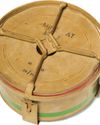
ANTI-TANK MINE
This lightweight General Service Mk V device could immobilise Hitler's heavy tanks and was used during fighting in Northwest Europe
1 mins
Issue 153

History of War
HEROES OF THE MEDAL OF HONOR BALDOMERO LOPEZ
During the daring landings at Inchon in 1950, this first lieutenant sacrificed his life to save his US Marine comrades
6 mins
Issue 153
History of War
NORTH KOREA'S ROCKET REVOLUTION
After the peninsula was divided by a long-term ceasefire, Pyongyang and Seoul raced to build weapons that could obliterate each other
4 mins
Issue 153
History of War
THE GREAT TRAIN RAID THE MOST DARING SAS MISSION OF WWII
DAMIEN LEWIS' LATEST SAS ADVENTURE IS CHARACTERISTICALLY FAST-PACED AND ACTION-PACKED
2 mins
Issue 153
Translate
Change font size