
Go Unlimited with Magzter GOLD
Get unlimited access to 10,000+ magazines, newspapers and Premium stories for just
Try GOLD - Free
The Future Of Coal In Saskatchewan
Briarpatch
|May/June 2019
Last spring, we – activists with Climate Justice Saskatoon – travelled to Estevan and Coronach, where the majority of Saskatchewan’s coal is produced.
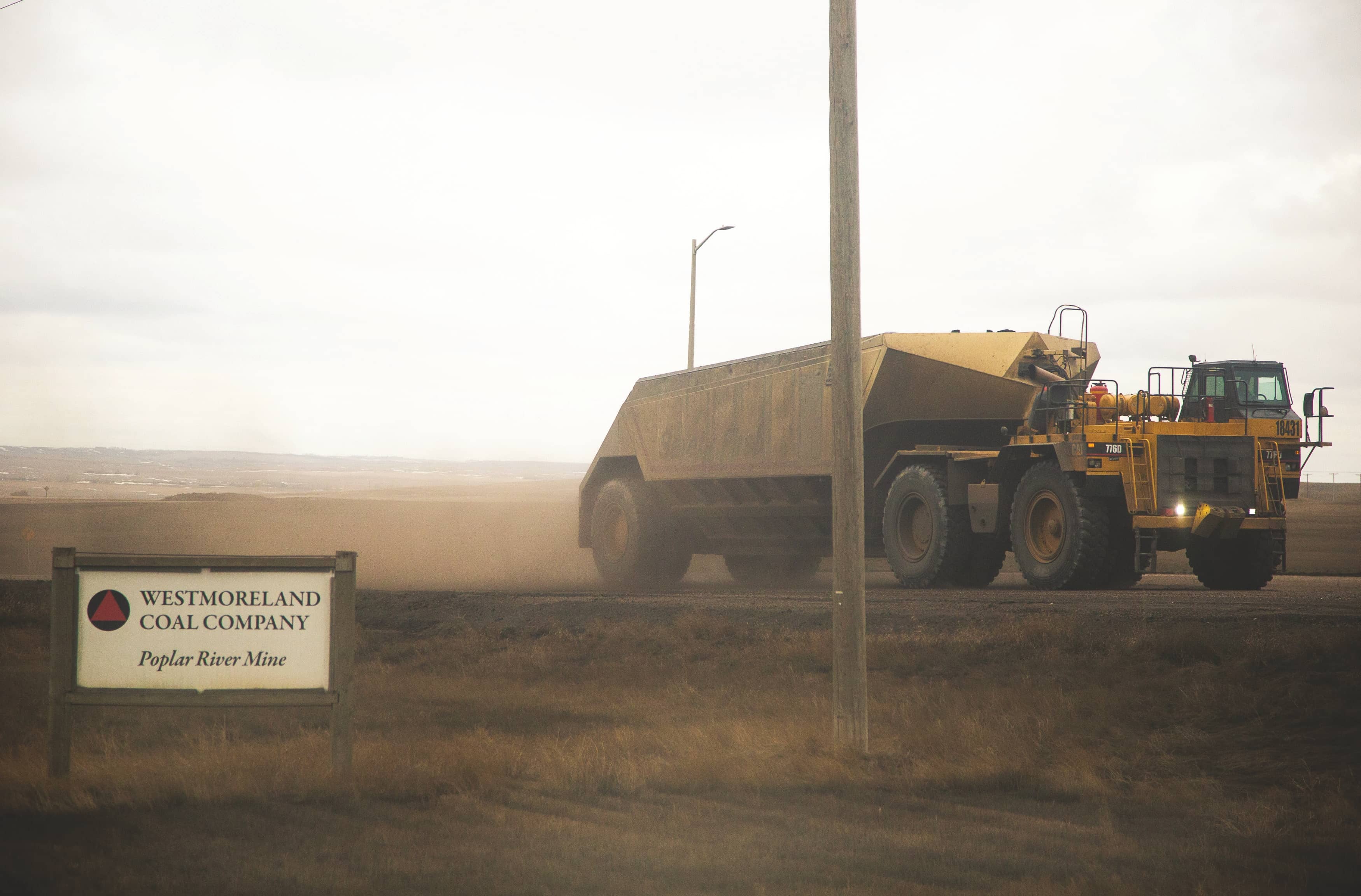
We interviewed 17 people at length – coal workers, service industry workers, union representatives, local administrators, and farmers, among others – and tried to make sense of what a just transition could mean for coal-producing communities.
We began this project – which culminated in a report called Bridging the Gap – because we think that engaging people in climate action requires more than just scientific and political education. It’s based on identities, values, emotions, and stories.
As of 2017, 40 per cent of Saskatchewan’s electricity still came from traditional coal-fired power plants. But the provincial government has finalized an agreement stipulating that companies would have to either add carbon capture and sequestration (CCS) technology to their coal plants or shut them down by 2030. The Saskatchewan government hasn’t put forward a clear strategy, though, for the future of coal and the communities it supports, like Estevan and Coronach. The uncertainty “just slowly spread,” one interviewee tells us. “You know, as if everybody became more aware of the date looming over.”
Phasing out coal is an obvious and necessary step toward slowing climate change. In 2017, coal accounted for 10 per cent of Canada’s electricity but was responsible for 77 per cent of electricity-related emissions. “Unfortunately, and essentially due to our lack of planning, a lot of livelihoods are also at stake,” says Justin Fisher, one of the Bridging the Gap project co-leads and a fact-checker for Briarpatch. “And we have an additional challenge of finding a way to support people and communities that are dependent on coal.”

This story is from the May/June 2019 edition of Briarpatch.
Subscribe to Magzter GOLD to access thousands of curated premium stories, and 10,000+ magazines and newspapers.
Already a subscriber? Sign In
MORE STORIES FROM Briarpatch

Briarpatch
PLATFORMS FOR PEOPLE, NOT PROFIT
Digital platforms boast that they’ve “democratized” cultural production. But what would truly democratic platforms look like in Canada?

10 mins
January/February 2020

Briarpatch
ORGANIZING THROUGH LOSS IN THE HEART OF OIL COUNTRY
The story of climate justice organizing in Alberta, at the heart of the tarsands, is the story of a group of young activists learning what it means to lose, and keep on fighting
13 mins
January/February 2020

Briarpatch
GROWING THE LABOUR MOVEMENT
How unions are using community gardens to engage members, nourish communities, and help strikers weather the picket line
11 mins
January/February 2020
Briarpatch
A NEW ERA FOR OLD CROW
In the Yukon’s northernmost community, the Vuntut Gwitchin First Nation is reckoning with how to preserve their land and culture, amid a warming climate and an influx of tourists
16 mins
January/February 2020

Briarpatch
“At Least Hookers Get Wages”
The risky business of sex work in the gig economy
14 mins
November/December 2019

Briarpatch
The Literal – And Literary – Futures We Build
Briarpatch editor Saima Desai talks to two judges of our Writing in the Margins contest about Idle No More and MMIWG, ethical kinship, writing queer sex, and their forthcoming work.
9 mins
November/December 2019
Briarpatch
The Cost Of A T-Shirt
In Honduras, women maquila workers are fighting back against the multinational garment companies that they say are endangering their health and safety.
18 mins
November/December 2019

Briarpatch
Milking Prison Labour
Canada’s prison farms are being reopened. But when prisoners will be paid pennies a day, and the fruits of their labour will likely be exported for profit, there’s little to celebrate.
12 mins
November/December 2019

Briarpatch
Bringing Back The Beat
In mainstream media, labour journalism has been replaced by financial reporting and business sections. But journalism students are raising the labour beat from the grave.
10 mins
November/December 2019

Briarpatch
There's No Journalism On A Dead Planet
Corporate media owners are killing local newspapers – which is making it impossible for everyday people to understand the on-the-ground impacts of the climate crisis
18 mins
September/October 2019
Translate
Change font size