
Go Unlimited with Magzter GOLD
Get unlimited access to 10,000+ magazines, newspapers and Premium stories for just
Stock Buybacks Surge
Kiplinger's Personal Finance
|June 2019
Done right, they can be a good deal for shareholders.

THE TOPIC OF STOCK BUYBACKS is on the minds of politicians and investors alike, and it’s no wonder: 2018 was a banner year for companies buying shares of their own stock. Flush with cash, thanks to friendlier corporate tax policies, companies in Standard & Poor’s 500-stock index repurchased $806 billion of stock last year, up 55% from the previous year and 37% from the record set in 2007. The spending continues: Investment firm Goldman Sachs expects S&P 500 firms to spend $940 billion on buybacks in 2019.
With companies having already spent $4.7 trillion over the past decade on their own stock, politicians are beginning to wonder if that money would be better spent elsewhere. Earlier this year, Senators Chuck Schumer and Bernie Sanders announced plans to introduce legislation that would require companies to meet conditions—such as paying a $15 minimum wage and providing certain health care benefits, including paid sick leave—before they could repurchase shares.
Large-scale buybacks, the senators argued in a New York Times op-ed, benefit major shareholders and executives at the expense of workers, and also divert corporate spending from research and development. Experts say such a bill would be unlikely to become law and question whether, in its current form, it would have the desired effect. “I get nervous when I see legislation that attempts to fix an ill in the corporate system by just addressing one part,” says Tamara Belinfanti, a professor at New York Law School who specializes in corporate governance. She says rules limiting stock buybacks wouldn’t necessarily promp companies to deploy money in the way Schumer and Sanders want it spent.
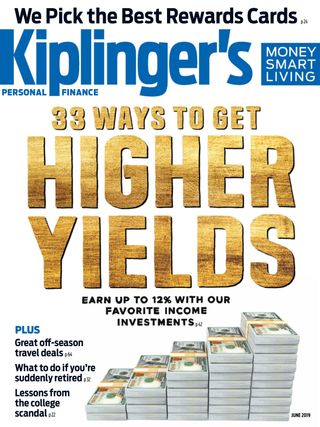

This story is from the June 2019 edition of Kiplinger's Personal Finance.
Subscribe to Magzter GOLD to access thousands of curated premium stories, and 10,000+ magazines and newspapers.
Already a subscriber? Sign In
MORE STORIES FROM Kiplinger's Personal Finance

Kiplinger's Personal Finance
A Helping Hand for the Homeless
This nonprofit offers shelters, job programs, support in finding a home and more.

2 mins
January 2026

Kiplinger's Personal Finance
Downsizing Advice, Part II
My column on downsizing (see “Living in Retirement,” Oct.) struck a chord with readers. I heard from many who offered advice on successfully culling clutter.
2 mins
January 2026
Kiplinger's Personal Finance
WHY COMPANY GUIDANCE MATTERS
Understanding how corporate profit forecasts affect analysts' estimates and stock ratings can help you make investment decisions.
4 mins
January 2026

Kiplinger's Personal Finance
WHAT SCIENCE REVEALS ABOUT MONEY AND A HAPPY RETIREMENT
Whether you're still planning or already retired, these research-based insights point the way to your best post-work life.
12 mins
January 2026

Kiplinger's Personal Finance
WHAT TO KNOW ABOUT FLOOD INSURANCE
Even if your home is outside a high-risk area, you may want to purchase coverage.
2 mins
January 2026

Kiplinger's Personal Finance
My Retirement Learning Curve
THE NEW WORLD OF RETIREMENT
2 mins
January 2026

Kiplinger's Personal Finance
CREATE A FINANCIAL PLAN WITH THESE TOOLS
Online programs for do-it-yourselfers are better than ever-and they're affordable, too.
9 mins
January 2026

Kiplinger's Personal Finance
2026 MONEY CALENDAR
These key dates and tips will help you make the most of your money in the new year.
7 mins
January 2026
Kiplinger's Personal Finance
Should You Renew Your CD?
AFTER you put money in a certificate of deposit, you can sit back while it collects interest over its term. Once it reaches maturity, you'll face a decision: renew it or withdraw the funds.
1 mins
January 2026

Kiplinger's Personal Finance
GIVING THE BULL THE BENEFIT OF THE DOUBT
KIPLINGER: What do you see ahead for financial markets in 2026? Do you have a target price for the S&P 500?
5 mins
January 2026
Translate
Change font size