
Go Unlimited with Magzter GOLD
Get unlimited access to 10,000+ magazines, newspapers and Premium stories for just
“Covid-19 Highlighted The Limitations Of Our Current Healthcare Infrastructure”
BioSpectrum Asia
|August 2020
COVID-19 has exposed the inadequacies in the healthcare industry, which is now evolving through vigorous transformation. The Asia Pacific (APAC) region is embracing digital transformation in the healthcare ecosystem. According to a 2020 report by Bain & Company, the APAC region is set to represent more than 40 per cent of growth in global healthcare spending over the next decade, expanding at a rate almost double than that of the rest of the world. This also means that APAC stakeholders have an unprecedented opportunity to transform the region’s healthcare landscape through collaboration and networking tools. Dirk Dumortier, Head of Business Development, Smart City and Healthcare (Asia Pacific) at Alcatel-Lucent Enterprise, Singapore, shared his views with BioSpectrum Asia about the new framework for healthcare delivery. Edited excerpts;

Dirk Dumortier, Head of Business Development SmartCity and Healthcare (APAC region), Alcatel-Lucent Enterprise, Singapore
What does healthcare continuity mean in the times of COVID-19?
There are two aspects to consider in healthcare continuity – operational needs and technical needs.
Operational needs involve ensuring that health facilities like clinics and hospitals remain operating during a pandemic while protecting both patients and healthcare workers. There are multiple ways to go about this. For instance, the building of temporary wards or rearranging normal wards into Intensive Care Units (ICUs) to cater to the surge in demand. Minimizing physical contact between patients and healthcare workers using collaboration tools that allow for shift handovers to be done remotely. Or the use of collaboration tools to enable administrative staff to work from home and general practitioners to reach out to their patients remotely.
Technical needs refer to the technologies that allow healthcare facilities to resolve operational requirements within a short time frame. Hospitals and clinics need to tap on technology that allows for:
Ruggedised network infrastructure to create secure wired and wireless connectivity for both hospital and patient use.
Work from home software and hardware – extending the hospital and care network and communications to home, allowing staff to work remotely without affecting operations.
Over-the-top (OTT) cloud collaboration licenses for free to all healthcare workers. This managed service does not require any onsite installations and can be rolled out quickly, enabling collaboration between hospitals and clinics, and even teleconsultations.
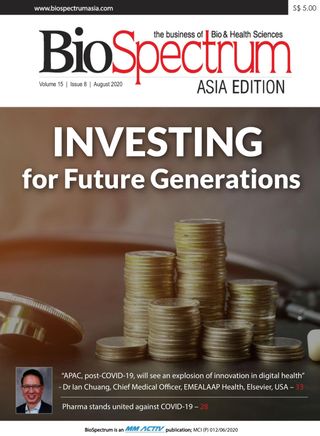

This story is from the August 2020 edition of BioSpectrum Asia.
Subscribe to Magzter GOLD to access thousands of curated premium stories, and 10,000+ magazines and newspapers.
Already a subscriber? Sign In
MORE STORIES FROM BioSpectrum Asia

BioSpectrum Asia
"The next 5-years will see mRNA science evolve beyond infectious disease"
A new survey from Moderna Singapore reveals persistent vaccine hesitancy among older adults in Singapore, even as international travel and year-end gatherings increase the urgency of protection. The findings point to clear opportunities to strengthen public health, including empowering healthcare professionals as trusted messengers and promoting co-administration of vaccines.

4 mins
BioSpectrum Asia Dec 2025
BioSpectrum Asia
No Funding No Vax for TB?
The World Health Organization (WHO)'s latest updates on tuberculosis (TB) released on November 12 reveal significant progress in diagnosis, treatment, and political commitment, but also expose deep vulnerabilities—especially in the South-East Asia Region (SEARO)—related to funding gaps and the uncertain future of novel TB vaccines. SEARO remains the global epicentre of the TB epidemic, carrying more than 45 per cent of the world's TB incidence despite representing only a quarter of the global population.
2 mins
BioSpectrum Asia Dec 2025

BioSpectrum Asia
Australia builds tailored heart pump to transform heart failure care
Despite making up half of the 64 million people living with heart failure, patients with this common form have no access to heart pump treatments and are left with only medication or palliative care.
1 min
BioSpectrum Asia Dec 2025

BioSpectrum Asia
Clinical Research Trends 2026: Hybrid DCTs Set for Surge as Innovation Outpaces Regulatory Hurdles
APAC's openness to innovation, combined with its large population and low trial density, creates strong potential for expanding decentralised clinical trials (DCTs), especially for patients with limited trial access. While regulatory diversity and operational challenges will continue to hinder fully decentralised models, the region is expected to adopt more digital technologies in clinical research. As a result, hybrid DCTs will keep gaining traction, and effective management of digitally collected data will remain a central focus for data science teams.
4 mins
BioSpectrum Asia Dec 2025

BioSpectrum Asia
CSL Seqirus to localise advanced influenza vaccine manufacturing in Saudi Arabia
Australia-based CSL Seqirus and Vaccine Industrial Company have signed a Memorandum of Understanding with the Ministry of Health of Saudi Arabia to enhance the biotechnology sector by accessing advanced cellbased seasonal and pandemic influenza vaccines and localising manufacturing in Saudi Arabia.
1 min
BioSpectrum Asia Dec 2025

BioSpectrum Asia
How Sponsors Could Gain Advantage by Embracing Dose Optimisation in Asia by 2026
In 2026, oncology drug development in Asia may move away from the historical maximum tolerated dose (MTD) paradigm toward evidence-based dose optimisation. Sponsors might consider adopting strategies similar to the FDA's Project Optimus, which emphasises selecting doses that balance efficacy and safety rather than relying solely on toxicity thresholds. Doing so could improve patient outcomes and position companies favourably as regulatory expectations evolve.
1 mins
BioSpectrum Asia Dec 2025

BioSpectrum Asia
Fujifilm launches joint research with National Cancer Center in Japan
Fujifilm Corporation has signed a joint research agreement with the National Cancer Center Japan, a Tokyo-based national institution recognised for its leadership in cancer care and research.
1 min
BioSpectrum Asia Dec 2025

BioSpectrum Asia
Monash spinout RAGE Biotech secures $29 M to advance next-generation RNA therapeutics
Australia's Monash University spinout RAGE Biotech has raised $29 million in Series A funding, marking a major step toward translating RNA-based therapeutics for chronic inflammatory disease into the clinic.
1 min
BioSpectrum Asia Dec 2025

BioSpectrum Asia
Submitting clinical data to the FDA and PDMA: An efficient and compliant approach
In both the US and Japan, regulators provide an extensive set of resources detailing the rules and specifications governing submissions for marketing approval of new drugs and biologics. Fortunately, despite some differences, the regulations concerning clinical data have a surprising amount in common. It is possible that with a solid understanding of the requirements and an adherence to best practices, sponsors can develop some of the same material for submission to both countries.
2 mins
BioSpectrum Asia Dec 2025

BioSpectrum Asia
Regenerative medicines and microbiome health are emerging as exciting frontiers, with Australian companies and researchers pushing into new therapeutic approaches
After more than a year at the helm of AusBiotech, CEO Rebekah Cassidy reflects on her early priorities and the organisation’s ambitions as Australia accelerates its position in the global life sciences economy. In an email interaction on the sidelines of AusBiotech 2025, she highlights the country's progress in mRNA, cell and gene therapy, and radiopharmaceuticals, outlines emerging areas of momentum, and discusses how new partnerships and MoUs are strengthening collaboration across the biotech ecosystem. Rebekah also outlines how AusBiotech is preparing Australia for a more competitive and connected global life sciences economy and the strategic priorities shaping AusBiotech’s next chapter. Edited excerpts:
7 mins
BioSpectrum Asia Dec 2025
Translate
Change font size