
Go Unlimited with Magzter GOLD
Get unlimited access to 10,000+ magazines, newspapers and Premium stories for just
Try GOLD - Free
Pests Which Can Save Lives
BUSINESS ECONOMICS
|May 1-15, 2019
There are no pests, no weeds, in nature. There are beings who get in the way of humans growing food, or destroying the habitat in order to take up residence and make service centres for these human populations. Billions of insects are killed by pesticides alone for this purpose.

Human beings have used insects as medicine in different human cultures throughout the world, but very little research was done to convert local use into proven, standardized medicine. Entomotherapy is a branch of science that uses insects for medicine. The rise of antibiotic-resistant infections has forced pharmaceutical research into looking for new resources. Many insects, used in alternative medicine, are now being tested for mainstream medical products. FDA, for instance, recently approved the flu vaccine, Flublok, which is derived from cells taken from the ovaries of the fall armyworm moth.
One insect alone, the honey bee, provides honey, pollen, royal jelly, propolis and an anti-inflammatory peptide melittin. Honey is applied to skin to treat scar tissue, rashes and burns, and as an eye poultice, for digestive problems and as a general health restorative. It is taken hot to treat colds, coughs, laryngitis, tuberculosis, throat infections and lung diseases.
Apitoxin (honey bee venom) is applied through direct stings to relieve arthritis, rheumatism, polyneuritis and asthma. Propolis, used by bees as a hive insulator and sealant, is said to have antibiotic, anaesthetic, and anti-inflammatory properties. Royal jelly is used to treat anaemia, ulcers, arteriosclerosis and hypertension. Bee pollen is eaten as a health restorative.
Over a thousand protein families have been identified in the saliva of blood-feeding insects; these may provide useful drugs such as anticoagulants, vasodilators, antihistamines and anaesthetics.
Here are some lesser known insects who are used in human medicine :


This story is from the May 1-15, 2019 edition of BUSINESS ECONOMICS.
Subscribe to Magzter GOLD to access thousands of curated premium stories, and 10,000+ magazines and newspapers.
Already a subscriber? Sign In
MORE STORIES FROM BUSINESS ECONOMICS

BUSINESS ECONOMICS
Tata Power introduces EZ Home Automation Solutions in Kolkata
Designed to make everyday life more comfortable and secure, Tata Power introduced its Tata Power EZ Home Automation Solutions in Kolkata.

1 min
February 01 - 28, 2026

BUSINESS ECONOMICS
Economic Survey 2025–26
Every year, the Economic Survey is presented in Parliament two days before the Union Budget.
3 mins
February 01 - 28, 2026

BUSINESS ECONOMICS
Navigating the soul's ultimate intelligence
In recent years, psychologists and thinkers have introduced the concept of Spiritual Intelligence (SI) to describe what makes a human being whole, integrated, and profoundly creative.
3 mins
February 01 - 28, 2026

BUSINESS ECONOMICS
Where Bengal meets Rajasthan in heritage conservation
The government of Rajasthan organized a significant heritage preservation initiative as part of the NDTV Conclave - 'Rising Rajasthan Vikas Bhi, Virasat Bhi', held on 24th December at Mandawa Castle, Fort Mandawa, Rajasthan.
1 min
February 01 - 28, 2026

BUSINESS ECONOMICS
Structural glitches trouble Indian economy
India's economy is often described as one of the fastest-growing in the world.
2 mins
February 01 - 28, 2026

BUSINESS ECONOMICS
Tredence sets the stage for Eastern India's AI future with new center in Kolkata
Tredence announced the inauguration of its new office in Kolkata, in the presence of Babul Supriyo, Minister of Information Technology and Electronics, West Bengal.
1 min
February 01 - 28, 2026

BUSINESS ECONOMICS
Educator, Author, and Thought Leader on Consciousness, Education, and Governance
Devesh Gupta works at the intersection of consciousness, education, and public systems.
5 mins
February 01 - 28, 2026

BUSINESS ECONOMICS
Beyond GDP numbers- recalibrating prosperity for 2026
Why growth alone no longer tells the full story
2 mins
February 01 - 28, 2026
BUSINESS ECONOMICS
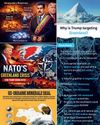
World's greed for Rare Earth: US steps into Greenland, Venezuela & Ukraine
Attempts to grab Greenland, Ukraine & Venezuela are examples of modern-day colonialism.
3 mins
February 01 - 28, 2026
BUSINESS ECONOMICS
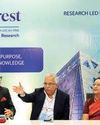
TCG CREST to expand globally with academic hubs in the UK, Japan, and the US
TCG CREST (Deemed University) announced a significant expansion roadmap, outlining its plans to establish academic hubs in the UK, Japan, and the US as part of a broader strategy to deepen global research collaboration and cross-sector engagement.
1 min
February 01 - 28, 2026
Translate
Change font size