Try GOLD - Free
The Basics Of Pigeon Pea Production
Farmer's Weekly
|Farmer's Weekly 4 May 2018
Pigeon peas have the ability to survive and provide good economic returns in a drought-prone environment and low input farming systems.
-

Pigeon peas (Cajanus cajan) can be used as a vegetable food crop that serves as a source of protein, carbohydrates and other minerals. The flavourful seeds can be eaten in fresh, shelled, dried or flour form.
The peas are an excellent form of fodder that can be used for animal and poultry feed.
They also fix nitrogen and are good for inter-cropping and crop rotation. The branches and stems can be used for baskets and fuel.
GROWING REQUIREMENTS
Pigeon peas grow well under temperatures of between 18°C and 35°C. Bright sunshine is needed for optimum yield. The plants are sensitive to waterlogging and frost.
Rainfall ranging between 600mm and 1 000mm per annum is preferable. Pigeon peas prefer moist conditions for their first two growing months and drier conditions during flowering and harvesting.
The crop grows well in all types of soils, from sandy to heavy loams, with well-drained, medium heavy loams being best. It requires a pH level ranging from 5 to 7. Excessive acidity inhibits nodulation.
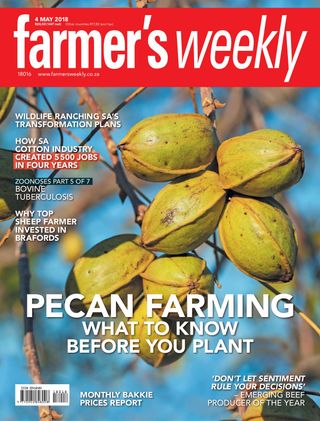

This story is from the Farmer's Weekly 4 May 2018 edition of Farmer's Weekly.
Subscribe to Magzter GOLD to access thousands of curated premium stories, and 10,000+ magazines and newspapers.
Already a subscriber? Sign In
MORE STORIES FROM Farmer's Weekly
Farmer's Weekly
Cannabis and marketing in South Africa
The path from cultivation to commercial success remains complicated by regulatory ambiguity. Cultivators who master compliant marketing while delivering verifiable quality will build sustainable businesses, says Thomas Walker.

2 mins
January 16-23, 2026
Farmer's Weekly
Foot-and-mouth disease project targets waste reduction and regulatory reform
A groundbreaking research collaboration between Red Meat Industry Services, the University of Pretoria, and global animal health leader Zoetis is aiming to transform South Africa's approach to foot-and-mouth disease.
3 mins
January 16-23, 2026
Farmer's Weekly
What to expect in 2026
The world faces a complex interplay of economic, geopolitical, environmental, technological, and social pressures.
3 mins
January 16-23, 2026
Farmer's Weekly
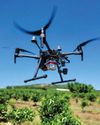
How drones are revolutionising pest and disease detection in agriculture
Drones are reshaping modern crop protection by giving farmers a powerful new vantage point: the sky. With advanced sensors, high-resolution imaging, and artificial intelligence-driven analytics, these unmanned aerial vehicles can detect early signs of disease, water stress, and pest damage long before the human eye can. Jedrie Harmse spoke to agricultural drone specialist Monique Heydenrych.
7 mins
January 16-23, 2026
Farmer's Weekly
Generic advertising in perspective
Dr Koos Coetzee explains how industry organisations and the agriculture sector actually have the ability to prudently manage the negative perceptions surrounding generic advertising campaigns.
2 mins
January 16-23, 2026

Farmer's Weekly
Elsenburg Agricultural Training Institute celebrates excellence
The Elsenburg Agricultural Training Institute marked a major milestone in December 2025, conferring over 200 agricultural qualifications, including bachelor's degrees and various national certificates.
2 mins
January 16-23, 2026
Farmer's Weekly
Grain SA issues guidelines as poor-quality agri inputs threaten farmers livelihoods
Grain SA has urged South African grain and oilseed farmers to act fast when seeds, fertilisers, or agrochemicals underperform, providing clear guidelines to protect crops.
2 mins
January 16-23, 2026
Farmer's Weekly
Vegetable price trends as we enter the new year
This analysis by Zama Sangweni explores how five key vegetable commodities, cabbages, carrots, onions, potatoes, and tomatoes, performed, considering recent supply volumes and consumer demand patterns.
2 mins
January 16-23, 2026
Farmer's Weekly
University of the Free State's cutting-edge research to save the giraffe from extinction
The University of the Free State has launched a first-of-its-kind giraffe research facility, creating a groundbreaking, low-stress environment where standing procedures, as well as reproductive and physiological research, can be conducted on habituated giraffes. Annelie Coleman reports on the initiative.
5 mins
January 16-23, 2026

Farmer's Weekly
Joburg Fresh Produce Market needs a 'refresh'
South Africa's fresh produce markets are vital to food security, supplying up to half of the nation's fruit and vegetables. Protecting and modernising these markets is essential for a resilient, equitable food system writes Marc Wegerif, senior lecturer in Development Studies at the University of Pretoria.
4 mins
January 16-23, 2026
Translate
Change font size