
Go Unlimited with Magzter GOLD
Get unlimited access to 10,000+ magazines, newspapers and Premium stories for just
Sound Systems Of The Sea
BBC Wildlife
|June 2021
The underwater world can be a dark and murky place, so many creatures rely on sound to survive. But some species are adapting their acoustic calling cards in exciting new ways.

In oceans around the world, marine animals are making quite a noise. It’s long been known that cetaceans such as whales and dolphins use sound to locate food, to navigate and to communicate, but new research is revealing fascinating other uses for this underwater orchestra – from evading predators to ‘whispering’ to their young.
The science of locating objects by sound is known as echolocation (or biosonar). Many species, including toothed whales and dolphins, bats, swiftlets, oilbirds and shrews, use the behaviour to ‘picture’ their environment via sound. Echolocating animals emit calls, locating and identifying objects through the returning echoes. It’s a highly specialised system that can be used for navigation, foraging and hunting.
Whales and dolphins echolocate by throwing out beams of high-frequency clicks in the direction they are facing, much like sonar on a submarine. (Frequency relates to how high or low a sound is. For example, the beat of a bass drum and a rumble of thunder are low-frequency sounds; a piercing whistle and a child’s squeal are high-frequency sounds.)
These clicks are created by passing air through the skull, specifically through the bony nares (nostrils) and across the phonic lips (structures that project into the nasal passage). When air passes through the phonic lips, the surrounding tissue vibrates, producing the sound (see box on p71).
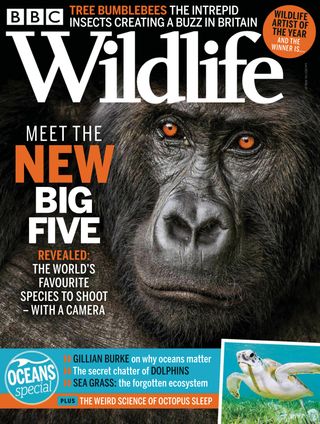

This story is from the June 2021 edition of BBC Wildlife.
Subscribe to Magzter GOLD to access thousands of curated premium stories, and 10,000+ magazines and newspapers.
Already a subscriber? Sign In
MORE STORIES FROM BBC Wildlife
BBC Wildlife
"I was terrified the elephant would ram us"
African elephant in Kenya

2 mins
January 2026
BBC Wildlife
ALL YOU EVER NEEDED TO KNOW ABOUT THE Fennec fox
THE FENNEC FOX IS THE SMALLEST fox in the world, with a body length that can be as little as 24cm.
3 mins
January 2026
BBC Wildlife
INTO THE PLASTISPHERE
A unique synthetic ecosystem is evolving in our oceans – welcome to the plastisphere
7 mins
January 2026
BBC Wildlife
“More than half of all animal life exists in a parasitic relationship, and all life lives in symbiosis”
Our survival depends on species evolving to live together - but some relationships take dark turns
7 mins
January 2026
BBC Wildlife
Are animals able to dream?
SLEEP IS A MYSTERIOUS THING. FOR A long time, we weren't sure why we do it.
1 mins
January 2026
BBC Wildlife
Does a cuckoo know it's a cuckoo?
ABSURD LITTLE BIRDS ACROSS THE world lay their eggs in the nests of other species, leaving the hapless parents to raise a changeling at the expense of their own offspring.
2 mins
January 2026
BBC Wildlife
Orcas killing young sharks
Juvenile great whites are easy prey for orca pod
1 mins
January 2026
BBC Wildlife
Ocean goes on tour
Acclaimed film touring the UK, backed by live orchestra and choir
1 min
January 2026
BBC Wildlife
Feisty bats hunt like lions
Winged mammals use a 'hang and wait' strategy to take down large prey
1 mins
January 2026

BBC Wildlife
SNAP-CHAT
Richard Birchett on magical merlins, wily coyotes and charging deer
2 mins
January 2026
Translate
Change font size