
Go Unlimited with Magzter GOLD
Get unlimited access to 10,000+ magazines, newspapers and Premium stories for just
Is the answer really blowin' in the wind?
BBC Wildlife
|July 2022
Renewable energy is a necessity as we aim for net-zero carbon emissions, but it comes at a cost to wildlife

STANDING ON A Sussex beach while galeforce winds create a maelstrom of waves threatening to inundate the low-lying land behind isn't the best time to argue against wind energy.
Wind, clearly, is an abundant and powerful force, and the swelling surf is a stark reminder that rising sea levels - caused by climate change - could create havoc for many parts of Britain's coastline, and increasingly are.
But campaigner Zoe Visram is undeterred. "Rampion 2 wind farm is going to cause tremendous harm to wildlife, with the cable [carrying the electricity] coming ashore here at Climping, a Site of Special Scientific Interest (SSSI) for its vegetative shingle, sand dunes, and migratory birds," she says. "The trench for the underwater cable will impact marine life, including seahorses, black bream, and oyster and mussel beds."
Visram is leading efforts by local residents to stop Rampion 2, a development of between 75 and 116 wind turbines off the coast of Sussex, stretching some 50km from Newhaven to Selsey Bill. Modern wind turbines are enormous - those planned for Rampion 2 could reach 325m high, as tall as the Eiffel Tower, and will be clearly visible from the coast.
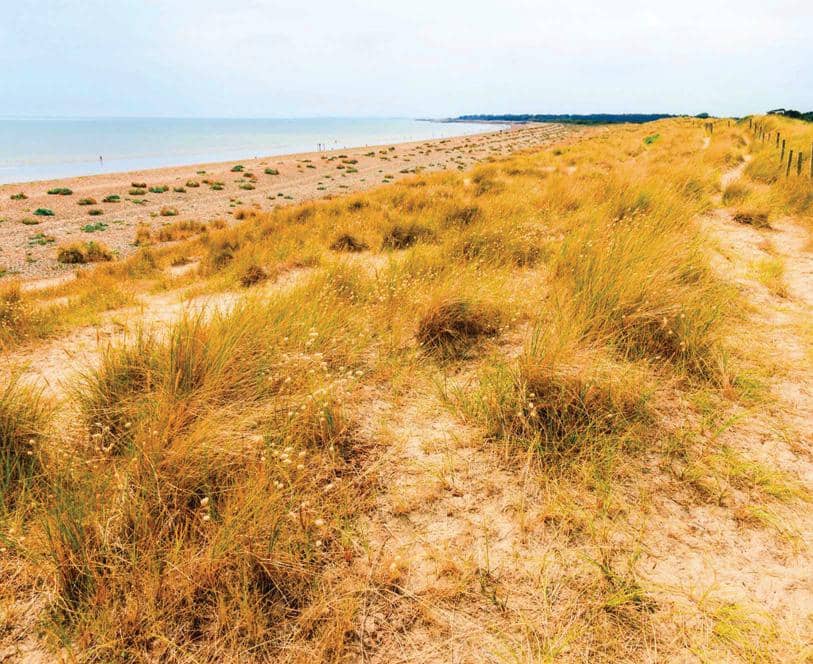
Two official bodies - Natural England and the South Downs National Park Authority - along with the RSPB, Sussex Wildlife Trust, and Sussex Ornithological Society, have expressed concerns about the potential impacts of Rampion 2. These range from seabirds and migrating songbirds colliding with the turbines to the disturbance caused by laying the underwater cable and then digging a 50m-wide cable route that winds 37km inland through the South Downs National Park.

This story is from the July 2022 edition of BBC Wildlife.
Subscribe to Magzter GOLD to access thousands of curated premium stories, and 10,000+ magazines and newspapers.
Already a subscriber? Sign In
MORE STORIES FROM BBC Wildlife
BBC Wildlife
"I was terrified the elephant would ram us"
African elephant in Kenya

2 mins
January 2026
BBC Wildlife
ALL YOU EVER NEEDED TO KNOW ABOUT THE Fennec fox
THE FENNEC FOX IS THE SMALLEST fox in the world, with a body length that can be as little as 24cm.
3 mins
January 2026
BBC Wildlife
INTO THE PLASTISPHERE
A unique synthetic ecosystem is evolving in our oceans – welcome to the plastisphere
7 mins
January 2026
BBC Wildlife
“More than half of all animal life exists in a parasitic relationship, and all life lives in symbiosis”
Our survival depends on species evolving to live together - but some relationships take dark turns
7 mins
January 2026
BBC Wildlife
Are animals able to dream?
SLEEP IS A MYSTERIOUS THING. FOR A long time, we weren't sure why we do it.
1 mins
January 2026
BBC Wildlife
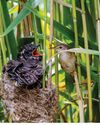
Does a cuckoo know it's a cuckoo?
ABSURD LITTLE BIRDS ACROSS THE world lay their eggs in the nests of other species, leaving the hapless parents to raise a changeling at the expense of their own offspring.
2 mins
January 2026
BBC Wildlife
Orcas killing young sharks
Juvenile great whites are easy prey for orca pod
1 mins
January 2026
BBC Wildlife
Ocean goes on tour
Acclaimed film touring the UK, backed by live orchestra and choir
1 min
January 2026
BBC Wildlife
Feisty bats hunt like lions
Winged mammals use a 'hang and wait' strategy to take down large prey
1 mins
January 2026
BBC Wildlife
SNAP-CHAT
Richard Birchett on magical merlins, wily coyotes and charging deer
2 mins
January 2026
Translate
Change font size