Try GOLD - Free
FADING queen
BBC Wildlife
|October 2021
Far away in French Polynesia, a little songbird is clinging on to survival. Can the Fatu Hiva monarch beat the odds?

Echoing across a valley on the island of Fatu Hiva in the South Pacific Ocean is a sound heard nowhere else on Earth. Few have ventured into this narrow gorge of yellow blooming hibiscus and razor-leaved pandanus, for the only pathways are those forged by wild pigs. Anyone foolhardy enough to follow these trails must come armed with a machete and a willingness to scramble over sharp, slippery boulders.
Scientist Caroline Blanvillain describes the unusual cry heard here as “So powerful you believe the dinosaurs are coming”. Others liken this peculiar noise to the squeals of a dying cat. It emanates not from some mythical creature but from an insectivorous songbird called the Fatu Hiva monarch. At the time of writing, there are precisely 17 individuals left, making this little bird one of the most endangered animals in the world.
Fatu Hiva is the most southerly of the Marquesas Islands, an archipelago in north-eastern French Polynesia. There is no airstrip on Fatu Hiva and it can only be reached by boat. When drawn on a map, it is often depicted as a mere dot, and at only 15km long, it is indeed of miniature proportions. However, to visit Fatu Hiva is to witness the grandeur of a volcanic eruption frozen in time; a crest of mountains forms the spine of the island, from which ridges and ravines descend into the ocean. The island emerged from the sea so recently (a few million years is, of course, recent in geological timeframes) that its shores have not yet softened to sandy beaches; instead, black basalt columns rise like battlements, sheltering the rich green interior of the island from the vagaries of the waves.
Looks deceive
The Marquesan name for the Fatu Hiva monarch is ’

This story is from the October 2021 edition of BBC Wildlife.
Subscribe to Magzter GOLD to access thousands of curated premium stories, and 10,000+ magazines and newspapers.
Already a subscriber? Sign In
MORE STORIES FROM BBC Wildlife
BBC Wildlife
“Our canoe was nearly sunk by a hippo”
Hippos in Niger

3 mins
March 2026

BBC Wildlife
Why does Australia have such weird animals?
AUSTRALIA IS A LONG WAY FROM anywhere and has been for a very long time. The landmass definitively separated from the supercontinent of Gondwana around 40 million years ago and, since then, has existed - as a big blob in the middle of an even bigger ocean - in glorious geographical isolation.
2 mins
March 2026
BBC Wildlife
Which country has the fewest native animals?
AT AROUND 61KM² SAN MARINO, IN Europe, is one of the world's smallest countries. Entirely landlocked, it is surrounded by Italy.
1 min
March 2026

BBC Wildlife
Why do some species sunbathe?
RING-TAILED LEMURS ARE FAMED FOR their 'sun-worshipping' posture, legs and arms outstretched to reveal their pale bellies. Like humans, they do it to save energy and boost health. Sunlight is necessary to many bodily processes. As a source of vitamin D it's required to maintain bone and muscle health. It is also related to the production of serotonin, the chemical that regulates mood, sleep and stress response.
1 mins
March 2026
BBC Wildlife
ALL YOU EVER NEEDED TO KNOW ABOUT THE Piranha
PIRANHAS HAVE A REPUTATION as some of the most dangerous freshwater hunters: terrifying predators capable of devouring a large mammal in mere minutes.
3 mins
March 2026
BBC Wildlife
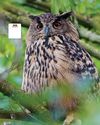
EAGLES LANDING
Eagle owls were once heavily persecuted. But thanks to a new initiative, these magnificent birds are reclaiming a wetland home
7 mins
March 2026
BBC Wildlife
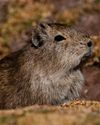
Do wild guinea pigs exist?
GUINEA PIGS, WHICH ARE NOT pigs and not from Guinea, are domesticated rodents that do not exist in the wild.
1 min
March 2026

BBC Wildlife
SNAP-CHAT: THE INSIDE WORLD OF WILDLIFE PHOTOGRAPHY
Boris Belchev on birds, batteries and battling bears with pop music
3 mins
March 2026
BBC Wildlife
Does anything live in the Bermuda Triangle?
THE BERMUDA TRIANGLE, IN THE NORTH Atlantic Ocean, has become infamous for the planes and ships that are said to have vanished without a trace while travelling through the area.
1 min
March 2026
BBC Wildlife
Do animals have different blood types?
HUMANS HAVE FOUR MAIN BLOOD GROUPS: A, B, AB and O.
1 min
March 2026
Translate
Change font size