Try GOLD - Free
DIVE IN!
BBC Wildlife
|January 2022
Steve Backshall met up with BBC Wildlife editor Paul McGuinness to explain why we need to stop thinking of sharks as creatures to fear

HALF OF ALL SHARK SPECIES ARE NOW LISTED as endangered or critically endangered, despite their role in ocean ecosystems. Steve shares his fascination with these misunderstood creatures – and how social media could be their unlikely saviour
BBC WILDLIFE: WHAT DO YOU FIND SO fascinating about sharks?
Steve Backshall: We have an inherent fascination for apex predators – for the top-of-the-line predator that is at the evolutionary high-water mark, and sharks appear to be that.
They have super senses and can detect the movement of fish – that may already be long gone – from the wake they leave behind. They have the ability to sense the weak electrical fields given off by the moving muscles of their prey. They have an extraordinary olfactory sense – the ability to perceive minute amounts of a substance many, many times diluted in water. They are incredibly beautiful, very sleek and streamlined, but also incredibly complex.
And their presence encompasses the most important and interesting span of time on our planet – at least 400 million years, possibly more like 500 million years. They’ve lived through all the major extinction events, but they could disappear within this one that’s occurring right now. And that is baffling and frustrating, and it’s also something that I’ve seen with my own eyes.
I’ve been going back to the exact same dive site where I dived in 1991, 1997, 2000, 2003, 2007, 2012 and now, and seeing the decline in the reefs, in the mangroves and in the sharks, it hits you, it really hits you. It’s like seeing your local woodlands cut down it has that same impact on you, and in a way that you just don’t get from reading about it in a newspaper.
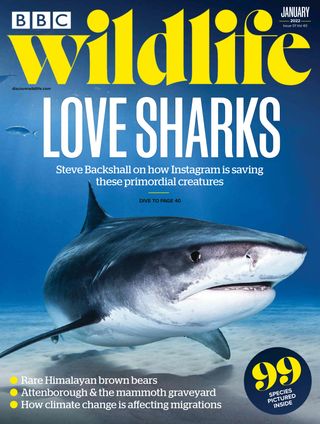

This story is from the January 2022 edition of BBC Wildlife.
Subscribe to Magzter GOLD to access thousands of curated premium stories, and 10,000+ magazines and newspapers.
Already a subscriber? Sign In
MORE STORIES FROM BBC Wildlife
BBC Wildlife
“Our canoe was nearly sunk by a hippo”
Hippos in Niger

3 mins
March 2026

BBC Wildlife
Why does Australia have such weird animals?
AUSTRALIA IS A LONG WAY FROM anywhere and has been for a very long time. The landmass definitively separated from the supercontinent of Gondwana around 40 million years ago and, since then, has existed - as a big blob in the middle of an even bigger ocean - in glorious geographical isolation.
2 mins
March 2026
BBC Wildlife
Which country has the fewest native animals?
AT AROUND 61KM² SAN MARINO, IN Europe, is one of the world's smallest countries. Entirely landlocked, it is surrounded by Italy.
1 min
March 2026

BBC Wildlife
Why do some species sunbathe?
RING-TAILED LEMURS ARE FAMED FOR their 'sun-worshipping' posture, legs and arms outstretched to reveal their pale bellies. Like humans, they do it to save energy and boost health. Sunlight is necessary to many bodily processes. As a source of vitamin D it's required to maintain bone and muscle health. It is also related to the production of serotonin, the chemical that regulates mood, sleep and stress response.
1 mins
March 2026
BBC Wildlife
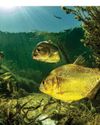
ALL YOU EVER NEEDED TO KNOW ABOUT THE Piranha
PIRANHAS HAVE A REPUTATION as some of the most dangerous freshwater hunters: terrifying predators capable of devouring a large mammal in mere minutes.
3 mins
March 2026
BBC Wildlife
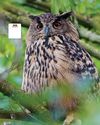
EAGLES LANDING
Eagle owls were once heavily persecuted. But thanks to a new initiative, these magnificent birds are reclaiming a wetland home
7 mins
March 2026
BBC Wildlife
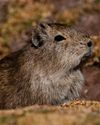
Do wild guinea pigs exist?
GUINEA PIGS, WHICH ARE NOT pigs and not from Guinea, are domesticated rodents that do not exist in the wild.
1 min
March 2026

BBC Wildlife
SNAP-CHAT: THE INSIDE WORLD OF WILDLIFE PHOTOGRAPHY
Boris Belchev on birds, batteries and battling bears with pop music
3 mins
March 2026
BBC Wildlife
Does anything live in the Bermuda Triangle?
THE BERMUDA TRIANGLE, IN THE NORTH Atlantic Ocean, has become infamous for the planes and ships that are said to have vanished without a trace while travelling through the area.
1 min
March 2026
BBC Wildlife
Do animals have different blood types?
HUMANS HAVE FOUR MAIN BLOOD GROUPS: A, B, AB and O.
1 min
March 2026
Translate
Change font size