Try GOLD - Free
It's a Shock
African Birdlife
|July - August 2016
Birds & electricity infrastructure: how you can help
-

Let’s face it – how many of us can cope without electricity for a day? Or even an hour? We all need electricity for that first cup of coffee in the morning, to charge cell phones, to keep food and drinks cold, to heat water for the shower. But what does this need cost South Africa’s bird life?
Energy and communications infrastructure such as telephone lines, cell phone towers, power lines and wind turbines represent an important interface between humans and wildlife. These structures are often tall and they cross huge distances, increasing the opportunity for various kinds of interaction with wildlife, including electrocution and collisions with power lines. Eskom is responsible for providing the electricity required to meet the ever increasing needs of South Africans and its infrastructure is expanding daily. Its challenge is to find a balance between the interests of industry, residential electrification needs and the effective use and conservation of resources.
Avian fatalities due to power line interactions were poorly understood in South Africa until the late 1970s and few mitigation measures were implemented. Public awareness of these fatalities has grown significantly over the past four decades, especially since the advent of social media, and national environmental legislation now mandates utilities to lessen their impacts on wildlife.


This story is from the July - August 2016 edition of African Birdlife.
Subscribe to Magzter GOLD to access thousands of curated premium stories, and 10,000+ magazines and newspapers.
Already a subscriber? Sign In
MORE STORIES FROM African Birdlife
African Birdlife
Southern SIGHTINGS
MID-JULY TO MID-SEPTEMBER 2025

2 mins
November/December 2025
African Birdlife
BLUE CRANE
A symbol of pride and vulnerability
6 mins
November/December 2025
African Birdlife
CHAOS AT THE KOM
Between 1 and 3 December 2024 there was a remarkable sardine run off Kommetjie on the Cape Peninsula.
1 min
November/December 2025
African Birdlife
Ramsar Convention on Wetlands
Whatever form they take, from peatlands to estuaries, wetlands are critical for the survival of waterbirds, such as the White-winged Flufftail, Maccoa Duck and Grey Crowned Crane. They are highly productive ecosystems that are characterised by diverse and abundant food sources and they provide essential feeding, breeding, migratory and resting habitat for numerous species. iSimangaliso Wetland Park, for example, supports more than 500 bird species.
1 mins
November/December 2025
African Birdlife
FRAMING wild feathers
WINNERS OF THE BIRDLIFE SOUTH AFRICA PHOTOGRAPHY COMPETITION 2025
4 mins
November/December 2025
African Birdlife
PITTA PILGRIMAGE
Look there - on that branch, behind those green leaves!’ Crouching in thick forest, with sweat dripping, heart pounding and eyes straining, I frantically searched with my binoculars, trying to work out which branch, which green leaves - indeed, which darned tree? I was close to panicking as we had come so far, and yet I just couldn't see where our guide was pointing.
4 mins
November/December 2025
African Birdlife
Unlocking a DIGITAL WORLD of bird stories
For more than 75 years, the South African Bird Ringing Unit (SAFRING), now hosted by the FitzPatrick Institute of African Ornithology, has woven together the complex life stories of southern Africa's birds.
1 mins
November/December 2025
African Birdlife
MIRRORLESS MARVEL
Testing Canon's R1 in the field
3 mins
November/December 2025
African Birdlife
Is NECHISAR NIGHTJAR a hybrid?
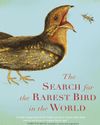
Vernon Head's award-winning book The Search for the Rarest Bird in the World brought widespread attention to the curious case of the Nechisar Nightjar. In 1992, a dead nightjar was found on a dirt road in Nechisar National Park, southern Ethiopia. A wing was collected and the bird was later described as a new species based on its distinctive large white wing patch. Its scientific name, Caprimulgus solala, attests to the fact that it is known only from a single wing.
2 mins
November/December 2025
African Birdlife
a TALL Tail
In the high grass of eastern South Africa, midsummer is when the Long-tailed Widowbird transforms the veld into a stage.
1 min
November/December 2025
Translate
Change font size