Versuchen GOLD - Frei
GREENLAND'S FROZEN SECRET
Scientific American
|July/August 2025
The collapse of the world's second-largest ice sheet would drown cities worldwide. Is that ice more vulnerable than we know?
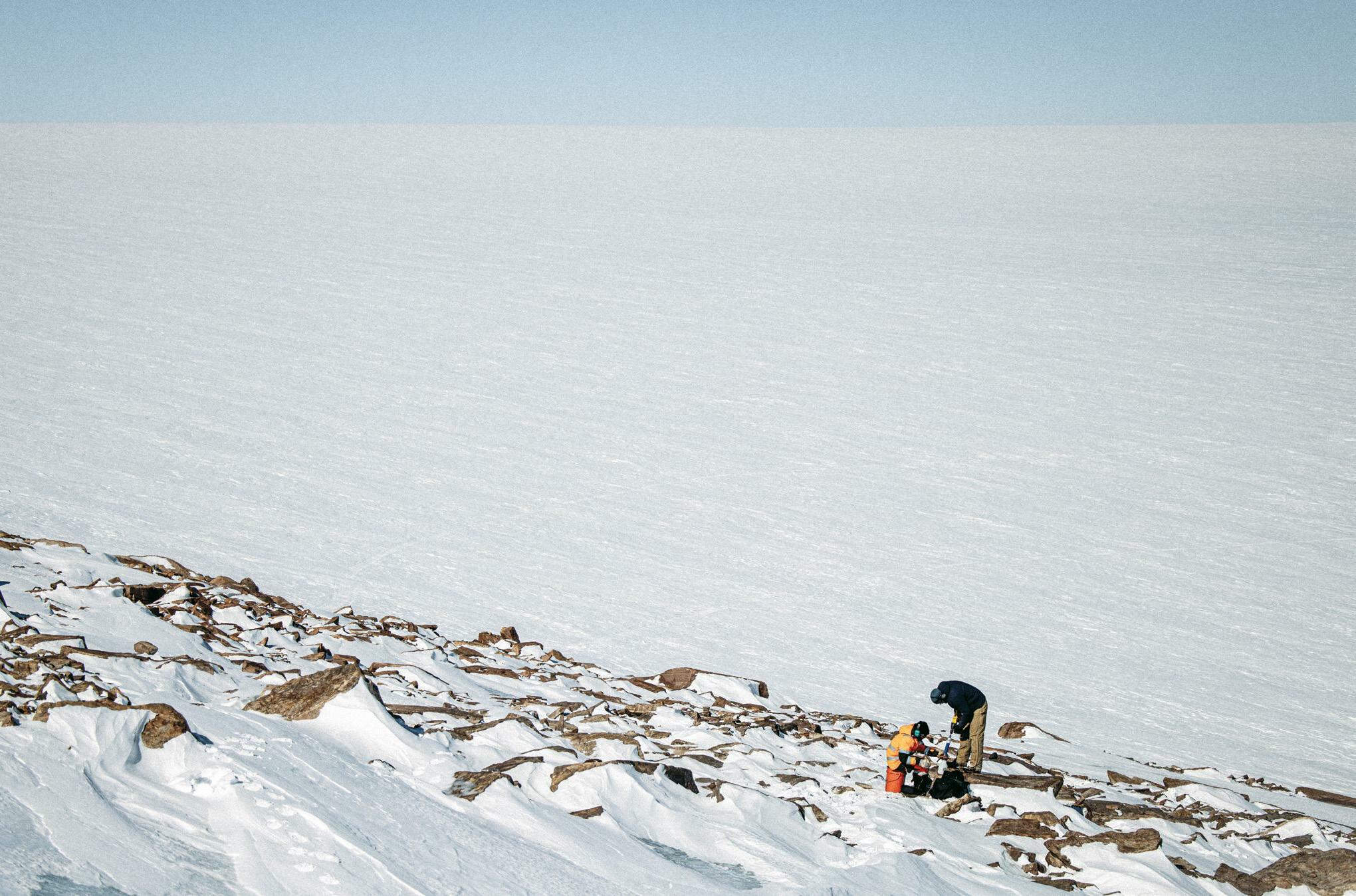
INSIDE A TENT FASTENED TO THE SURFACE of Greenland's ice sheet, the members of the GreenDrill expedition huddled around a drilling rig. The machine whined and shook as it spun. For days the drillers had been inching through ancient, solid ice to reach the rock below.
Outside, the sun burned down through a cloudless sky. The wind, having tumbled down 4,000 feet of elevation from the domed summit of the ice sheet hundreds of miles to the west, charged over the surface in wavelike pulses. The tent shuddered like some mad bouncy house at the end of the world. The nine members of the expedition—ice and rock engineers, scientists, polar-survival specialists—knew they should be close to bedrock. But Forest Harmon, the driller working the handwheel, said he still couldn't feel the core break—the moment when the metal catcher inside the drill head separates the bedrock core from its earthly tomb.
The GreenDrill site sat on the frozen edge of the Northeast Greenland Ice Stream, or NEGIS, a massive, moving tongue of ice that drains 12 to 16 percent of the ice sheet into the ocean. Upended and laid atop the contiguous U.S., it would look like a flowing mountain range more than a mile and half tall at its highest point and 20 to 30 miles across, extending from Boston to Washington, D.C. If the entire Greenland ice sheet melted, global sea levels would rise by about 24 feet. The NEGIS is how a good deal of that planet-altering flood would enter the sea.
The sheet won't melt all at once, of course, but scientists are increasingly concerned by signs of accelerating ice-sheet retreat. A recent report showed that it has been losing mass every year for the past 27 years. Another study found that nearly every Greenlandic glacier has thinned or retreated in the past few decades. The NEGIS itself has extensively sped up and thinned over the past decade.
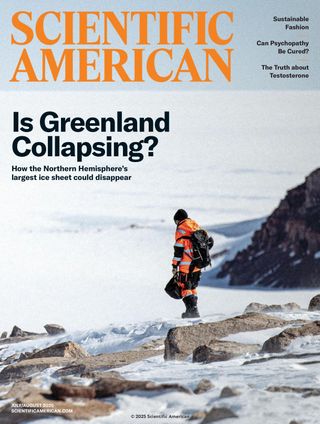

Diese Geschichte stammt aus der July/August 2025-Ausgabe von Scientific American.
Abonnieren Sie Magzter GOLD, um auf Tausende kuratierter Premium-Geschichten und über 9.000 Zeitschriften und Zeitungen zuzugreifen.
Sie sind bereits Abonnent? Anmelden
WEITERE GESCHICHTEN VON Scientific American
Scientific American
War in Plain Sight
Near-real-time satellite coverage means militaries can no longer hide. So they are learning to lie better

4 mins
June 2026

Scientific American
A Bridge-Crossing Puzzle Led to New Math
Are you smarter than an 18th-century Prussian?
5 mins
June 2026
Scientific American
Nocturnal Navigation
These ants use a sophisticated lunar compass
2 mins
June 2026
Scientific American
Early Plates
Scientists found the oldest direct evidence for Earth’s tectonic motion
3 mins
June 2026

Scientific American
Mating Arm
Reproduction in octopuses is even weirder than you think
3 mins
June 2026
Scientific American
Battleship Science
Game-playing AI can show us how to do science better
2 mins
June 2026

Scientific American
WHAT’S A QUANTUM COMPUTER GOOD FOR, ANYWAY?
Quantum computing promises profound power in cryptography, materials design, telecommunications, and much more. But those dreams won’t become reality overnight—if ever
11 mins
June 2026

Scientific American
Atomic Snowflakes
Could each atom in the universe be unique?
2 mins
June 2026

Scientific American
The New Moon Race
The triumphant Artemis II mission marks a new era of lunar exploration and science. Here’s how it went down and what comes next
7 mins
June 2026

Scientific American
What’s Wrong with Quantum Mechanics
A 100-year-old theory might explain the confusion
6 mins
June 2026
Listen
Translate
Change font size