Versuchen GOLD - Frei
Catch the Sun
BBC Sky at Night Magazine
|July 2023
ASTROPHOTOGRAPHY CAPTURE | Take the perfect astrophoto with our step-by-step guide | How to safely capture the drama now that solar activity is picking up

The Sun has been showing increased activity over recent months and with its position in the sky now optimal from the UK, this is a great time to review some of the techniques required to image it. Solar imaging isn't without risk, and concentration needs to be high at all times to avoid accidents. It goes without saying that you should never look directly at the Sun nor point any instrument at it without using appropriate filters.
The two most common ways to view the Sun using a telescope are in white light or with a solar narrowband filter. Ready-made white-light filters are available or you can make your own (following instructions provided by the supplier).
Narrowband filters are more expensive and can be either built into a dedicated solar telescope or supplied to convert a night-time telescope, typically a refractor, into a speciality narrowband instrument. Common narrowband filter types offer views in hydrogen-alpha or calcium-K, the former being the most common. Other wavelengths are also available.
White-light filters show photospheric phenomena such as sunspots, sunspot groups, faculae, limb darkening, solar granulation and very rarely - solar flares. Features in white light tend to change in form subtly over the course of a few hours or days.
H-alpha filters reveal chromospheric and inner atmosphere (corona) features including active regions, plage, spots, spicules, filaments, fibrils, dark mottles, prominences and flares..


Diese Geschichte stammt aus der July 2023-Ausgabe von BBC Sky at Night Magazine.
Abonnieren Sie Magzter GOLD, um auf Tausende kuratierter Premium-Geschichten und über 9.000 Zeitschriften und Zeitungen zuzugreifen.
Sie sind bereits Abonnent? Anmelden
WEITERE GESCHICHTEN VON BBC Sky at Night Magazine
BBC Sky at Night Magazine
The Giant Leap: Why Space is the Next Frontier in the Evolution of Life
“Earth is the cradle of humanity, but one cannot live in the cradle forever,” wrote Konstantin Tsiolkovsky in 1911.

1 mins
February 2026
BBC Sky at Night Magazine
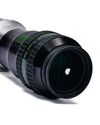
Tele Vue Nagler Type-7 series eyepieces
These premium optics were inspired by Apollo - and deliver a giant leap to your views
4 mins
February 2026
BBC Sky at Night Magazine
Once Upon a Time in Space
While the Space Race of the Cold War years was ultimately a geopolitical contest between the USA and the Soviet Union, the rivalry sparked rapid innovation and inspired multiple generations to look skyward.
1 mins
February 2026
BBC Sky at Night Magazine
The Multiverse: When One Universe Isn't Enough
The concept of a 'multiverse' – the idea that our Universe may be just one of many – is widespread in science fiction and a common thread of online discussions.
1 mins
February 2026
BBC Sky at Night Magazine
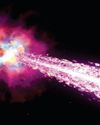
Q&A WITH A GAMMA RAY SPECIALIST
In 2025, astronomers detected a blast from space that lasted seven hours. Now they're uncovering the strange processes behind the exceptional outburst
3 mins
February 2026
BBC Sky at Night Magazine
Astronomy Photographer of the Year
The world-leading astrophotography competition returns. Could your image take the top prize of £10,000?
2 mins
February 2026
BBC Sky at Night Magazine
MOONWATCH
February's top lunar feature to observe
2 mins
February 2026
BBC Sky at Night Magazine
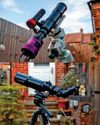
NOVAStar Scarlet A62Q 62mm f/8.4 quadruplet achromatic refractor
Well-built and capable, this beginner scope punches well above its bargain price
4 mins
February 2026
BBC Sky at Night Magazine
STAR OF THE MONTH
Rasalas, Leo the Lion's metal-rich crown
1 min
February 2026
BBC Sky at Night Magazine
Comet 24P/Schaumasse
Having reached perihelion on 8 January, comet 24P/ Schaumasse is now fading. Starting the month at a small-telescope-friendly mag. +10.5, it dims throughout February to below 12th magnitude.
1 min
February 2026
Translate
Change font size