कोशिश गोल्ड - मुक्त
Catch the Sun
BBC Sky at Night Magazine
|July 2023
ASTROPHOTOGRAPHY CAPTURE | Take the perfect astrophoto with our step-by-step guide | How to safely capture the drama now that solar activity is picking up

The Sun has been showing increased activity over recent months and with its position in the sky now optimal from the UK, this is a great time to review some of the techniques required to image it. Solar imaging isn't without risk, and concentration needs to be high at all times to avoid accidents. It goes without saying that you should never look directly at the Sun nor point any instrument at it without using appropriate filters.
The two most common ways to view the Sun using a telescope are in white light or with a solar narrowband filter. Ready-made white-light filters are available or you can make your own (following instructions provided by the supplier).
Narrowband filters are more expensive and can be either built into a dedicated solar telescope or supplied to convert a night-time telescope, typically a refractor, into a speciality narrowband instrument. Common narrowband filter types offer views in hydrogen-alpha or calcium-K, the former being the most common. Other wavelengths are also available.
White-light filters show photospheric phenomena such as sunspots, sunspot groups, faculae, limb darkening, solar granulation and very rarely - solar flares. Features in white light tend to change in form subtly over the course of a few hours or days.
H-alpha filters reveal chromospheric and inner atmosphere (corona) features including active regions, plage, spots, spicules, filaments, fibrils, dark mottles, prominences and flares..


यह कहानी BBC Sky at Night Magazine के July 2023 संस्करण से ली गई है।
हजारों चुनिंदा प्रीमियम कहानियों और 10,000 से अधिक पत्रिकाओं और समाचार पत्रों तक पहुंचने के लिए मैगज़्टर गोल्ड की सदस्यता लें।
क्या आप पहले से ही ग्राहक हैं? साइन इन करें
BBC Sky at Night Magazine से और कहानियाँ

BBC Sky at Night Magazine
Crush: Close Encounters with Gravity
Gravity is something that we're all innately familiar with. It keeps our feet on the ground, fights against a rocket trying to leave Earth and governs the movement of the planets and stars.

1 mins
April 2026

BBC Sky at Night Magazine
Exploring the Universe
There's no shortage of children's books about astronomy.
2 mins
April 2026
BBC Sky at Night Magazine
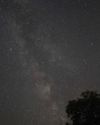
Make your Milky Way images pop
Simple, free processing techniques using FastStone Image Viewer
3 mins
April 2026

BBC Sky at Night Magazine
Nightfaring: In Search of the Disappearing Darkness
This book is a manifesto for dark skies, written as a travel memoir.
1 mins
April 2026
BBC Sky at Night Magazine
Flying saucers- The making of a modern myth
Our obsession with UFOs goes back further than you might think. Robert Pateman traces how early science fiction, dubious sightings and an alien-mad media led to the 1950s saucer fever
9 mins
April 2026

BBC Sky at Night Magazine
STAR OF THE MONTH
Alphecca, the brightest jewel in the Crown
1 min
April 2026
BBC Sky at Night Magazine
How to use a planisphere
Navigate the sky with the original stargazer's tool. No batteries, apps or Wi-Fi required!
3 mins
April 2026
BBC Sky at Night Magazine
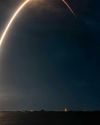
Why rockets don't launch straight up
For a rocket to get its payload into space, it has to follow a curved path. But what would happen if it didn't?
2 mins
April 2026
BBC Sky at Night Magazine
Q&A WITH A DARK MATTER SPECIALIST
Dark matter makes up 27 per cent of all matter in the Universe. So why is it so hard to find? Meet one of the people making a map that leads us to it
3 mins
April 2026

BBC Sky at Night Magazine
Why I want to put a hotel on the Moon
Bored of the beach? Sick of city breaks? Step this way. Space entrepreneur Skyler Chan explains how he'll build a holiday destination on the Moon by 2030
2 mins
April 2026
Translate
Change font size