
Mit Magzter GOLD unbegrenztes Potenzial nutzen
Erhalten Sie unbegrenzten Zugriff auf über 9.000 Zeitschriften, Zeitungen und Premium-Artikel für nur
Versuchen GOLD - Frei
Is Forgiveness Possible?
The Atlantic
|November 2024
Thirty years after the genocide in Rwanda

He told me this on a warm March day in a courtyard in central Kigali, almost exactly 30 years later. I had come to Rwanda because I wanted to understand how the genocide is remembered-through the country's official memorials as well as in the minds of victims.
And I wanted to know how people like Longolongo look back on what they did.
Longolongo was born in Kigali in the mid-1970s. As a teenager in the late 1980s, he didn't feel any personal hatred toward Tutsi. He had friends who were Tutsi; his own mother was Tutsi. But by the early 1990s, extremist Hutu propaganda had started to spread in newspapers and on the radio, radicalizing Rwandans. Longolongo's older brother tried to get him to join a far-right Hutu political party, but Longolongo wasn't interested in politics. He just wanted to continue his studies.
On April 6, 1994, Longolongo attended a funeral for a Tutsi man. At about 8:30 p.m., in the midst of the funeral rituals, the sky erupted in red fire and black smoke. The news traveled fast: A plane carrying the Rwandan president, Juvénal Habyarimana, and the Burundian president, Cyprien Ntaryamira, had been shot down over Kigali. No one survived.
Responsibility for the attack has never been conclusively determined. Some have speculated that Hutu extremists shot down the plane; others have blamed the Rwandan Patriotic Front (RPF), a Tutsi military group that had been fighting Hutu government forces near the Ugandan border. Whoever was behind it, the event gave Hutu militants a pretext for the massacre of Tutsi.
The killing started that night.
Almost as if they had been waiting for the signal, Hutu militia members showed up in Longolongo's neighborhood. One group arrived at his home and called for his brother. When he came to the door, they gave his brother a gun and three grenades and told him to come with them.
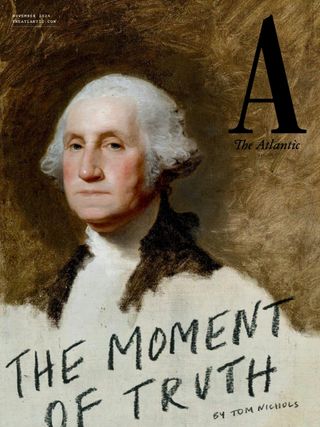

Diese Geschichte stammt aus der November 2024-Ausgabe von The Atlantic.
Abonnieren Sie Magzter GOLD, um auf Tausende kuratierter Premium-Geschichten und über 9.000 Zeitschriften und Zeitungen zuzugreifen.
Sie sind bereits Abonnent? Anmelden
WEITERE GESCHICHTEN VON The Atlantic

The Atlantic
STRUCK
What getting hit by lightning does to the body and mind

15 mins
April 2026

The Atlantic
LEAVING THE UNITED STATES BEHIND
The Cruz family spent years building a life in New York. Then the risks of staying became too great.
16 mins
April 2026

The Atlantic
MY SELF-DRIVING CAR CRASH
The Tesla was driving perfectly—until it wasn't.
8 mins
April 2026

The Atlantic
The Last Days of Franco
Montserrat Roig's classic novel captures Barcelona on the cusp of unimaginable change.
7 mins
April 2026

The Atlantic
INSATIABLE
Indoor rain, windows to nowhere, and reanimated nuclear reactors- how the race to power AI is remaking the physical world
16 mins
April 2026
The Atlantic
THE WOMEN OF AVENGER FIELD
THEY BRAVELY SERVED AS PILOTS IN WORLD WAR II. THEN AMERICA FORGOT THEM.
15 mins
April 2026

The Atlantic
The Unbearable Lightness of Signalgate
Nearly a year after a national-security scandal erupted on my iPhone, no one in the Trump administration has faced serious consequences.
14 mins
April 2026

The Atlantic
Robyn Is Still Dancing On Her Own
The queen of poptimism takes up motherhood and midlife desire.
5 mins
April 2026
The Atlantic
The College-Educated Working Class
Can a generation of graduates frustrated by their economic prospects change American labor politics?
13 mins
April 2026

The Atlantic
THAT 1930s FEELING
How dark fringes reached the center of the Republican Party
10 mins
April 2026
Listen
Translate
Change font size