Versuchen GOLD - Frei
AMERICA'S MOST FAMOUS NAP
The Atlantic
|November 2025
How “Rip Van Winkle” became our founding folktale
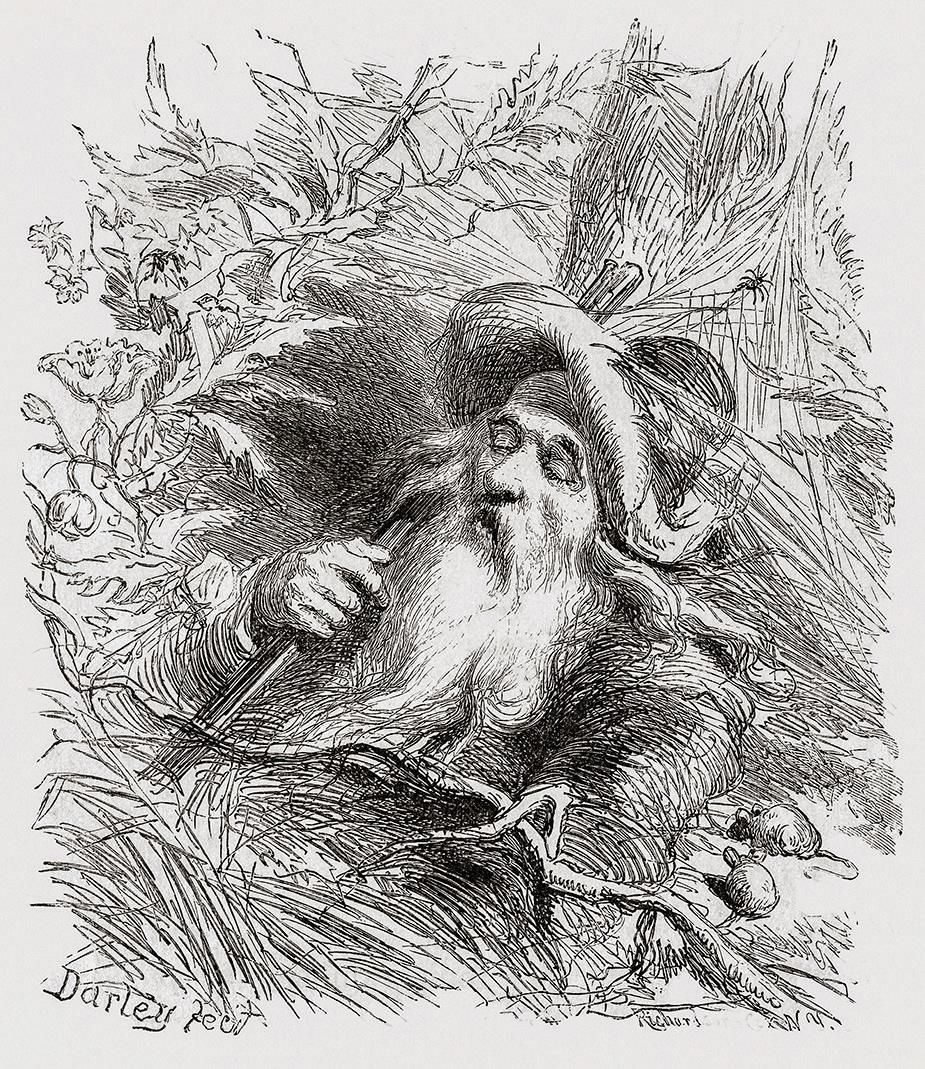
Washington Irving was born just as the news reached New York City: The war with England was over. To celebrate, his mother named him after the victorious American general. When he was a boy of 6, Irving was out for a walk with a Scottish maidservant, who spotted George Washington, now the nation’s first president, on a Manhattan street. The enterprising maidservant followed him into a shop. (Apparently, presidents once ran their own errands.) “Please, Your Honor,” she said. “Here’s a bairn was named after you.” Putting his hand on the young man’s head, Washington bestowed his blessing.
Thus anointed, Irving went on to become America’s original literary celebrity. During the first half of the 19th century, Charles Dudley Warner wrote in The Atlantic in 1880, “probably no citizen of the republic, except the Father of his Country, had so wide a reputation as his namesake, Washington Irving.” Irving wrote one of The first, and still one of the best, American ghost stories: “The Legend of Sleepy Hollow,” about a Hessian soldier who lost his head to a Patriot cannonball. He wrote satirical sketches, romantic tales, travelogues, and, near the end of his life, a five-volume biography of George Washington.
Yet the story that established Irving’s literary reputation is, at first glance, not a likely one to build a new national literature around. Irving wrote it during a sojourn in Britain. He took its bones from a German folktale. And although set in the Revolutionary era, the story doesn’t dramatize America’s fight for independence. Rather, the protagonist dozes right through it.

Diese Geschichte stammt aus der November 2025-Ausgabe von The Atlantic.
Abonnieren Sie Magzter GOLD, um auf Tausende kuratierter Premium-Geschichten und über 9.000 Zeitschriften und Zeitungen zuzugreifen.
Sie sind bereits Abonnent? Anmelden
WEITERE GESCHICHTEN VON The Atlantic
The Atlantic
Deadlier Than Gettysburg
How the cruelty of the Confederacy's prison camps gave rise to the rules of war

10 mins
March 2026

The Atlantic
THE MAN WHO BROKE PHYSICS
One of the pleasures of watching Ilia Malinin, apart from his indifference to gravity, is to witness him becoming.
16 mins
March 2026

The Atlantic
How Toni Morrison Saw History
In her novels, she located the missing story of Black America.
12 mins
March 2026

The Atlantic
The Madness of Lord Tennyson
The Victorian poet was startlingly modern.
5 mins
March 2026

The Atlantic
THE PLOT AGAINST THE HUMANITIES
What is the Andrew W. Mellon Foundation doing to higher education?
22 mins
March 2026

The Atlantic
Why Do Democrats Hate Winning?
Ken Martin has one of those resting dread faces, as if he's bracing for someone to dump a bucket of rocks on his head.
37 mins
March 2026

The Atlantic
ROD DREHER'S DEMONS
HE DERIDES THE ENLIGHTENMENT, SECULARISM, AND THE MODERN WORLD. CONSERVATIVES-INCLUDING THE VICE PRESIDENT-ARE JOINING HIM ON A MARCH BACK TO THE MIDDLE AGES.
20 mins
March 2026

The Atlantic
Every Nation for Itself
President Trump wants to return to the 19th century's international order. He will leave America less prosperous—and the whole world less secure.
19 mins
March 2026

The Atlantic
The Secrets of Indigenous Art
Major exhibits are upending the way people understand Native American and Aboriginal artists.
14 mins
March 2026

The Atlantic
The Novel as Extended Op-Ed
If anyone could write good fiction about immigration, it would probably be Lionel Shriver. Instead, her latest book goes off the rails.
10 mins
March 2026
Listen
Translate
Change font size