Versuchen GOLD - Frei
THE MORAL FOUNDATION OF AMERICA
The Atlantic
|November 2025
The idea that everyone has intrinsic rights to life and liberty was a radical break with millennia of human history. It's worth preserving.
For thousands of years, the view that only rulers conferred rights or privileges on everyone else was taken for granted in traditional societies around the world. In Babylonia, Egypt, Greece, and Rome, only those whom rulers regarded as their peers had value, or what the Romans called dignitas. Hindu societies enshrined the ruler as one who embodies the divine order of the gods, and established a hierarchical rank for everyone else. The caste system even defined some people as “outcaste,” with no right to move freely and little recourse from lifelong servitude.
The anonymous Babylonian scribes who wrote the legal code of Hammurabi some 4,000 years ago seem to have regarded human value as a quality that the king could grant to certain people and deny to others. This code assigned privileges, and what we call “rights,” according to a strictly hierarchical view of social power.
The archaeologists who discovered Hammurabi’s code must have been surprised, at first, to see that it offered certain protections from mutilation, torture, and execution. But it became clear that these were dependent on one’s social rank. The king—who authorized the code—assigned punishments based on the social status of the offender and the victim.
Ancient kings and emperors enforced their power through terror and violence. They claimed to derive their own prerogatives from the gods—from Marduk, in Babylonia; Ra, in Egypt; Jupiter, in Rome. Ancient philosophers held similar views. More than 2,000 years ago, when Plato wrote his famous treatise on “The Laws,” he declared that human laws merely articulate the will of the gods, and extend privileges to people like himself, members of the aristocratic class in Athens.
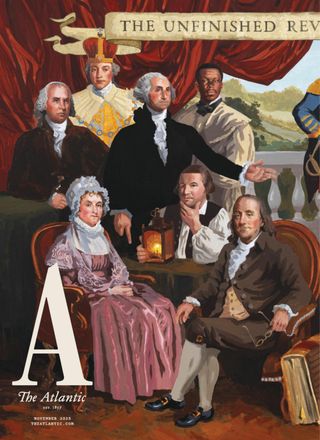

Diese Geschichte stammt aus der November 2025-Ausgabe von The Atlantic.
Abonnieren Sie Magzter GOLD, um auf Tausende kuratierter Premium-Geschichten und über 9.000 Zeitschriften und Zeitungen zuzugreifen.
Sie sind bereits Abonnent? Anmelden
WEITERE GESCHICHTEN VON The Atlantic

The Atlantic
Deadlier Than Gettysburg
How the cruelty of the Confederacy's prison camps gave rise to the rules of war

10 mins
March 2026

The Atlantic
THE MAN WHO BROKE PHYSICS
One of the pleasures of watching Ilia Malinin, apart from his indifference to gravity, is to witness him becoming.
16 mins
March 2026

The Atlantic
How Toni Morrison Saw History
In her novels, she located the missing story of Black America.
12 mins
March 2026

The Atlantic
The Madness of Lord Tennyson
The Victorian poet was startlingly modern.
5 mins
March 2026

The Atlantic
THE PLOT AGAINST THE HUMANITIES
What is the Andrew W. Mellon Foundation doing to higher education?
22 mins
March 2026

The Atlantic
Why Do Democrats Hate Winning?
Ken Martin has one of those resting dread faces, as if he's bracing for someone to dump a bucket of rocks on his head.
37 mins
March 2026

The Atlantic
ROD DREHER'S DEMONS
HE DERIDES THE ENLIGHTENMENT, SECULARISM, AND THE MODERN WORLD. CONSERVATIVES-INCLUDING THE VICE PRESIDENT-ARE JOINING HIM ON A MARCH BACK TO THE MIDDLE AGES.
20 mins
March 2026

The Atlantic
Every Nation for Itself
President Trump wants to return to the 19th century's international order. He will leave America less prosperous—and the whole world less secure.
19 mins
March 2026

The Atlantic
The Secrets of Indigenous Art
Major exhibits are upending the way people understand Native American and Aboriginal artists.
14 mins
March 2026

The Atlantic
The Novel as Extended Op-Ed
If anyone could write good fiction about immigration, it would probably be Lionel Shriver. Instead, her latest book goes off the rails.
10 mins
March 2026
Listen
Translate
Change font size