Versuchen GOLD - Frei
Getting A Silage Maize Crop Into The Bunker Chop-Chop
Farmer's Weekly
|March 12, 2021
In terms of its cost-benefit ratio, silage maize is arguably the best-value stored green feed for milk production systems in the KwaZulu-Natal Midlands. However, to maximize the nutritional quality and quantity of this crop, it is important to harvest and handle it at the correct time and in the correct way. Lloyd Phillips reports.

The clean and neatly parked fleet of John Deere forage harvesters, tractors, and large haulage trailers on East End Farm make for an impressive sight. Around mid-March, the collective roar of the powerful, green-and-yellow diesel machines reverberates across this farm in the Mooi River area of the KwaZulu-Natal (KZN) Midlands as they all head out to start their demanding task of bringing in local dairy farmers’ silage maize crops. Not until as much as 2 000ha of silage maize crops, equating to approximately 130 000t of wet maize silage, have been harvested and safely ensiled in bunkers will the drivers of the fleet be able to enjoy a well-deserved rest.
Overseeing this hive of activity are Craig Johnston and his wife Kim, owners of Johnston Contracting, which provides silage harvesting and haymaking services to a number of dairy and other livestock farmers in the KZN Midlands. At the time of writing, the Johnstons were preparing preliminary schedules for the farms where they will harvest silage. The schedules become more accurate and fixed the closer the time gets to the tight harvesting window of late February to mid-May.
“As recently as five or so years ago, the local effects of climate change were not as big a problem as they are now,” says Johnston. “At that time, weather patterns were still fairly predictable, and our silage maize-growing clients would all plant their crops from late October to early November with the aim of having these crops ready by mid-March for harvesting. “Nowadays, our clients are having to wait longer for the warmer soil temperatures and consistent rainfall they need to start planting, and even these factors vary across the KZN Midlands.”


Diese Geschichte stammt aus der March 12, 2021-Ausgabe von Farmer's Weekly.
Abonnieren Sie Magzter GOLD, um auf Tausende kuratierter Premium-Geschichten und über 9.000 Zeitschriften und Zeitungen zuzugreifen.
Sie sind bereits Abonnent? Anmelden
WEITERE GESCHICHTEN VON Farmer's Weekly

Farmer's Weekly
The foot-and-mouth disease threat is growing
Foot-and-mouth disease poses a growing threat to the livestock industry, especially communal farmers, with devastating economic consequences unless awareness and compliance improve, writes Shane Brody.

3 mins
January 30 - February 06, 2026

Farmer's Weekly
Shipping conditions to ease in 2026, but risk remains high
Early signs suggest a more favourable export season for South African producers, as easing global shipping congestion and improved performance by Transnet point to higher throughput at local ports. Lindi Botha reports.
2 mins
January 30 - February 06, 2026

Farmer's Weekly
A path of accelerating land reform in South Africa
Delivering the ANC's January 8th Statement a few weeks ago, President Cyril Ramaphosa noted, amongst other things, that: “Land reform remains one of the most urgent tasks of the National Democratic Revolution. While progress has been made, much more is required to give effect to the constitutional requirement for redress and equitable access to land.”
2 mins
January 30 - February 06, 2026
Farmer's Weekly
Reflections on 2025 and the policy space for 2026
The year 2025 was a year characterised initially by a wave of misinformation, particularly relating to legislation and tariff issues. This year some big moves are expected in the trade space.
3 mins
January 30 - February 06, 2026
Farmer's Weekly
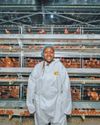
From planning to peak lay: building a profitable egg business
Mpumalanga poultry farmer Lebogang Mashego spoke to Octavia Avesca Spandiel, and shared practical insights on planning, building systems that work, breed choice, feed management, and markets to build a profitable and sustainable egg business.
5 mins
January 30 - February 06, 2026

Farmer's Weekly
Impofu Wind Farm becomes a canvas for community connection through Enel's Blowing Art Initiative
Enel Green Power South Africa has introduced the Blowing Art Initiative at the Impofu Wind Farm in the Eastern Cape, a creative community project that turns renewable energy infrastructure into a living gallery.
2 mins
January 30 - February 06, 2026

Farmer's Weekly
Geely is intent on hanging around
Having fallen off the radar around a decade ago following a short local stint, Chinese manufacturer Geely has announced its proposed return to South Africa towards the end of 2026. The Citizen's Jaco van der Merwe reports.
4 mins
January 30 - February 06, 2026

Farmer's Weekly
Great reads to enjoy during ‘me-time'
Patricia McCracken has plucked an assortment of fascinating titles covering different areas of interest, from coastal exploration and dining in the wild, to African traditions surrounding love and marriage.
3 mins
January 30 - February 06, 2026
Farmer's Weekly
Thokoman Peanut Butter marks 25-year milestone with R500 000 commitment to food security
Thokoman Peanut Butter, one of South Africa's biggest producers of peanut butter, celebrates 25 years of consistent quality and community support, marking the occasion with a significant R500 000 partnership with Hot 102.7's Hot Cares initiative for 2026.
2 mins
January 30 - February 06, 2026
Farmer's Weekly
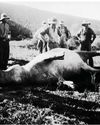
South Africa's famous wandering hippo
From 1928 to 1931, a hippopotamus trekked 1 600km from what was then northern Natal to the Eastern Cape's Keiskamma River near Peddie, where it was shot dead by a posse of farmers. As Mike Burgess writes, this journey would immortalise the hippo in South African history.
3 mins
January 30 - February 06, 2026
Translate
Change font size