
Magzter GOLDで無制限に
10,000以上の雑誌、新聞、プレミアム記事に無制限にアクセスできます。
試す 金 - 無料
Getting A Silage Maize Crop Into The Bunker Chop-Chop
Farmer's Weekly
|March 12, 2021
In terms of its cost-benefit ratio, silage maize is arguably the best-value stored green feed for milk production systems in the KwaZulu-Natal Midlands. However, to maximize the nutritional quality and quantity of this crop, it is important to harvest and handle it at the correct time and in the correct way. Lloyd Phillips reports.

The clean and neatly parked fleet of John Deere forage harvesters, tractors, and large haulage trailers on East End Farm make for an impressive sight. Around mid-March, the collective roar of the powerful, green-and-yellow diesel machines reverberates across this farm in the Mooi River area of the KwaZulu-Natal (KZN) Midlands as they all head out to start their demanding task of bringing in local dairy farmers’ silage maize crops. Not until as much as 2 000ha of silage maize crops, equating to approximately 130 000t of wet maize silage, have been harvested and safely ensiled in bunkers will the drivers of the fleet be able to enjoy a well-deserved rest.
Overseeing this hive of activity are Craig Johnston and his wife Kim, owners of Johnston Contracting, which provides silage harvesting and haymaking services to a number of dairy and other livestock farmers in the KZN Midlands. At the time of writing, the Johnstons were preparing preliminary schedules for the farms where they will harvest silage. The schedules become more accurate and fixed the closer the time gets to the tight harvesting window of late February to mid-May.
“As recently as five or so years ago, the local effects of climate change were not as big a problem as they are now,” says Johnston. “At that time, weather patterns were still fairly predictable, and our silage maize-growing clients would all plant their crops from late October to early November with the aim of having these crops ready by mid-March for harvesting. “Nowadays, our clients are having to wait longer for the warmer soil temperatures and consistent rainfall they need to start planting, and even these factors vary across the KZN Midlands.”


このストーリーは、Farmer's Weekly の March 12, 2021 版からのものです。
Magzter GOLD を購読すると、厳選された何千ものプレミアム記事や、10,000 以上の雑誌や新聞にアクセスできます。
すでに購読者ですか? サインイン
Farmer's Weekly からのその他のストーリー
Farmer's Weekly
Cash flow budgets: keeping farmers in control of liquidity, risk, and their survival
Profit doesn't guarantee a farm's survival - cash does. Cobus du Plessis explains why cash flow budgets are one of the most important yet underused financial tools on South African farms.

5 mins
February 27 - March 06, 2026

Farmer's Weekly
The toast of the Navy
The incredible story of the World War II-era Great Dane dog Nuisance being enlisted in the Royal Navy is well documented. Graham Jooste shared some entertaining anecdotes involving the canine shipmate.
6 mins
February 27 - March 06, 2026
Farmer's Weekly
Healthier soils deter destructive locusts
Locust swarms remain a serious global threat, capable of devastating crops, livelihoods and local economies across vast regions.
1 min
February 27 - March 06, 2026
Farmer's Weekly
Wheat crisis dominates Grain SA regional meetings
As the ongoing wheat crisis continues to erode producers' margins, emotions ran high at Grain SA's regional meeting in Moorreesburg in the Western Cape.
2 mins
February 27 - March 06, 2026

Farmer's Weekly
A FARMER'S EXPERIENCE
Street Wallet has been a game-changer for Mario Athanasopoulos, hydroponic production consultant and owner of Green City Farms.
1 mins
February 27 - March 06, 2026
Farmer's Weekly
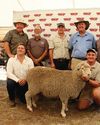
Kesieberg Merino Stud Production Sale
The Kesieberg Merino Stud Production Sale was held on the farm Leeuwfontein on 4 February on behalf of Willie and Herman Henning.
1 min
February 27 - March 06, 2026
Farmer's Weekly
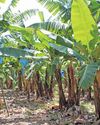
Not cheaper, just different: what you should know about farming in Mozambique
Although Mozambique is often viewed as a cheaper, easier farming location than South Africa, cost comparisons tell a more complex story. But while cross-border production presents real challenges, it also offers opportunities for complementary trade, diversification and regional food security, particularly when it comes to subtropical crops such as bananas.
10 mins
February 27 - March 06, 2026
Farmer's Weekly
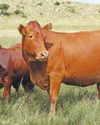
The all-rounder anchoring South Africa's beef value chain
Louis Steyl, CEO of the Bonsmara Cattle Breeders' Society of South Africa, spoke to Octavia Avesca Spandiel about how the versatile Bonsmara breed anchors the country's beef value chain, delivering balanced performance, reproductive and feed efficiency, and carcass traits across extensive and intensive systems.
6 mins
February 27 - March 06, 2026

Farmer's Weekly
THE HITCHING POST
I'm a 60-year-old white woman who loves camping, animals, the outdoors, and watching sport.
2 mins
February 27 - March 06, 2026
Farmer's Weekly
Foot-and-mouth disease in pigs
Recently, the radio news mentioned an outbreak of foot-and-mouth disease (FMD) in pigs in South Africa.
2 mins
February 27 - March 06, 2026
Translate
Change font size