
استمتع بـUnlimited مع Magzter GOLD
احصل على وصول غير محدود إلى أكثر من 9000 مجلة وصحيفة وقصة مميزة مقابل
يحاول ذهب - حر
Collision Course
February 2026
|Scientific American
The ancient moon- forming planet Theia probably came from the inner solar system
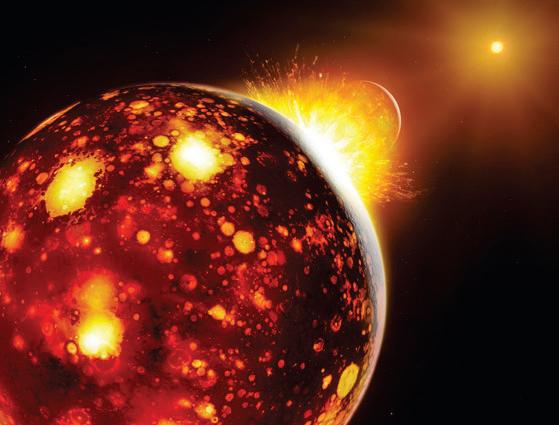
Artist's impression of the planet Theia colliding with ancient Earth to create the moon
ROUGHLY FOUR AND A HALF billion years ago the planet Theia slammed into Earth, destroying itself, melting large portions of our planet's mantle and ejecting a huge debris disk that later pulled together to become the moon. Scientists have long wondered about both the composition and the origin of Theia. Now they have evidence that it formed very close to home.
The original giant-impact model of the moon's formation, proposed in the 1970s, predicted that the moon was made mostly of material from the colliding object. This scenario implied there should be differences between the chemical compositions of the moon and Earth, but research has found that the two are nearly identical—far more similar than two independent planetary bodies should be. A study published recently in Science took a close look at other things Theia gave us besides the moon: additional molybdenum and iron left behind on Earth from the collision.

هذه القصة من طبعة February 2026 من Scientific American.
اشترك في Magzter GOLD للوصول إلى آلاف القصص المتميزة المنسقة، وأكثر من 9000 مجلة وصحيفة.
هل أنت مشترك بالفعل؟ تسجيل الدخول
المزيد من القصص من Scientific American

Scientific American
The Business of Space Weather
A company aims to offer better forecasts based on a new solar model

7 mins
April 2026
Scientific American
Mindless Sleep
Even without brains, sea anemones and jellyfish can sleep like humans do
1 min
April 2026

Scientific American
THE KIDS ARE ALL RIGHT
Young people are doing better than you think
12 mins
April 2026

Scientific American
Something in THE WATER
Pristine alpine lakes are being choked by algal blooms. The culprit is in the air
9 mins
April 2026
Scientific American
A Dose of Prevention
New alert systems and biomarkers are spotting drug- induced kidney damage early, before irreversible harm
6 mins
April 2026

Scientific American
Life on the Edge
Kidney damage can progress for years without symptoms. The newly diagnosed cope with everything from restrictive diets to the emotional and logistical toll of dialysis
9 mins
April 2026
Scientific American
Stopping an Autoimmune Attack
IgA nephropathy, a frequent cause of kidney failure, is underdiagnosed. New treatments mean it's more important now to find those who will benefit
8 mins
April 2026
Scientific American
Mindless Sleep
Even without brains, sea anemones and jellyfish can sleep like humans do
4 mins
April 2026

Scientific American
Microbes Afloat
BACTERIA AND THE VIRUSES that infect them are perpetually at war. Their deadly clashes push both kinds of microbes to evolve new traits that meet the challenges of every environment they inhabit, from the human digestive tract to the seafloor’s hydrothermal vents— and even the harsh conditions of space.
2 mins
April 2026

Scientific American
The Strangest Bloom
Research reveals how the corpse flower came by its peculiar traits
9 mins
April 2026
Listen
Translate
Change font size