Go Unlimited with Magzter GOLD
Get unlimited access to 10,000+ magazines, newspapers and Premium stories for just
Try GOLD - Free
Go Unlimited with Magzter GOLD
Get unlimited access to 10,000+ magazines, newspapers and Premium stories for just
Hurry, Limited Period Offer!
0
Hours
0
minutes
0
seconds
The Business NG - BusinessNg
Go Unlimited with Magzter GOLD
Read The Business NG along with 10,000+ other magazines & newspapers with just one subscription
View CatalogSubscribe only to The Business NG
Cancel Anytime.
(No Commitments) ⓘIf you are not happy with the subscription, you can email us at help@magzter.com within 7 days of subscription start date for a full refund. No questions asked - Promise! (Note: Not applicable for single issue purchases)
Digital Subscription
Instant Access ⓘSubscribe now to instantly start reading on the Magzter website, iOS, Android, and Amazon apps.
Verified Secure
payment ⓘMagzter is a verified Stripe merchant.
In this issue
Despite being Africa’s largest crude oil producer and home to the continent’s biggest refinery, Nigeria continues to import refined petroleum products, a reality that has contributed to rising petrol prices even as the dollar weakens. On Wednesday, BusinessNg notes that retail petrol prices in major cities like Lagos and Abuja hit N835 and N839 per litre, respectively, reflecting persistent domestic supply constraints. Meanwhile, crude oil prices on the international market continue to climb, and the naira has shown relative strength against the dollar. Economists say the situation exposes a structural anomaly in Nigeria’s energy sector. While standard economic theory suggests that rising crude prices coupled with a stronger currency should ease domestic fuel costs, operational inefficiencies at local refineries, under-capacity production, and dependence on imports continue to push prices higher. “This is a paradox that wouldn’t make sense in conventional economic textbooks,” noted an energy analyst. “Nigeria produces vast amounts of crude and has refining capacity, yet it imports fuel. The system’s inefficiencies override market fundamentals.”

The Business NG Description:
The BusinessNG, a leading business news publication across Nigeria and WestAfrica With a strong team of 30 staff members and a weekly print circulation of over 10,000 copies, we are poised for growth and report all political relating to business news at all level
Recent issues

January 26, 2026

BusinessNg

BusinessNg

BusinessNg

BusinessNg

January 16, 2026

January 14, 2026

January 12, 2026

January 10, 2026

January 07, 2026

January 05, 2026

December 29, 2025
December 24, 2025

December 22, 2025

December 19, 2025

December 15, 2025

December 12, 2025

December 11, 2025

December 10, 2025

December 08, 2025

December 06, 2025

December 05, 2025

December 03, 2025
December 01, 2025
November 24, 2025

November 21, 2025

November 18, 2025

November 16, 2025
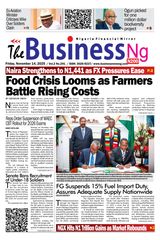
November 13, 2025
Special Issues

October 21, 2024
Related Titles

The Star

Cape Times

Daily Voice

Post

Sunday World

Sunday Tribune

The Mercury

Cape Argus

Daily News

Soccer Laduma

George Herald

Paarl Post

Greytown Gazette
People’s Post False Bay

Kouga Express
The Citizen

Saturday Star

Independent on Saturday

Weekend Argus on Saturday

Tabletalk

Bolander Lifestyle

Plainsman

Southern Suburbs Tatler

Diamond Field Advertisers

Southern Mail

False Bay Echo

Atlantic Sun

Constantiaberg Bulletin

Athlone News

Vukani