Denemek ALTIN - Özgür
TITANS
The Week Junior Science+Nature UK
|Issue 79
The biggest dinosaurs grew to truly epic proportions. Peter Gallivan tells the super-sized tale of these giant reptiles and discovers why they grew so large.
-
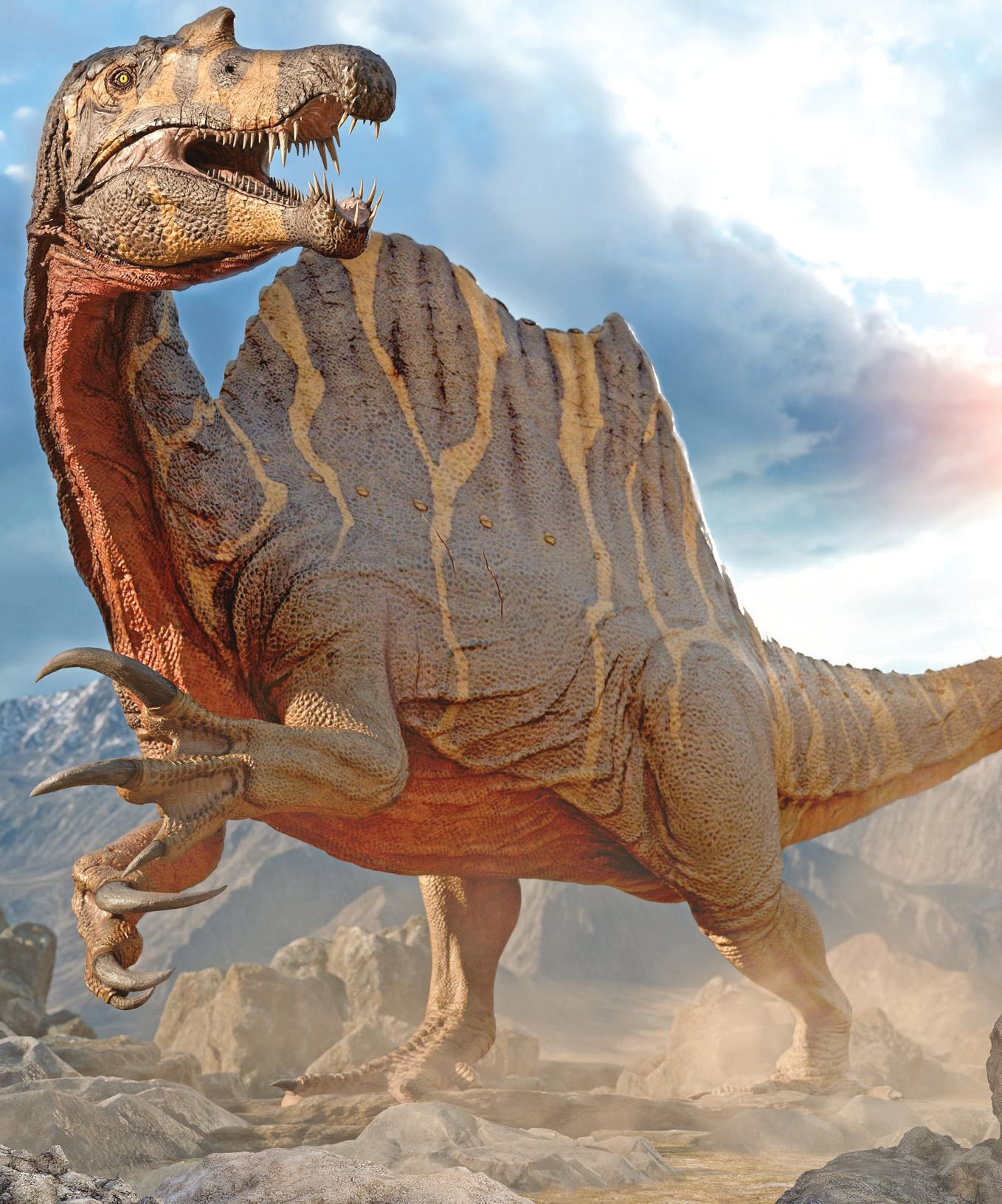
When it comes to supersized animals, dinosaurs are the undisputed champions. They dominated the world for around 200 million years, growing much larger than elephants, giraffes or any other animal alive on land today. You might think Tyrannosaurus rex was the king of the dinosaurs. No doubt, at 12 metres and 7,000 kilograms, it was mighty impressive, but was overshadowed by the real heavyweights – the titanosaurs. Larger relatives of Diplodocus, these titans were the largest animals ever to walk on Earth, and brought the age of the dinosaurs to a colossal conclusion.
Dawn of the dinos Dinosaurs weren’t always supersized. The first to evolve were rather diddy. They appeared around 250 million years ago, at the start of the Triassic period. At the time, the planet looked completely different. Instead of large chunks of land separated into continents, all the land was clumped together in one giant supercontinent called Pangea. Earth had also just experienced a mass extinction event (when species vanish much faster than they are replaced – usually about threequarters of all species over less than three million years). A colossal volcano or perhaps a meteor strike wiped out almost 90% of all animal life.
In this barren world, with most of the competitors off the scene, the first dinosaurs soon took advantage. These first Triassic dinos were the size of dogs, and looked a bit like crocodiles with long legs. By the start of the Jurassic period, 50 million years later, dinos had branched out.
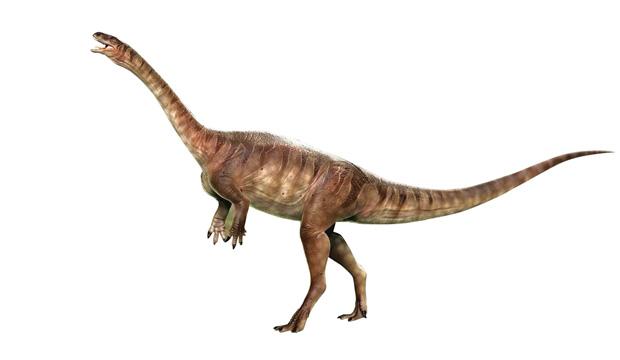 They had evolved many new forms and occupied almost every habitat on Earth. Their legs now moved vertically underneath their bodies (rather than splayed out like a lizard). This allowed them to develop stronger leg muscles, move faster and begin to walk upright.

Bu hikaye The Week Junior Science+Nature UK dergisinin Issue 79 baskısından alınmıştır.
Binlerce özenle seçilmiş premium hikayeye ve 9.000'den fazla dergi ve gazeteye erişmek için Magzter GOLD'a abone olun.
Zaten abone misiniz? Oturum aç
The Week Junior Science+Nature UK'den DAHA FAZLA HİKAYE

The Week Junior Science+Nature UK
Girl rescues rare axolotl
When 10-year-old Evie Hill told her mother that she'd seen an axolotl while she was playing under a bridge in Wales, her mum thought it was probably just a newt.

1 min
June 2026

The Week Junior Science+Nature UK
Why do people have baby teeth and adult teeth?
Your jaw changes size as you grow, which is why you need two sets of teeth.
3 mins
June 2026

The Week Junior Science+Nature UK
MISSION TO THE MOON
The successful Artemis 2 mission has launched an exciting new age of space exploration. Climb on board the tiny capsule with Daisy Dobrijevic as we blast off to the Moon.
5 mins
June 2026

The Week Junior Science+Nature UK
Bot is a table tennis ace
A robot called Ace is beating some of the world's best table tennis players.
1 min
June 2026
The Week Junior Science+Nature UK
Wildlife watch
As summer starts, Jenny Ackland takes a walk on the wild side to spot nature’s best wonders.
1 mins
June 2026

The Week Junior Science+Nature UK
Looking after the ocean
Hop on board a floating lab that protects the blue planet.
1 mins
June 2026

The Week Junior Science+Nature UK
Saffie's sight restored
And new therapy has helped a six-yearold girl from Stevenage, England, to see better.
1 min
June 2026

The Week Junior Science+Nature UK
Can we send our rubbish into space?
If we run out of room for our trash, is sending it into space the answer? You decide.
1 mins
June 2026
The Week Junior Science+Nature UK
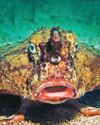
Into the deep
Join Matt Ralphs on a journey to the dark, cold and mysterious depths of the ocean.
5 mins
June 2026

The Week Junior Science+Nature UK
Who killed Ötzi the Iceman?
We're on the trail of a killer in the Alps. Let's investigate one of history's coldest cases.
2 mins
June 2026
Listen
Translate
Change font size