Denemek ALTIN - Özgür
KILLER INSTINCT
The Week Junior Science+Nature UK
|Issue 78
Step into the wild - if you dare - with JD Savage to discover how nature's ultimate predators use astonishing skills and cunning tactics to catch prey and dominate their domains.
-
A tiger’s striped coat blends into the surrounding jungle as the muscular big cat prepares to pounce. In the ocean, an orca coordinates with its pod (group) to outsmart its prey. In the sky, a peregrine falcon, a soaring solo slayer, suddenly dives from dizzying heights at over 200 miles per hour to strike an unsuspecting bird in mid air. These are some of the animal kingdom’s top predators, and each has a unique set of skills and strategies to bring down their prey. Predators are any animals that hunt and kill another species for food. None kill for thrills, it’s simply a matter of survival.
The food chain starts with plants and tiny creatures that small animals eat. These, in turn, become meals for larger carnivores (meat-eaters). At the very top of the chain are the apex predators. These are nature’s ultimate hunters – the creatures that have no natural enemies. Their unmatched hunting skills mean that they rule their habitats. If you’re a small, vulnerable animal you would be keen to avoid them.
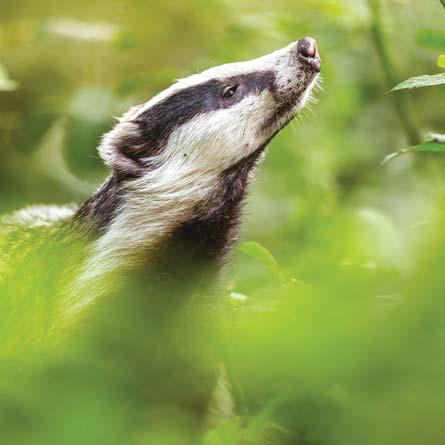
Here’s the bad news, though. Apex predators are almost everywhere – in hot deserts, icy polar climates, rainforests, lakes and oceans, on mountain tops and even underground. Badgers are the UK’s largest land predators, mostly burrowing into the ground to catch creatures that live below the surface – a menu that may include several hundred earthworms a night.
Super-senses
Apex predators have their own specially adapted senses that are practically superpowers. Tigers and leopards have superior night vision for hunting under cover of darkness, while badgers use their superior sense of smell to target prey.

Bu hikaye The Week Junior Science+Nature UK dergisinin Issue 78 baskısından alınmıştır.
Binlerce özenle seçilmiş premium hikayeye ve 9.000'den fazla dergi ve gazeteye erişmek için Magzter GOLD'a abone olun.
Zaten abone misiniz? Oturum aç
The Week Junior Science+Nature UK'den DAHA FAZLA HİKAYE

The Week Junior Science+Nature UK
Do fairies exist?
Is there real magic in this world or is the fairy realm history's longest-running hoax?

2 mins
July 2026

The Week Junior Science+Nature UK
Scientists finally solve an age-old T. rex teaser
The reason why the big dino had such tiny arms is a prehistoric puzzler.
2 mins
July 2026

The Week Junior Science+Nature UK
Will humans and aliens ever meet?
If aliens exist somewhere out there, will we ever get a chance to say hello?
1 min
July 2026
The Week Junior Science+Nature UK
Carlee Jackson
Meet the shark scientist who wants to inspire others to love these predators.
2 mins
July 2026

The Week Junior Science+Nature UK
Wildlife watch
Go on a wildlife spotting trip this summer with Jenny Ackland.
1 min
July 2026

The Week Junior Science+Nature UK
Welcome to the jungle
Visit the project turning an abandoned space into a wildlife haven.
1 mins
July 2026

The Week Junior Science+Nature UK
New launch puts a Smile in space
On 19 May, the Smile spacecraft took off on a mission to understand how Earth uses its invisible shield as protection from deadly particles released by the Sun.
1 min
July 2026

The Week Junior Science+Nature UK
Heavy metal scorpions
Scorpions are nature's ultimate they have powerful claws (pincers) and a venom-tipped stinger. Scientists have shown that these formidable critters can make their weapons stronger using metals.
1 min
July 2026

The Week Junior Science+Nature UK
Wing it!
Reach for the skies with Tom Jackson as he reveals the secrets of flight.
6 mins
July 2026

The Week Junior Science+Nature UK
Can you survive inside a tornado?
Read the story of the scientist who got stuck inside a twister.
3 mins
July 2026
Listen
Translate
Change font size