Denemek ALTIN - Özgür
Space Saver
Scientific American
|September 2025
A new proof dramatically compresses the memory needed for computation
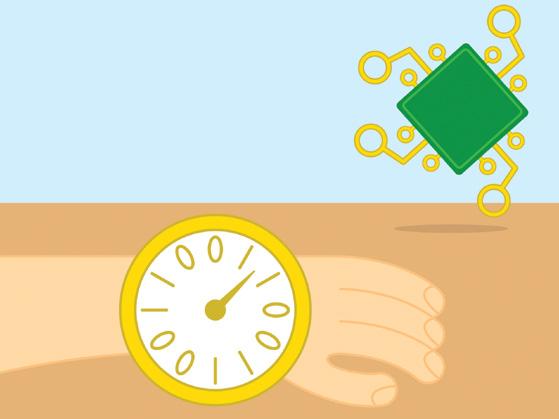
ONCE UPON A TIME computers filled entire rooms, reading numbers from spinning tapes and churning them through wires to do chains of basic arithmetic. Today they slip into our pockets, performing in a tiny fraction of a second what used to take hours. But after decades of shrinking chips to pack as much computation as possible onto a machine, theorists are flipping the question: How little space is enough to get the job done?
This inquiry lies at the heart of computational complexity, a measure of the limits of what problems can be solved and at what cost in time and space. For nearly 50 years theorists could prove only that if solving a problem takes t steps, it should be possible using roughly t bits of memory—the 0s and 1s that a machine uses to record information. (Technically, that equation also incorporates log(t), but for the numbers involved this has little effect.)


Bu hikaye Scientific American dergisinin September 2025 baskısından alınmıştır.
Binlerce özenle seçilmiş premium hikayeye ve 9.000'den fazla dergi ve gazeteye erişmek için Magzter GOLD'a abone olun.
Zaten abone misiniz? Oturum aç
Scientific American'den DAHA FAZLA HİKAYE
Scientific American
Sailing the Sun
By designing vertical panels that move in a gale, two Swedish inventors are unlocking a solar future for the windswept north

9 mins
March 2026
Scientific American
Covered in Bees
Ancient bees burrowed deep into discarded mammal jawbones
2 mins
March 2026
Scientific American
Fire Starters
Ancient humans were making fire 350,000 years earlier than thought
3 mins
March 2026
Scientific American
Relativity Revealed
Physicists have observed a bizarre prediction of special relativity for the first time
8 mins
March 2026

Scientific American
Everything You Wanted to Know about Polyamory (but Were Afraid to Ask
The practice is not a faddish excuse to sleep around, research shows. And it has deep roots in American culture
14 mins
March 2026

Scientific American
Let the Rivers Run
An investigation into the rights of nature
4 mins
March 2026

Scientific American
Hidden Proof
\"Effective zero knowledge\" beats long-standing cryptographic impossibilities
2 mins
March 2026

Scientific American
The Universe's Weirdest Optical Illusions
Sometimes the farther away an object is, the bigger it seems to be
4 mins
March 2026
Scientific American
Earthquake Life
Yellowstone quakes spark bursts of microbial growth underground
2 mins
March 2026

Scientific American
Living in the COPILOT SOCIETY
The promise and peril of artificial intelligence everywhere
2 mins
March 2026
Listen
Translate
Change font size