Versuchen GOLD - Frei
Space Saver
Scientific American
|September 2025
A new proof dramatically compresses the memory needed for computation
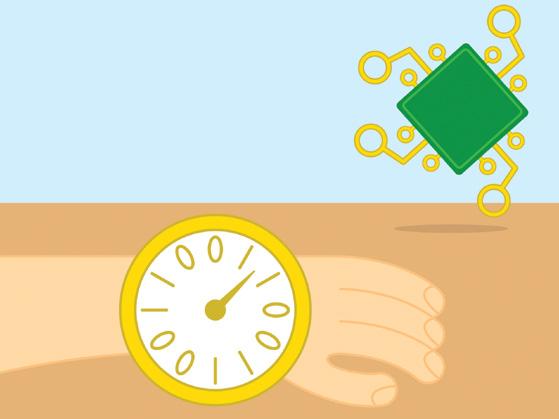
ONCE UPON A TIME computers filled entire rooms, reading numbers from spinning tapes and churning them through wires to do chains of basic arithmetic. Today they slip into our pockets, performing in a tiny fraction of a second what used to take hours. But after decades of shrinking chips to pack as much computation as possible onto a machine, theorists are flipping the question: How little space is enough to get the job done?
This inquiry lies at the heart of computational complexity, a measure of the limits of what problems can be solved and at what cost in time and space. For nearly 50 years theorists could prove only that if solving a problem takes t steps, it should be possible using roughly t bits of memory—the 0s and 1s that a machine uses to record information. (Technically, that equation also incorporates log(t), but for the numbers involved this has little effect.)


Diese Geschichte stammt aus der September 2025-Ausgabe von Scientific American.
Abonnieren Sie Magzter GOLD, um auf Tausende kuratierter Premium-Geschichten und über 9.000 Zeitschriften und Zeitungen zuzugreifen.
Sie sind bereits Abonnent? Anmelden
WEITERE GESCHICHTEN VON Scientific American

Scientific American
War in Plain Sight
Near-real-time satellite coverage means militaries can no longer hide. So they are learning to lie better

4 mins
June 2026

Scientific American
A Bridge-Crossing Puzzle Led to New Math
Are you smarter than an 18th-century Prussian?
5 mins
June 2026

Scientific American
Nocturnal Navigation
These ants use a sophisticated lunar compass
2 mins
June 2026

Scientific American
Early Plates
Scientists found the oldest direct evidence for Earth’s tectonic motion
3 mins
June 2026

Scientific American
Mating Arm
Reproduction in octopuses is even weirder than you think
3 mins
June 2026

Scientific American
Battleship Science
Game-playing AI can show us how to do science better
2 mins
June 2026

Scientific American
WHAT’S A QUANTUM COMPUTER GOOD FOR, ANYWAY?
Quantum computing promises profound power in cryptography, materials design, telecommunications, and much more. But those dreams won’t become reality overnight—if ever
11 mins
June 2026
Scientific American
Atomic Snowflakes
Could each atom in the universe be unique?
2 mins
June 2026
Scientific American
The New Moon Race
The triumphant Artemis II mission marks a new era of lunar exploration and science. Here’s how it went down and what comes next
7 mins
June 2026

Scientific American
What’s Wrong with Quantum Mechanics
A 100-year-old theory might explain the confusion
6 mins
June 2026
Listen
Translate
Change font size